Opal Rings
Shifting play of color in a delicate stone
Opal is hydrated silica known for play of color, the shifting flashes of spectral color that move across the stone as light or viewing angle changes. Precious opal shows this effect over a body tone that may be white, crystal, grey or black, while common opal lacks play of color, and fire opal is valued for transparent orange to red body color with or without flashes. Major ring types include white opal, highly prized black opal, boulder opal still attached to its ironstone host rock, and assembled stones called doublets and triplets, in which a thin opal layer is backed and sometimes capped. Opal is the birthstone for October and a traditional fourteenth anniversary gift. It is also one of the more delicate ring stones, at 5.5 to 6.5 on the Mohs scale and sensitive to knocks, heat and drying. This guide covers types, value factors, protective settings and careful handling.
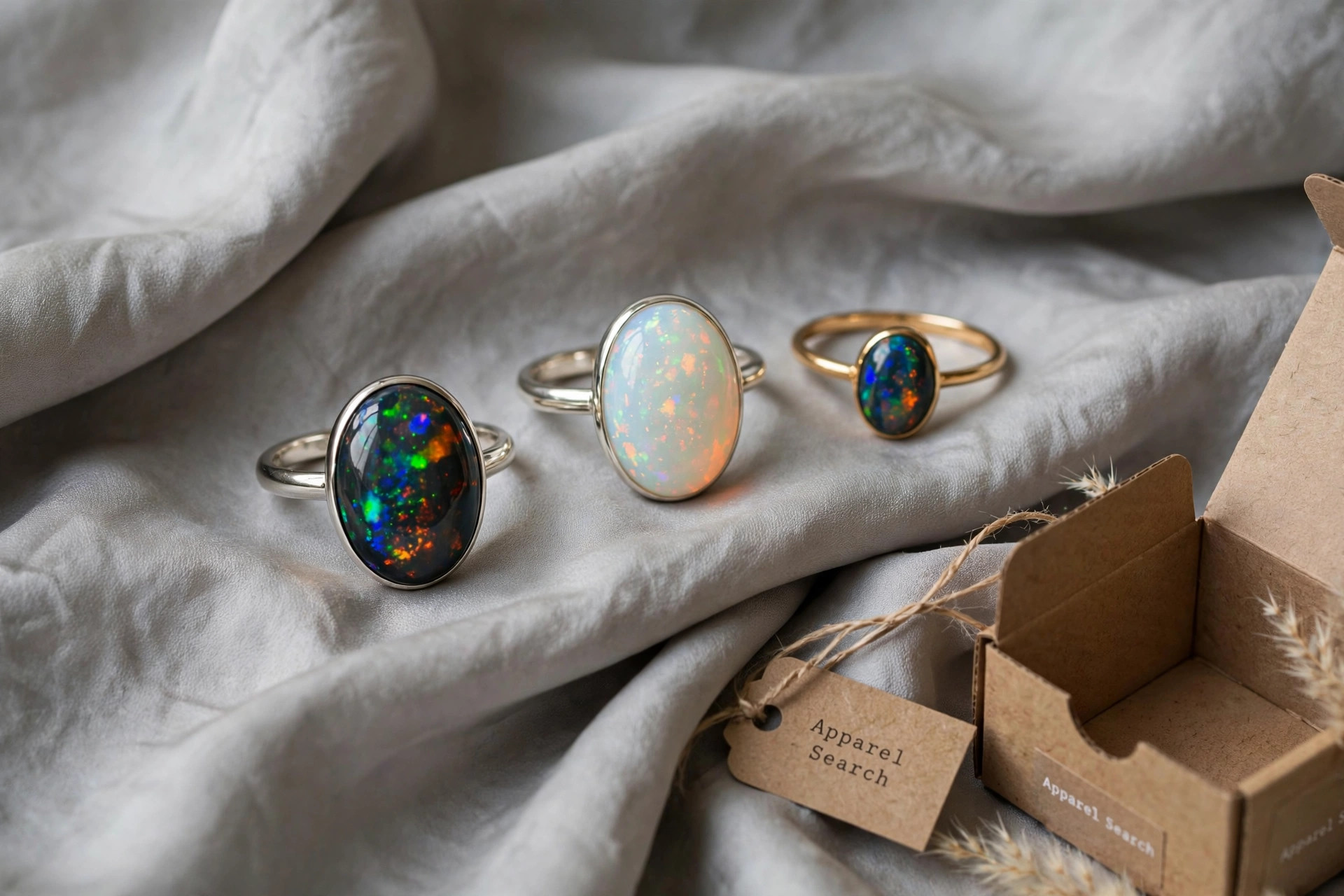
Opal Rings: Captivating Beauty and Unique Characteristics
Opal Gemstone Overview:
Opal is a stunning gemstone renowned for its captivating play-of-color, which results from internal diffraction of light. It is a unique gem that often displays a beautiful spectrum of colors, making it a popular choice for jewelry, especially rings.
Pros for Jewelry Designers:
Vibrant Play-of-Color: Opals exhibit a remarkable play-of-color, displaying a spectrum of hues that mesmerize and captivate. Jewelry designers can create striking, one-of-a-kind pieces that showcase this natural phenomenon.
Versatility in Design: Opal's iridescence makes it a versatile gemstone suitable for various jewelry styles. Designers can work with opals to create elegant, vintage-inspired rings or modern, minimalist designs, appealing to a broad customer base.
Customization and Creativity: Opal's unique patterns and colors allow designers to be creative, incorporating them into intricate and custom designs. From cabochon-cut opals to mosaic patterns, the possibilities for innovative designs are endless.
Natural Aesthetics: Opal's natural beauty often requires minimal enhancement, aligning with the trend towards appreciating the inherent characteristics of gemstones in their natural form.
Cons for Jewelry Designers:
Sensitivity and Fragility: Opals are relatively softer gemstones compared to others, making them more susceptible to scratches and damage. This requires careful handling during the design process to avoid harming the gem.
Challenges in Setting: Due to opal's delicate nature, setting it securely in a ring can be challenging. Designers need to carefully consider the setting style to ensure the opal is well-protected while maintaining its aesthetics.
Selectivity in Color and Pattern: Designers need to meticulously select opals for their play-of-color and patterns, ensuring the gemstone's unique characteristics align with the intended design and style of the ring.
Pros for Consumers Purchasing an Opal Ring:
Aesthetically Pleasing: Opal's play-of-color is visually stunning and offers a unique and dynamic appearance. It's an excellent choice for those seeking jewelry that stands out and reflects their vibrant personality.
Variety of Colors and Styles: Opals come in various colors, allowing consumers to choose the one that resonates with them. Whether it's the classic milky white opal, fiery orange, or electric blue, there's a broad range of options.
Spiritual and Symbolic Significance: Opals are believed to symbolize hope, purity, and good luck. They're also associated with creativity and inspiration, making them a meaningful choice for those who value these attributes.
Cons for Consumers Purchasing an Opal Ring:
Durability Concerns: Opals are relatively delicate and may be more prone to damage or scratches compared to harder gemstones. Consumers need to handle opal jewelry with care to ensure its longevity.
Maintenance: Opals require regular cleaning and care to maintain their luster. Consumers should avoid exposing them to extreme heat, chemicals, and prolonged direct sunlight to prevent potential damage.
In conclusion, opal rings are beloved for their breathtaking play-of-color and versatility, offering both jewelry designers and consumers an opportunity to embrace creativity and unique aesthetics. However, the delicate nature of opals necessitates careful handling and maintenance to preserve their beauty and durability.
You may want to also read about opal earrings, opal bracelets, and opal necklaces.
Learn more about stones for jewelry.
Judging Play of Color and Setting Choice
Value in precious opal turns on the brightness and pattern of its play of color, the body tone beneath it, and how much of the stone shows color from normal viewing angles. Broad harlequin patterns with strong red flashes are rarest, while small pinfire flashes and color visible only at one angle are more common. Black opal's dark body tone makes its colors look most intense, which is a large part of its premium, while boulder opal shows color in veins and patches across a brown ironstone surface for a more rugged look.
Bezels and low halos suit opal rings because they shield the girdle, the place most likely to chip, and keep the stone from sitting high where it catches knocks. Prong settings show more of the stone but leave edges exposed, so claws should be smooth, even and checked regularly. Because opal is often cut as a cabochon with a domed top, check that the dome is symmetric and the polish free of scratches when buying, whether new or vintage.
Common Questions
What is the difference between a solid opal, a doublet and a triplet?
A solid opal is cut entirely from opal, including solid boulder opal on its natural backing rock. A doublet bonds a thin slice of precious opal to a dark backing to strengthen it and deepen its color. A triplet adds a clear cap over an even thinner opal slice. Doublets and triplets cost less and can look vivid, but they must be described as assembled stones, and their glued layers should not be soaked for long periods.
Is an opal ring too fragile to wear every day?
An opal ring can be worn regularly by a careful wearer, but it is not a hard-wearing everyday stone like sapphire. It scratches more easily, can chip or crack from a knock, and may craze if exposed to sudden heat or very dry conditions. A low bezel setting that guards the edge, removing the ring for work, sport, cleaning and gardening, and choosing solid stone over thin assembled layers all improve its chances of lasting daily wear.
How should I clean and store an opal ring?
Clean it gently with a soft cloth dampened with lukewarm water and, if needed, a trace of mild soap, then pat dry. Never use ultrasonic or steam cleaners, hot water, harsh chemicals or prolonged soaking, especially for doublets and triplets. Store opal separately in a soft pouch at normal room conditions, away from heat sources and harder gems. It does not need to be stored in water or oil.