School Rings
Class rings that mark a graduation year
A school ring, usually called a class ring in the United States, is a signet-style ring ordered to mark time at a high school, college or university and the year of graduation. The classic design places a center stone — often a synthetic or created stone in a school color — in a raised bezel, with the school name around the stone, the graduation year on the sides, and personal details such as activities, sports or a mascot worked into the shank panels. Inside the band is commonly engraved with the wearer's name or initials. Metals range from sterling silver and durable silver-toned alloys to 10, 14 and 18 karat yellow and white gold, with price rising sharply by metal and weight. Ordering is usually through a school-approved supplier during a set period. This guide covers design elements, stones, metals, sizing for a wide ring, ordering checks, care and what to do about a lost ring.
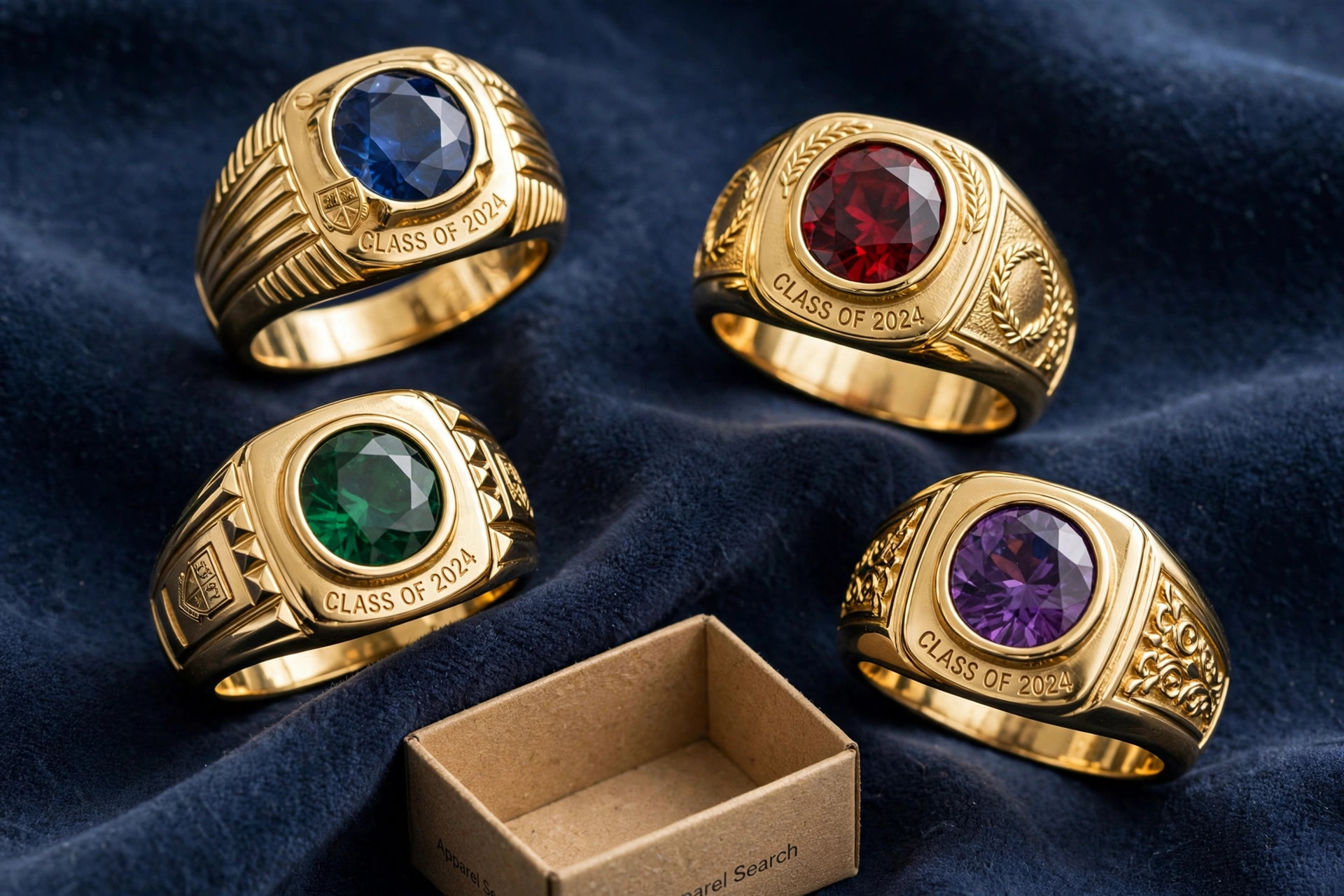
School Rings: A Symbol of Academic Pride and Tradition
A school ring, often known as a class ring or graduation ring, is a piece of jewelry worn to symbolize the completion of a specific level of education, typically high school or college. These rings carry sentimental and symbolic value, signifying academic achievements and the shared experiences of a graduating class.
What Are School Rings?
School rings are custom-designed rings featuring elements such as the school's emblem, mascot, graduation year, and sometimes the wearer's initials or name. They are personalized to commemorate the wearer's educational journey and achievements.
Cultural and Regional Significance:
School rings are more prevalent in some countries, particularly in the United States and Canada, where they are deeply ingrained in educational culture and tradition. In these countries, school rings are popular among high school and college graduates.
In other countries, while the concept of school rings exists, it may not be as widespread or deeply ingrained in the culture.
Percentage of Students Purchasing School Rings:
The percentage of students purchasing school rings varies widely based on the country, region, educational level, and cultural norms. In the United States, where school rings are a well-established tradition, a significant portion of high school and college graduates choose to purchase them.
The exact percentage can vary from year to year and from one institution to another. It's difficult to provide an exact percentage, as purchasing a school ring is a personal choice influenced by factors such as financial capacity, cultural upbringing, and the value placed on the tradition.
Tradition and Significance:
School rings serve as keepsakes, symbolizing achievements, memories, and the lasting bond among classmates. They are often worn as a reminder of one's educational journey and the shared experiences of a graduating class.
Ring ceremonies or ring dances are common traditions associated with school rings. During these ceremonies, rings are presented to students in a formal or ceremonial setting, enhancing the symbolism and importance of the ring.
Design and Customization:
School rings are highly customizable. Students can choose the type of metal, stone, emblem, and design that best represents their school and personal preferences. The design often reflects the school's identity and values.
Is it silly to purchase a high school ring if you are heading off to college?
Whether it's "silly" to purchase a high school ring before going to college is subjective and largely depends on personal preferences, sentimental attachment to high school memories, and cultural norms. Here are some considerations to help you decide:
Sentimental Value: High school rings can hold sentimental value as they represent a significant milestone in your life. They symbolize the culmination of your high school journey, including friendships, accomplishments, and growth.
Memories and Nostalgia: Wearing a high school ring can evoke fond memories and a sense of nostalgia, especially if you had a positive and memorable high school experience.
Transition to College: Some individuals prefer to focus on their upcoming college experience and choose to wait to get a college ring, which represents the next chapter of their academic journey.
Personal Style: Consider your personal style and whether you would prefer to wear a high school ring or wait to wear a college ring. Some people may enjoy wearing both, alternating based on their mood or the occasion.
Budget Considerations: Purchasing a high school ring and a college ring can be costly. If budget is a concern, you might want to prioritize one over the other or opt for a more affordable option.
Cultural Norms: Consider the cultural norms and traditions related to school rings in your region. In some places, it's a common tradition to have both a high school ring and a college ring.
Future Milestones: Think about how you envision commemorating future milestones. Some individuals choose to collect and wear rings from various stages of their academic and professional journey.
Ultimately, the decision to purchase a high school ring before heading to college is a personal one. Some people may value the sentimental aspect and choose to wear their high school ring proudly, while others may prefer to wait and prioritize their college ring. It's important to make a decision that resonates with you and brings you joy and pride.
School rings represent a tradition in many countries, particularly in the United States and Canada, and are cherished keepsakes for graduates. However, the tradition's popularity and the percentage of students purchasing school rings vary based on cultural norms, educational levels, and individual choices. Ultimately, school rings hold sentimental value, reflecting a graduate's academic journey and school pride.
If you enjoy learning about jewelry and fashion, you may want to learn about fashion schools in our fashion school directory. You are welcome to attend and then purchase a ring if you wish.
You may want to also learn about children's rings (if your kids are not yet old enough to graduate high school or college).
Design Choices and Ordering Checks
The two side panels carry most of a class ring's personal meaning, so choose designs that will still matter after graduation: a sport, instrument, subject or emblem connected with your actual school years reads better with time than a generic decoration. Check the spelling of the school name, your name and the graduation year on the order confirmation character by character, because personalized rings are commonly excluded from ordinary returns and an engraving error is far easier to prevent than to correct.
Metal choice is a balance of budget, weight and longevity. Gold class rings are substantial, repairable and hold detail well, but cost several times more than silver or alloy versions of the same size; silver-toned base alloys are hard-wearing and affordable, though they cannot always be resized. Because a class ring is bulky, many graduates wear it heavily for a few years and then keep it rather than wear it daily, which makes the keepsake qualities — correct details, a durable stone and a recorded warranty — matter as much as daily-wear comfort.
Common Questions
What stone is in most school rings, and can I choose the color?
Most class rings use a synthetic or laboratory-created center stone chosen for durability, uniform color and low cost, very often in one of the school's colors, with faceted or smooth cabochon cuts and sometimes a design visible under the stone. Natural stones are usually available at extra cost. Choosing a school color is the tradition, but many suppliers allow any color in their range, so confirm the options and whether a stone change affects the price before ordering.
How should a class ring be sized and which finger is it worn on?
Class rings are wide and heavy compared with ordinary bands, and wide rings fit more snugly, so have the exact finger measured with a wide sizer by the supplier rather than reusing a narrow-band size. In the United States the ring is traditionally worn on the ring finger of the right hand, leaving the left for a future wedding ring, but practice varies and some graduates later move it or keep it as a keepsake. Order early enough to allow a size exchange before graduation events.
What happens if a school ring is lost or damaged?
Many established class ring programs include a written replacement or warranty plan covering loss or damage for a set number of years, sometimes for a fee at purchase and sometimes included, with terms that require the original order details. Keep the receipt, metal, stone and engraving record and any warranty card separate from the ring. Without a plan, a replacement is a new order at current prices, and older designs may no longer be reproducible exactly.