Solitaire Ring Enhancer
The wrap or guard that transforms a single-stone ring
A solitaire ring enhancer is not a solitaire itself: it is a separate ring, also called a wrap, guard or jacket, designed to surround, frame or flank an existing solitaire ring and change its look without altering the original. The solitaire slips into the center of the enhancer, or sits between its two rails, so the combined piece reads as one wider, more elaborate ring with added side stones, a halo effect or a shaped outline. Enhancers are a popular anniversary and milestone addition because they mark a new occasion while keeping the original engagement ring untouched at the center. Fit is everything, since the enhancer must match the solitaire head height, stone shape and band width. This guide covers wrap, guard and insert styles, contour fitting, matching stone quality and width, and care for two rings worn as one. It also covers wearing an enhancer on its own, combining it with a plain wedding band, and the extra width and finger coverage to allow for when the pair is worn together all day.
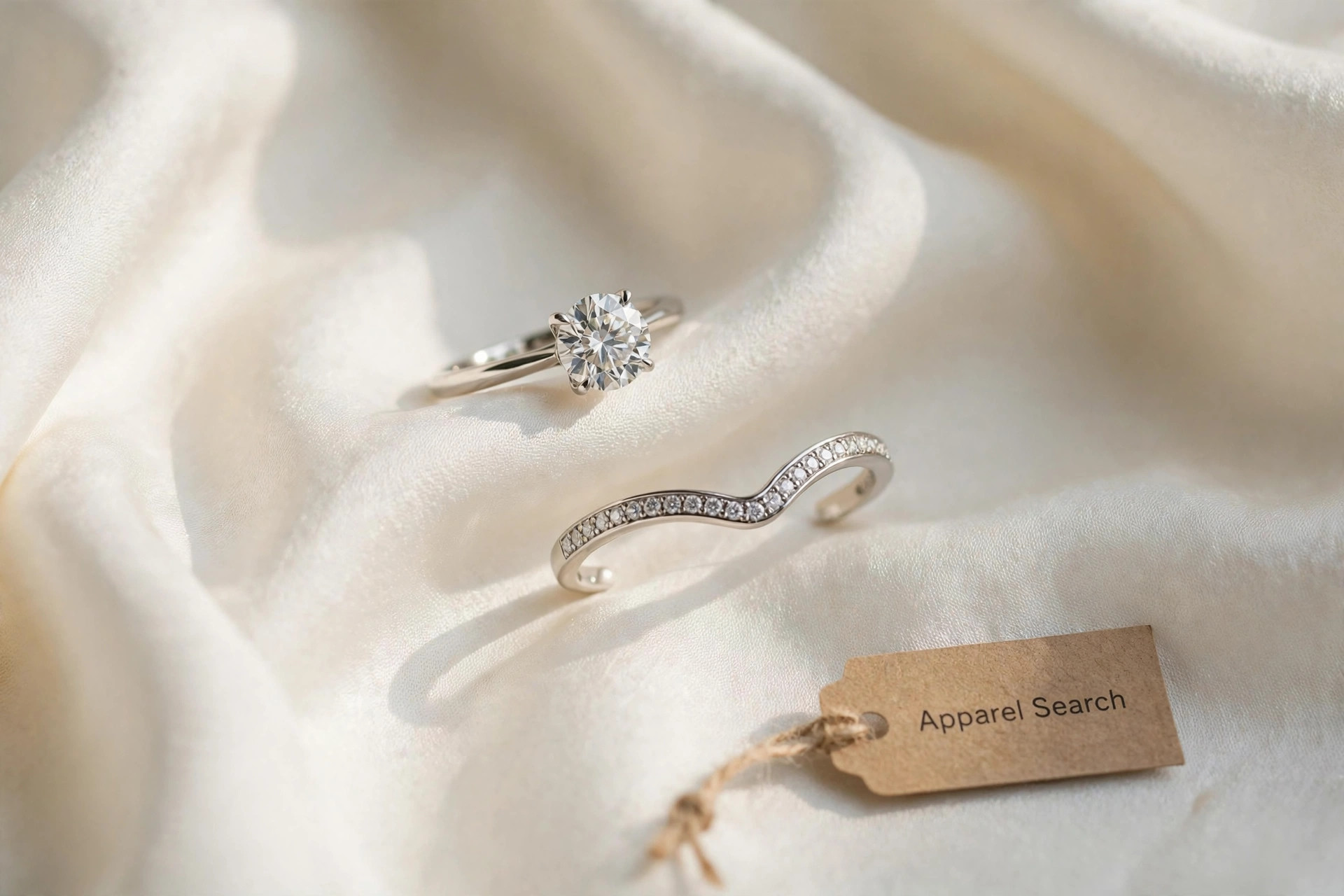
A solitaire ring enhancer, also known as a ring wrap or ring guard, is a type of ring accessory or additional band that is designed to complement and enhance the appearance of a solitaire ring. It's a popular choice for individuals looking to add a touch of style, complexity, or versatility to their solitaire engagement ring or any other solitaire ring.
Key Features of a Solitaire Ring Enhancer:
Wrap-around Design: A solitaire ring enhancer typically features a wrap-around design that surrounds or "wraps" the existing solitaire ring. It may have openings or channels that accommodate the solitaire ring.
Additional Gemstones or Designs: Enhancers may incorporate additional gemstones, accents, or intricate designs. These elements can add sparkle, color, or unique patterns to the overall look, enhancing the beauty of the solitaire ring.
Versatility: Solitaire ring enhancers are versatile and can be customized to match the style and design of the existing solitaire ring. They can be made in various metals, with different gemstones, or in different styles to suit individual preferences.
Prong Settings: Some enhancers have prong settings or settings for multiple smaller stones. These can surround the solitaire stone, creating a floral or halo-like effect, adding to the ring's elegance.
Uses of Solitaire Ring Enhancers:
Enhancing Solitaire Rings: As the name suggests, the primary use of a solitaire ring enhancer is to enhance the appearance of a solitaire ring, transforming it into a more intricate and visually appealing piece.
Creating a Set: An enhancer can be used to create a matching set with an existing solitaire ring. By adding an enhancer with a matching design, the solitaire ring can become part of a cohesive set.
Adding Versatility: Ring enhancers can allow for a change in the ring's appearance, providing options to switch between a simple solitaire look and a more elaborate, adorned design depending on the occasion or personal preference.
Improving Security: Enhancers can also improve the stability and security of the solitaire ring by holding it in place or preventing it from spinning on the finger.
The concept of enhancing or embellishing rings is not new, but the term "solitaire ring enhancer" or "ring guard" is a modern jewelry innovation that gained popularity in recent decades.
Historical Background:
Throughout history, people have sought to adorn their jewelry, including rings, to enhance their beauty and symbolism. Ancient civilizations utilized various techniques to add gemstones, filigree, or engraving to their rings, often reflecting the wearer's status, beliefs, or cultural identity.
During the Victorian era (1837-1901), intricate ring designs, often incorporating multiple gemstones and ornate details, were fashionable. These designs aimed to showcase the beauty of the gemstones and the craftsmanship of the jewelry.
Modern Emergence of Ring Enhancers:
The modern concept of a solitaire ring enhancer, as a specific type of jewelry accessory, is relatively new and gained popularity in the late 20th and early 21st centuries.
Jewelers and designers began to create ring enhancers to provide a flexible solution for enhancing the appearance of a solitaire ring. This innovation was a response to the desire for added versatility in jewelry, allowing wearers to change the look of their rings without altering the original design.
The rise of customization and personalization in jewelry further fueled the popularity of ring enhancers. Individuals wanted the ability to tailor their rings to suit various occasions or to match their evolving style preferences.
Key Features of Modern Solitaire Ring Enhancers:
Modern solitaire ring enhancers are characterized by their flexibility, allowing the wearer to slide the enhancer around the solitaire ring, providing an immediate aesthetic transformation.
Enhancers may include additional gemstones, accents, or intricate designs, providing a range of options to suit individual tastes.
Some enhancers have prong settings or channels designed to accommodate the solitaire stone, enhancing the central stone's appearance.
In conclusion, while the concept of enhancing rings has historical roots, the specific term and modern design of a "solitaire ring enhancer" as a distinct jewelry accessory is a recent development, aligning with the evolving preferences and customization trends of the contemporary jewelry market.
Solitaire ring enhancers offer a creative and stylish way to update or transform a solitaire ring without altering its original design. Whether for enhancing the existing ring's aesthetic or increasing its versatility, a solitaire ring enhancer provides a flexible and customizable solution for those looking to elevate their jewelry.
Matching Stones and Metals
An enhancer succeeds when its stones support the center without competing. Side diamonds or gems are usually graded a touch lower in size but should match the center stone in color and overall brightness, since a visibly yellower or duller guard makes the solitaire look worse, not larger. Channel, pave and shared-prong guards each give a different outline: channel reads sleek and architectural, pave reads sparkling and wide, and a shaped gemstone guard in sapphire or ruby adds a band of color around a white center.
Match the metal exactly in karat and color, especially white gold, where different alloys and rhodium wear can show as a two-tone seam between the rings. Consider total width on the finger: a solitaire plus a double guard can exceed comfortable width on a short finger, so measure the combined stack before ordering. Worn as a set, the pair should be cleaned and inspected as one ring, with attention to the contact points where the two shanks meet.
Common Questions
What is the difference between a wrap, a guard and a jacket enhancer?
The names overlap in shops, but a wrap usually curves around one side or spirals partly around the center stone, a guard typically has two bands joined underneath that straddle the solitaire on both sides, and a jacket or insert is a guard the solitaire drops into from above. All three do the same job of framing the center ring; choose by how completely you want the solitaire surrounded.
Does an enhancer need to be made for my exact solitaire?
A contoured enhancer does. Stock enhancers fit common round solitaires in standard head heights, but an unusual stone shape, a high or low head, or a wide or tapered shank will leave gaps, rubbing or an uneven top line with a generic guard. For anything non-standard, a jeweler-made enhancer traced from your ring is the reliable route, and many couples leave the solitaire with the jeweler briefly for fitting.
Should the enhancer be soldered to the solitaire?
Soldering the two together stops them spinning apart and rubbing, which protects both shanks and keeps the design aligned, and is often recommended for daily wear. The trade-off is flexibility: soldered rings can no longer be worn separately, and resizing becomes one job on a combined piece. Many wearers try the pair loose for a few weeks before deciding.