Solitaire Rings
One stone, held to catch the most light
A solitaire ring carries a single center stone with no side stones, so the entire design rests on that one gem, its cut and the setting that holds it. Diamonds are the classic choice for engagement solitaires, but sapphire, moissanite, emerald and other gems are also set as solitaires, and the plain band throws all attention on the stone color and sparkle. The setting does three jobs at once: it secures the stone, lifts it into the light, and sets the ring profile on the hand. Four-prong, six-prong, bezel and tension settings each balance security, visibility and maintenance differently, while band width, shank shape and metal color change the apparent size of the stone. This guide covers the main solitaire settings and stone shapes, how prong count and head height affect wear, pairing with a wedding band, and inspection and care. It also explains how a plain band keeps the focus entirely on the center stone, why that restraint has made the solitaire the enduring engagement standard, and how small changes in proportions alter the whole character of the ring.
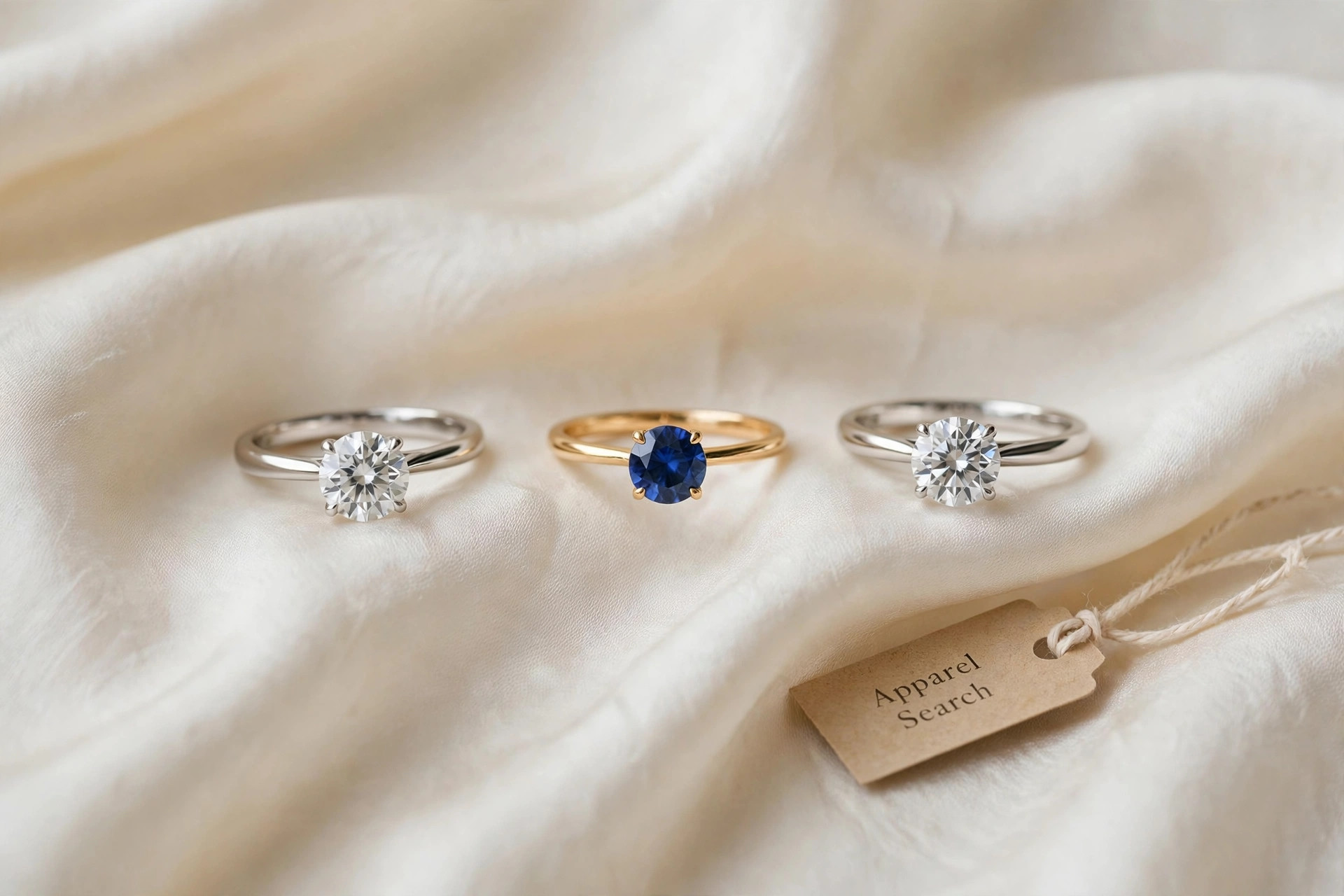
A solitaire ring is a type of jewelry, typically a ring, that features a single, prominent gemstone set in a simple band. The term "solitaire" is derived from the French word "solitaire," meaning alone or solitary, emphasizing the solitary gemstone as the centerpiece of the ring. Solitaire rings are a classic and timeless design choice, often associated with engagement rings, where a single, stunning gemstone takes center stage.
Key Characteristics of a Solitaire Ring:
Single Gemstone: The defining characteristic of a solitaire ring is that it prominently showcases a single gemstone. This gemstone can be a diamond, sapphire, emerald, ruby, or any other precious or semi-precious stone.
Centerpiece Setting: The gemstone is typically set in a way that it's raised above the band, drawing attention to its beauty and brilliance. Common settings for solitaire rings include prong, bezel, tension, or cathedral settings.
Minimalist Design: Solitaire rings have a minimalist and elegant design, focusing on the beauty and simplicity of the solitary gemstone. The band is usually plain or has minimal embellishments, allowing the gemstone to shine.
Versatility: Solitaire rings are incredibly versatile and can be crafted in various metals like gold, white gold, platinum, or silver. The gemstone can be of different shapes and sizes, offering a wide range of options to suit individual preferences.
Popular Gemstones for Solitaire Rings:
Diamonds: Diamond solitaire rings are perhaps the most iconic and widely recognized. They often feature a round, princess-cut, oval, cushion, or emerald-cut diamond. Learn about diamond rings.
Sapphires: Blue sapphire solitaire rings are popular alternatives to diamonds. Sapphires also come in other colors, providing a unique twist to the traditional solitaire design. Learn about sapphire rings.
Emeralds, Rubies, and Other Gems: Solitaire rings can showcase a variety of other gemstones like emeralds, rubies, aquamarines, or morganites, offering a spectrum of colors and styles.
Occasions for Solitaire Rings:
Engagement: Solitaire rings are a classic choice for engagement rings, symbolizing the beauty and uniqueness of a committed relationship. Learn about engagement rings.
Gifts: Solitaire rings are often given as gifts for special occasions, such as birthdays, anniversaries, or milestones, due to their timeless elegance and versatility.
Self-Purchase: Many individuals choose solitaire rings for themselves as a statement of personal style and achievement.
A solitaire ring represents simplicity, elegance, and the beauty of a single, stunning gemstone. It remains a beloved choice for engagements and special occasions, capturing the essence of the saying "less is more."
Learn about a solitaire ring enhancer.
If a solitaire ring has only "one" gemstone, could it be the "one ring"? (not unless it is made of Mithril)
Band, Metal and Everyday Practicality
The band is half the design in a solitaire. A narrow, slightly domed shank makes the center look larger and keeps the look delicate, while a wide or flat shank reads modern and substantial and resists bending better. A tapered shank, wider at the shoulders and narrower below, combines presence with comfort. Knife-edge profiles give a crisp, traditional highlight line but should be softened enough for daily comfort.
Platinum heads are prized for prongs because platinum displaces rather than wearing away, so claws stay strong longer; white gold heads need periodic rebuilding as prongs thin. Yellow and rose gold bands warm a slightly tinted stone and contrast a white head, a classic two-tone construction. Whatever the style, a solitaire needs its prongs checked at least yearly, since the single stone has no neighbors to hold it if a claw fails.
Common Questions
Is four prongs or six prongs better for a solitaire?
Six prongs hold the stone more securely and keep a round stone looking round, and if one prong is damaged five still hold. Four prongs show more of the stone, let in more light from the sides and give a squarer outline that suits many shapes. For a large or high-value stone, or an active wearer, six prongs or a bezel is the safer recommendation; for maximum openness, four sturdy prongs inspected regularly are standard.
What stone shapes work best as solitaires?
Round brilliant is the most forgiving and the brightest, and the easiest to set and match with a band. Oval, cushion and emerald cuts are popular alternatives that can look larger per carat. Pointed shapes such as pear, marquise and heart need a protective prong at each point. Because there are no side stones to distract, cut quality matters more in a solitaire than in any other ring style.
How high should a solitaire sit, and will it sit flush with a wedding band?
A medium head height balances light return, presence and practicality: very high settings catch on clothing and knock more easily, while very low settings can look flat. Flush fit depends on the head design, not height alone. A straight shank with a head that rises above the band allows a flat wedding band to sit against it; a low basket or wide bezel may need a contoured band.