Tanzanite Rings
Blue-violet color that shifts with the light
Tanzanite is a blue to violet variety of zoisite found only near Merelani in northern Tanzania, the source that gives the stone its trade name. Its defining feature is pleochroism: a single crystal shows blue, violet and flashes of burgundy or bronze depending on the viewing angle and the type of light, so a ring's color shifts as the hand moves. Most tanzanite reaches its familiar blue-violet color through gentle heating. With hardness of 6.5 to 7 on the Mohs scale, tanzanite suits rings worn with care rather than hard daily use, and it needs protection from knocks, sudden temperature change and ultrasonic cleaning. This guide covers pleochroism and color grading, cut and setting choices that show the shifting color, sizing and price factors, and cleaning and storage that keep a tanzanite ring bright. It also notes why larger stones usually show stronger color, and why a secure, low setting is the practical choice for this comparatively delicate gemstone ring.
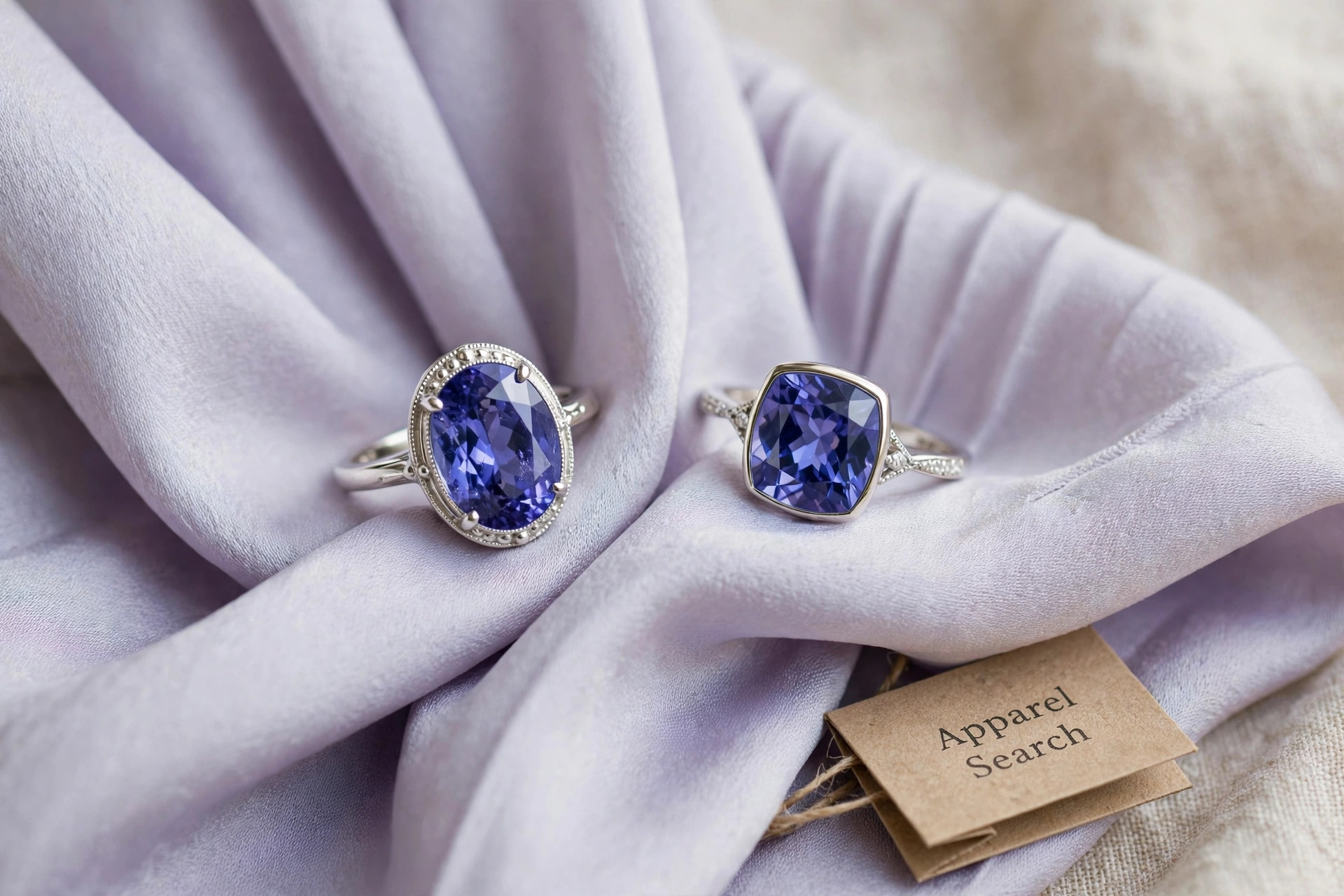
Tanzanite Rings: Unveiling the Beauty of Tanzanite
Tanzanite rings are exquisite pieces of jewelry that showcase the captivating beauty of tanzanite, a rare and alluring gemstone. Tanzanite is prized for its enchanting blue and violet hues, making it a highly sought-after choice for elegant and unique rings.
Tanzanite Gemstone:
Tanzanite is a blue to violet variety of the mineral zoisite and is specifically renowned for its stunning hues. It was first discovered in Tanzania, East Africa, in the 1960s, and has since become one of the most popular colored gemstones in the world.
The color of tanzanite can range from a rich, velvety blue to violet-blue, with the most desirable shade being a deep, saturated blue. The stone often exhibits pleochroism, displaying different colors when viewed from different angles.
Tanzanite Rings:
Tanzanite rings are designed to showcase the beauty and allure of the tanzanite gemstone. The gem is usually cut in various shapes, including round, oval, cushion, pear, and emerald cuts, to highlight its brilliance and color.
The gemstone is often set in a variety of metals, including white gold, yellow gold, rose gold, and platinum, enhancing the gemstone's vibrant hues and overall appeal.
Appearance and Features:
Tanzanite rings are known for their captivating color, which can range from a delicate violet to a deep, rich blue, with hints of red and purple. This stunning play of color makes tanzanite a versatile gemstone for jewelry.
The stone is typically transparent, allowing light to penetrate and create a brilliant sparkle. It is often faceted to enhance its natural sparkle and brilliance.
The appeal of tanzanite lies in its rarity, as it is found in only one location in the world, making it a truly unique gemstone.
Manufacturers and Designers:
Tanzanite rings are crafted by skilled jewelers and designers who appreciate the distinct beauty of tanzanite. Many well-known jewelry brands and independent artisans create custom tanzanite ring designs.
High-quality tanzanite rings are crafted with precision and attention to detail, ensuring that the gemstone is securely set and complements the overall design of the ring.
Symbolism and Meaning:
Tanzanite is believed to be a stone of transformation and spiritual enlightenment. It is associated with inner wisdom, spiritual growth, and communication.
Some also consider tanzanite to be a symbol of new beginnings, making it a meaningful choice for various life events like engagements, anniversaries, or graduations.
Jewelry designers often relish working with tanzanite stones to create exquisite rings. Tanzanite is highly valued for its captivating color, rarity, and unique optical properties, making it an appealing choice for designers looking to craft distinctive and alluring pieces of jewelry. Here are a few reasons why jewelry designers enjoy working with tanzanite stones:
Spectacular Color Range: Tanzanite offers a breathtaking array of blue and violet hues, making it a versatile gemstone that can complement various metals and designs. Designers appreciate the color range, from deep blues to soft violets, allowing for creative and diverse designs.
Appealing Optical Properties: Tanzanite is renowned for its pleochroism, meaning it can display different colors from different angles. This property adds an element of intrigue and depth to the design, allowing designers to play with how light interacts with the stone.
Versatility in Design: Tanzanite's unique color and optical characteristics make it suitable for a wide range of design styles, from vintage to modern. Designers can incorporate tanzanite into various types of rings, including solitaire, halo, cluster, or three-stone rings, giving them a broad canvas for creativity.
Rarity and Exclusivity: Tanzanite is sourced from a single location in Tanzania, making it one of the rarest gemstones. Designers appreciate the exclusivity this rarity brings, as it allows them to create one-of-a-kind, limited-edition, or bespoke pieces, adding value and desirability to their collections.
Customization Potential: Tanzanite is available in a variety of sizes and shapes, allowing designers to tailor the stone to fit their envisioned design perfectly. This flexibility enables the creation of personalized and unique rings that resonate with the wearer.
Market Demand and Appreciation: Tanzanite has gained popularity and recognition in the jewelry market over the years, attracting a growing number of admirers. Designers are drawn to the demand for tanzanite jewelry, knowing that their creations are likely to be well-received by consumers.
In summary, tanzanite's remarkable color, optical properties, rarity, and versatility in design make it an appealing choice for jewelry designers. Working with tanzanite allows designers to create stunning, distinctive rings that captivate and delight both the wearer and the observer.
Tanzanite rings are treasured not only for their captivating beauty but also for their rarity and the symbolism associated with the gemstone. Whether as an engagement ring or a statement piece, tanzanite rings are a testament to the wearer's unique style and appreciation for exceptional gemstones.
You may also want to learn about tanzanite necklaces, tanzanite earrings and tanzanite bracelets.
Color, Cut and Setting Choices
Tanzanite value starts with color: strongly saturated blue-violet stones, especially those leaning blue, command the highest prices, while pale lilac stones cost less and can still be lovely in a ring. Because color deepens with size, stones above two or three carats usually show the richest tone, and a well-cut smaller stone with good saturation is a better purchase than a large, washed-out one. Oval, cushion and trillion cuts are common, chosen to balance color return and weight.
White metal, silver, white gold or platinum, keeps the color cool and clean, while yellow gold warms it toward violet. A bezel or halo setting shields the girdle and suits the stone's moderate hardness, and prongs should be checked often because a loosened tanzanite is easily lost or chipped. December birthstone jewelry is a natural home for tanzanite, which is one of the modern December birthstones alongside turquoise and zircon.
Common Questions
What is pleochroism in a tanzanite ring?
Pleochroism means the crystal shows different colors from different directions. In tanzanite the three colors are blue, violet and a burgundy to bronze tone, so the stone can look sapphire blue in daylight, violet under warm indoor light, and flash reddish tones at some angles. Cutters orient the crystal to favor blue and violet face up, but the shifting character remains the stone's signature and its best identification clue.
Is tanzanite hard enough for a ring worn every day?
Tanzanite is 6.5 to 7 on the Mohs scale, softer than sapphire, ruby and diamond, and it has cleavage that makes it vulnerable to a hard knock. It works in a ring worn daily with a protective, low setting and sensible habits, taking it off for heavy work and sport, but it is not a set-and-forget stone. For a lifetime engagement-style ring worn without those habits, sapphire is the more durable blue choice.
How should I clean and care for a tanzanite ring?
Clean it only with warm water, a little mild soap and a very soft brush, then rinse and pat dry. Never use ultrasonic or steam cleaners, which can damage the stone, and avoid sudden temperature changes, such as very hot water on a cold stone. Store the ring separately in a soft pouch, have its setting checked regularly, and keep it away from harder stones that could scratch it.