Children's Bodysuit Factory Directory
Manufacturing guide for baby and children’s bodysuits: fabrics, snaps, sizing and safety.
The bodysuit is the foundation garment of a baby’s wardrobe: a one-piece knit garment with snaps at the bottom that keeps the garment in place, makes changing easy and layers smoothly under other clothing. This directory covers the factories that manufacture children’s and baby bodysuits, and explains how the product is made so buyers can specify it properly.
At this time the directory carries no factory listings in this specific category. The related factory directories linked below cover children’s clothing factories and bodysuit factories more broadly, and factories that wish to be listed in this category can contact Apparel Search through the Add Your Company page in the footer.
Related Factory Directories
How Children’s Bodysuits Are Made
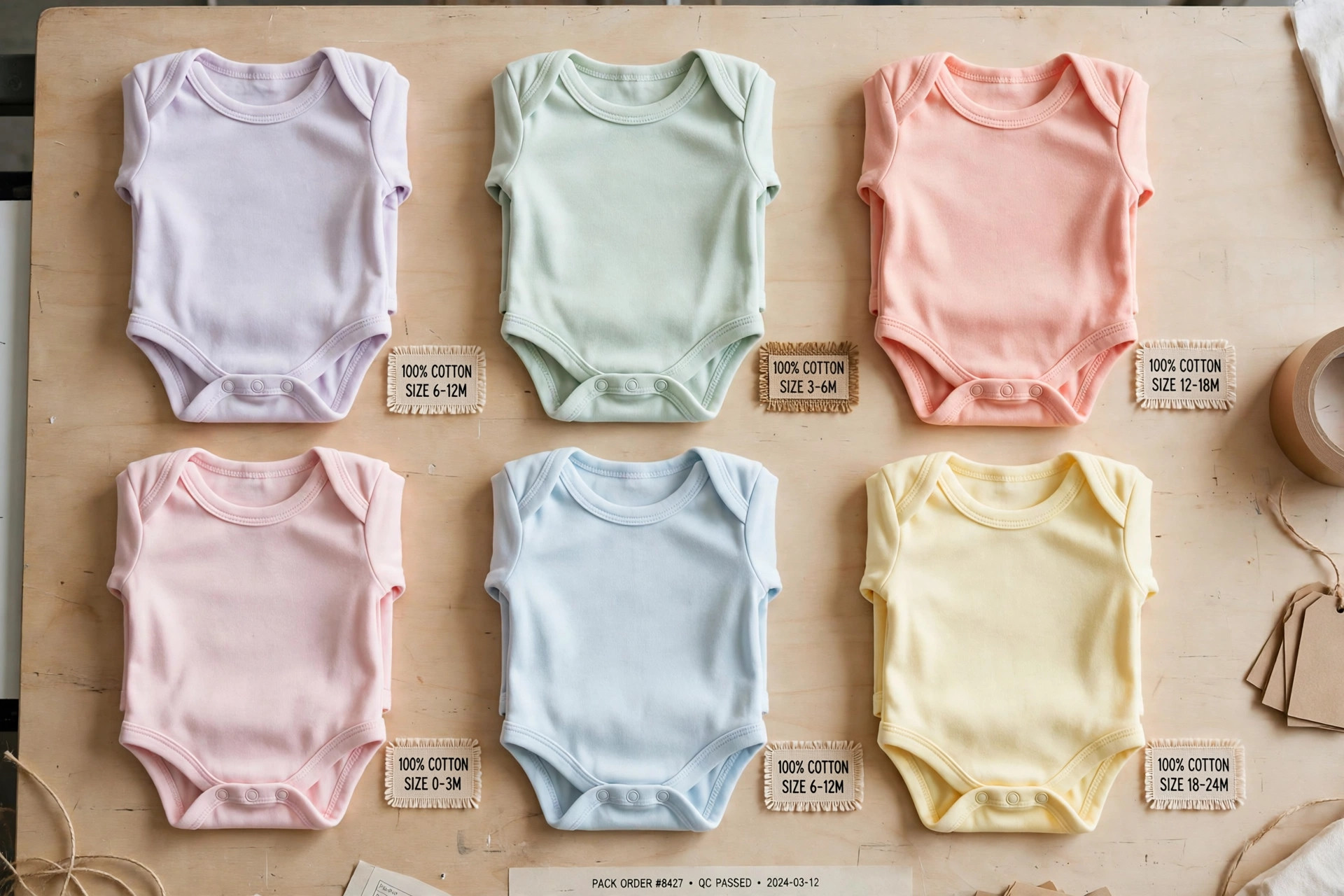
Most bodysuits are cut from soft cotton or cotton-blend jersey and interlock knits, often with a small percentage of elastane in the binding so the neckline and leg openings recover their shape. The classic construction uses an envelope or lap-shoulder neckline that stretches wide for dressing, ribbed binding at the neck and legs, and a reinforced snap panel at the bottom. Factories sew the garment on overlock and coverstitch machines set up for knits, then set the snaps with a press that must align each stud and socket precisely, because a misaligned snap is the most common defect in this product.
After sewing, each garment is inspected, folded and packed by size. Printing, when a design is included, is done with water-based inks chosen for softness against skin, and embroidery on infant sizes is backed with a soft protective layer so no rough stitching touches the wearer.
Fabrics, Snaps and Safety Standards
Fabric choice is a safety and comfort decision as much as a cost one. Buyers commonly specify combed cotton interlock for its smooth face, organic cotton for premium lines, or cotton-polyester blends where durability and price matter most. Snaps must be free of lead and nickel to meet children’s product regulations in the United States and Europe, and factories supplying those markets work to standards such as CPSIA in the US and OEKO-TEX certification for textiles. Sleepwear-adjacent bodysuits may also need to meet flammability rules, which is why many are made snug-fitting or from flame-resistant treated fabric.
Labels carry size, fiber content and care instructions, and for infant products the size is stated by age range and weight as well as height, so a factory’s labeling and packaging capability is part of what a buyer is sourcing.
Sizing and Ordering From a Bodysuit Factory
Children’s bodysuits are produced in a ladder of sizes, typically newborn, 0-3 months, 3-6 months, 6-9 months, 12 months, 18 months and 24 months, then toddler sizes. When requesting quotations, give the factory the size range, fabric weight in grams per square meter, snap specification, print or embroidery artwork if any, and your packaging format, whether individual polybags, folded sets or hanging retail packs. Ask about the factory’s testing arrangements for snap pull strength and lead content, and request production samples in the smallest and largest sizes, since grading errors show up at the extremes of the range first.
Photos

Common Questions
What fabric is best for children’s bodysuits?
Combed cotton interlock is the most common choice because it is soft, breathable and holds snaps well. Organic cotton is used for premium lines, and cotton blends with a little elastane in the binding help necklines and leg openings keep their shape.
What safety rules apply to baby bodysuits?
Snaps and trims must meet lead and nickel limits under rules such as CPSIA in the United States, fabrics are often certified to OEKO-TEX Standard 100, and sizes sold as sleepwear must meet flammability requirements, usually by being snug-fitting.
Why do bodysuit factories test snap strength?
Snaps are pulled open and closed many times a day, and a snap that detaches is a hazard on an infant garment. Factories press snaps with calibrated machines and pull-test samples from each production batch to confirm they hold to the required force.