Children's Swimwear Factory Directory
Manufacturing guide for children’s swimwear: stretch fabrics, UPF ratings and construction.
Children’s swimwear is a technical product made from stretch knit fabric that has to survive chlorine, salt water, sunscreen and constant sun while staying comfortable for the wearer. This directory covers factories manufacturing kids swimsuits, swim trunks and sun-protective swim garments, and explains the manufacturing points buyers should understand before placing an order.
At this time the directory carries no factory listings in this specific category. The related directories below cover children’s clothing factories, swimwear factories generally, and factories making UV protective clothing, and manufacturers that wish to be listed here can contact Apparel Search through the Add Your Company page in the footer.
Related Factory Directories
How Children’s Swimwear Is Made
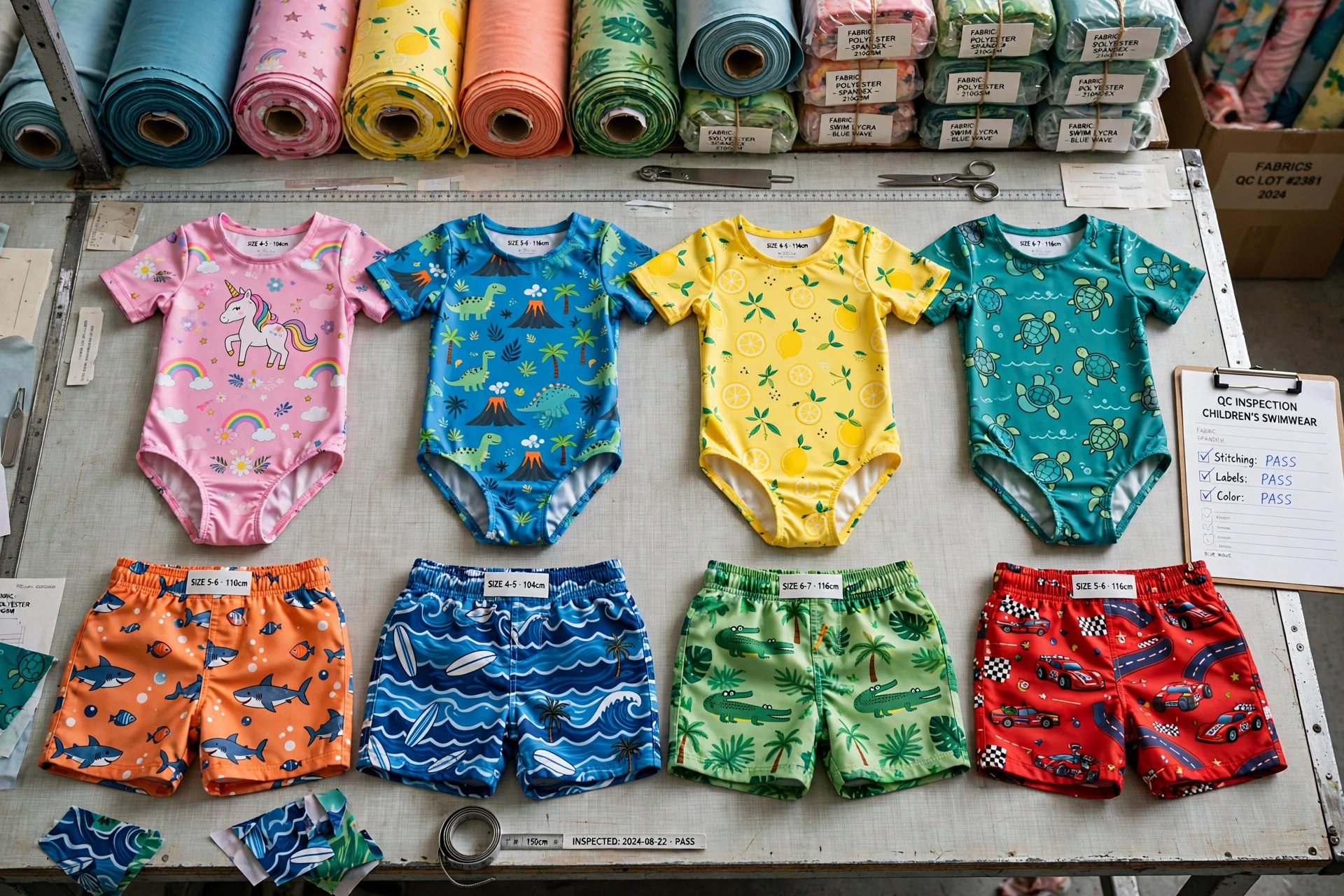
Swimwear production is specialist knitwear work. Garments are cut from four-way stretch fabric, usually nylon or polyester blended with elastane, and sewn on overlock and flatlock machines that stretch with the fabric instead of fighting it. Seams on children’s styles are kept flat and soft, elastic is applied inside a fabric channel or binding so it does not rub, and one-piece suits are lined at the front with a light powernet or tricot. Rash guards and sun suits, now a large share of this category, are cut with long sleeves and higher necklines and finished with flat seams for the same comfort reasons.
Print quality matters commercially: children’s swimwear is sold on bright prints, so factories use sublimation printing on polyester for sharp, chlorine-resistant color, or rotary printing on nylon. Each production batch is checked for print registration, elastic tension and seam stretch, because a seam that cracks when stretched is a returned garment.
UPF Ratings and Fabric Choices
Sun protection is a measurable part of this product. Fabrics are tested and rated UPF, with UPF 50+ blocking more than 98 percent of ultraviolet radiation, and the rating depends on the fabric’s weave density, fiber and color rather than a coating that washes out. Polyester holds color and resists chlorine longer than nylon, while nylon feels softer and is often chosen for fashion-led lines. Buyers should ask a factory for the test report behind any UPF claim, specify chlorine-resistant elastane where the line is aimed at swim lessons and pools, and confirm the fabric weight, since very light fabrics stretch thin and lose both coverage and protection.
Sizing and Ordering From a Swimwear Factory
Children’s swimwear is graded by age and height, and fit tolerance is tighter than on ordinary clothing because the garment works by stretch. Provide the factory with a size chart stating body measurements rather than only age labels, specify the stretch percentage expected of the fabric, and approve a fit sample washed in chlorinated water, since elastane degrades with exposure and a suit should still fit after repeated swims. Also confirm labeling: fiber content, UPF claim wording and care instructions (rinse after use, shade dry) are normally printed on the garment’s label or packaging and are part of the factory’s finishing work.
Common Questions
What does UPF 50+ mean on children’s swimwear?
UPF is the ultraviolet protection factor for fabric. A UPF 50+ rating means the fabric allows less than 2 percent of ultraviolet radiation to pass through. The protection comes from the fiber, weave and color, so it does not wash out, though stretched or worn fabric protects less.
Is polyester or nylon better for kids swimwear?
Polyester resists chlorine and holds printed color longer, which suits swim lessons and pool use. Nylon is softer and drapes better, which suits fashion styles, but it fades and degrades faster in chlorinated water. Many factories blend either fiber with chlorine-resistant elastane.
Why are children’s swimsuits sewn with flat seams?
Flatlock and overlocked seams lie flat against the body and stretch with the fabric, so they do not chafe during swimming or leave pressure marks. On a close-fitting stretch garment, a raised seam is the first source of discomfort and returns.