Children's Underwear Factory Directory
Manufacturing guide for children’s underwear: fabrics, elastic, sizing and packaging.
Children’s underwear is a high-volume basics category: briefs, boxer briefs, undershirts, vests and training pants produced in large runs to tight cost and quality targets. This directory covers the factories that manufacture these products and explains the production points that matter to buyers sourcing them.
At this time the directory carries no factory listings in this specific category. The related directories below cover children’s clothing factories and clothing factories generally, and manufacturers wishing to be listed in this category can contact Apparel Search through the Add Your Company page in the footer.
Related Factory Directories
How Children’s Underwear Is Made
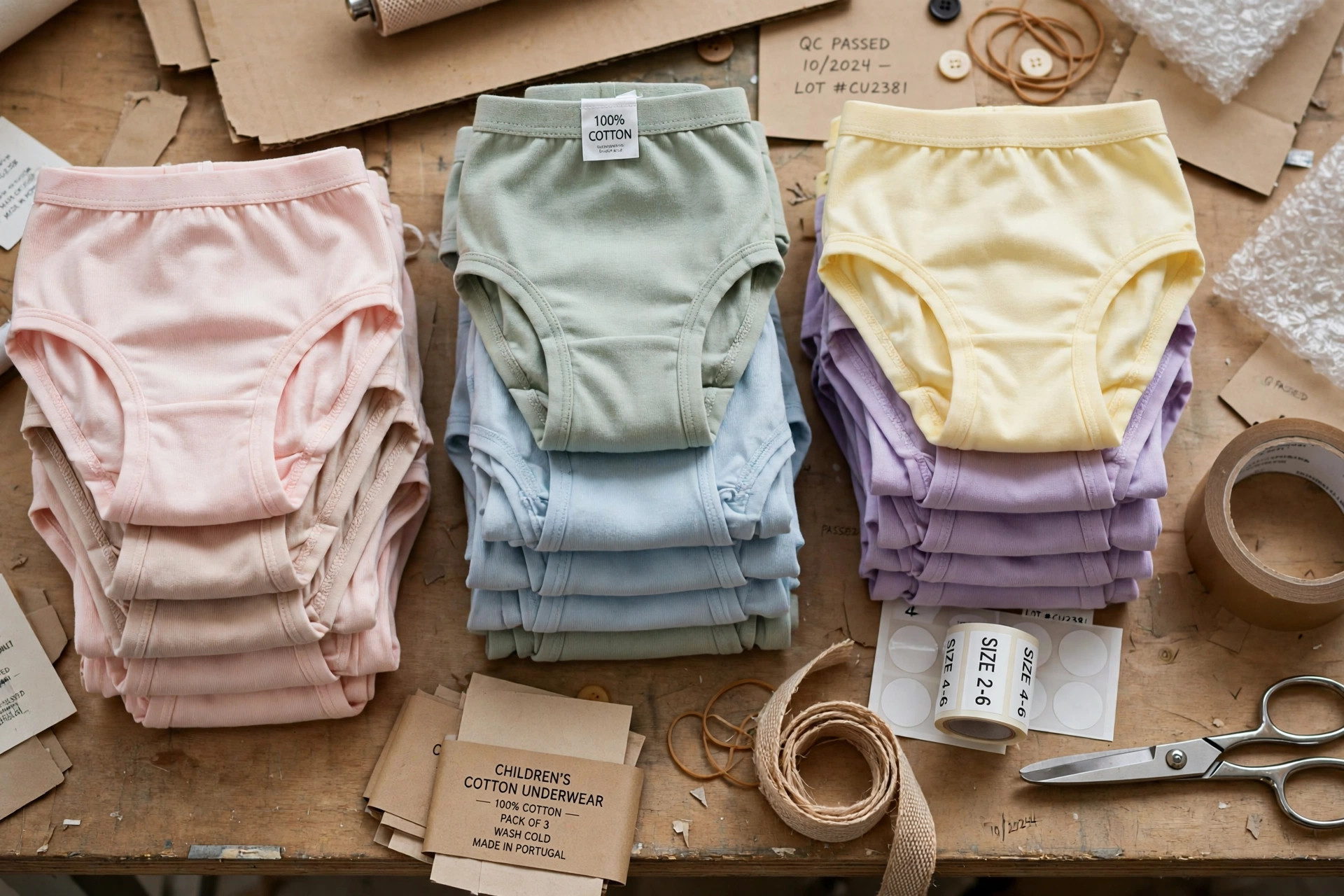
Production is built for volume and consistency. Cotton and cotton-blend jersey is cut in multi-ply lays, panels are joined on overlock machines, and waist and leg elastic is applied and covered in the same operations so no raw elastic touches the wearer. Briefs and boxer briefs are assembled with flat, soft seams; undershirts and vests are hemmed and bound at neck and armholes; training pants add absorbent layered panels. Because these garments are bought in multi-packs and replaced often, factories focus on repeatability: the same size must measure the same in January and June, so marker making, cutting accuracy and elastic tension settings are documented and checked by batch.
Fabrics, Elastic and Product Safety
Combed cotton is the standard fabric for its softness and absorbency; cotton-polyester blends trade a little softness for durability and lower cost, and modal blends appear in premium lines. Elastic must be latex-free where a buyer specifies it, and all components, including prints and labels, must comply with children’s product rules in the destination market, such as CPSIA lead and phthalate limits in the United States. Where garments are sold as sleepwear they may also fall under flammability rules, which factories meet with snug fits or approved fabrics. Buyers should obtain the factory’s test reports for the exact fabric and elastics in their order rather than a generic certificate.
Sizing, Packing and Ordering
Sizes are sold by age bands (such as 2-3, 4-5, 6-7 years and upward) with waist measurements behind them, and packs are usually assembled as three or five garments in one size or an assorted print mix. When requesting a quotation, state the styles, fabric weight, elastic width and type, print requirements, and the retail pack format, because folding, polybagging and carton packing are a visible part of the unit cost in this category. Ask for pre-production samples in the full size range and a shrinkage test result: cotton underwear is expected to shrink a controlled amount in its first washes, and patterns are cut with that allowance built in. Also confirm how the factory handles print placement on packaged multi-packs, since the top garment in the pack is the one the shopper sees, and misregistered prints on that garment are a common, avoidable retail complaint. Finally, agree the carton assortment in writing: mixed-size cartons save the factory time and cost the buyer sorting time at the warehouse, and the cheaper option depends on which side of that trade the program sits.
Common Questions
What fabric is most used for children’s underwear?
Combed cotton jersey is the standard because it is soft, absorbent and breathable. Cotton-polyester blends are used where durability and price matter, and modal or cotton-elastane blends appear in premium ranges for a softer, closer fit.
How is children’s underwear sized?
It is sold in age bands such as 2-3, 4-5 and 6-7 years, backed by waist and height measurements. Because brands grade differently, buyers comparing factories should work from measurement charts and fit samples rather than age labels alone.
What should a buyer verify before ordering underwear from a factory?
Verify fabric composition and weight, elastic type and width, shrinkage test results, compliance test reports for lead and phthalates in the destination market, and the exact retail pack format, since packing is a significant part of the unit cost.