Dog Harness Guide
Straps, types and fit — a working accessory with a sense of style
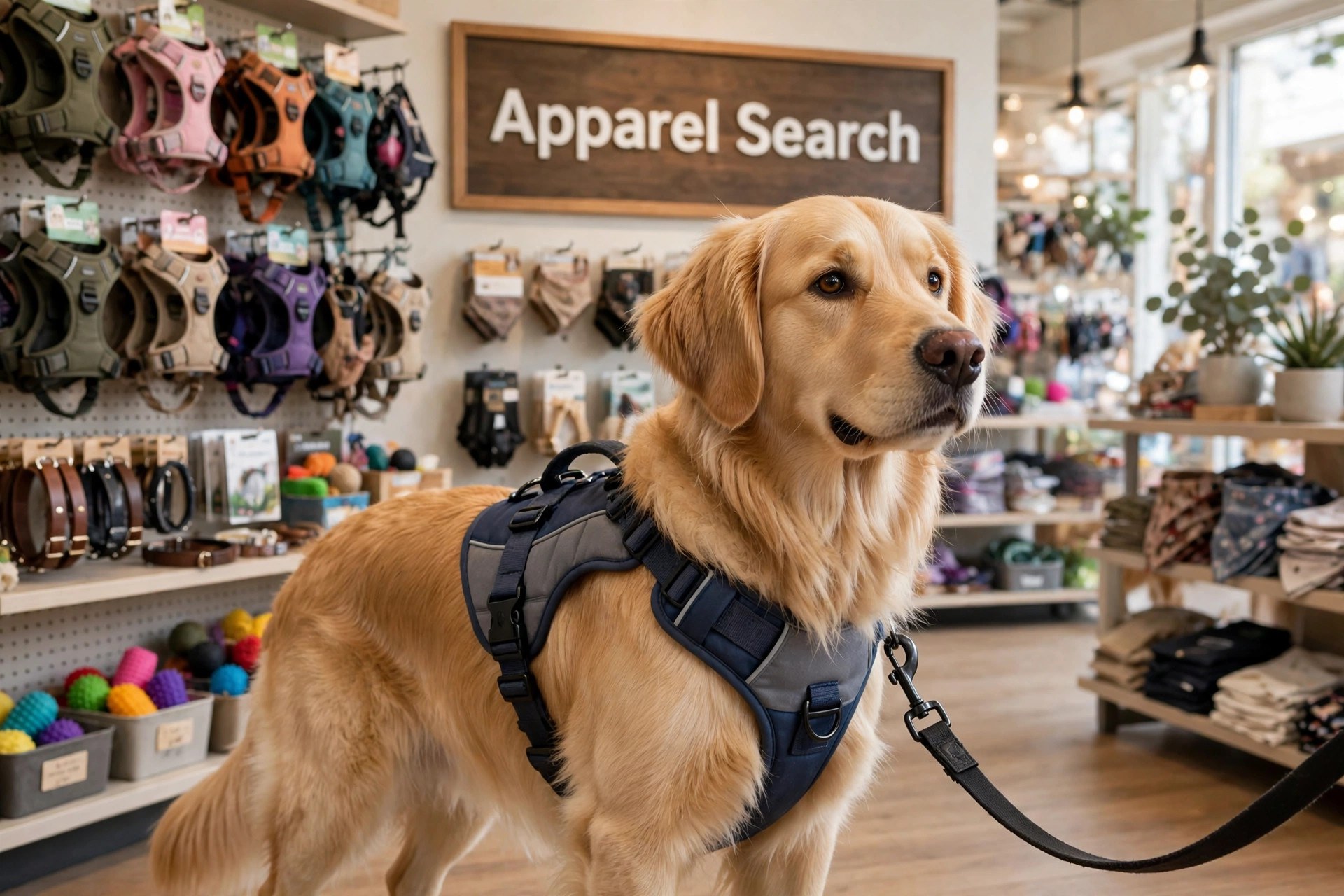
Is a dog's harness considered clothing, an accessory, or equipment? Because Apparel Search is a fashion website, this type of item counts here as a doggy fashion accessory. Although it is worn for a purpose, it can also give a dog a sense of style — harnesses come in a wide variety of styles, materials and color options.
Generally speaking, a dog harness is a piece of equipment consisting in part of straps that surround the dog's torso. It is used to guide, hold, and lift the dog for restraint or to utilize its pulling power. Harnesses generally have both a strap on the chest in front of the forelimbs and a strap around the torso behind the forelimbs, with straps in between connecting the two, and a D-ring suitable for pet identification tags and for a leash to clip to is important.
Start Here
Shop Dog Clothing
Shop Dog Clothing on AmazonShop Dog Clothing on eBayThese links open the Apparel Search shopping guides for Amazon and eBay, where the product links are kept in one place.
Types of Dog Harnesses
The harness family is broad because the jobs are different. Assistance dog harnesses equip dogs that help a person with a disability. Chest harnesses are the everyday walking form, and no-pull harnesses are arranged to discourage pulling on the leash. Y-harnesses are named for the Y shape their straps make across the chest, keeping the shoulders free.
Lifting harnesses support a dog's weight for guidance and mobility help, and rehabilitation harnesses serve dogs recovering from injury or surgery. Sled dog harnesses are built to utilize a dog's pulling power for hauling people and items, and tactical dog harnesses are the rugged, gear-carrying form. Most often, harnesses restrain an animal — but they also assist people with disabilities and haul loads, which is why fit and build quality matter so much.
Choosing a Quality Harness
When shopping for products for your pet, quality is obviously important. Put time and effort into selecting a good dog harness because it may affect the comfort of your furry friend. And if the harness is meant to keep him or her from pulling away from you, you clearly don't want cheap material that could potentially break.
Check the straps for sound stitching and hardware, confirm the chest and torso straps sit where they should without chafing the forelimbs, and make sure the D-ring is firmly anchored — it carries both the leash clip and can hold pet identification tags. A harness that fits and holds up is the whole point; style is the bonus. For neck-worn identification and control instead, see the dog collars guide.
Car Safety Harnesses
Do additional research on car safety harnesses before traveling with a dog. Safety harnesses designed for use in an automobile restrain the animal in a car seat using the car's seat belt.
These harnesses are marketed as reducing the risk of injury to a pet that is riding in a vehicle during a traffic collision. A walking harness is not automatically a car harness — choose a harness made and tested for the vehicle, and fit it as carefully as any other type.
Photos

Common Questions
Is a harness better than a collar for walking a dog?
A harness spreads leash pressure across the chest and torso instead of concentrating it on the neck, which many owners and trainers prefer for dogs that pull. A collar remains the natural place for ID tags — and a harness D-ring can carry tags too. Many dogs wear both, each for its job.
What are the main types of dog harness?
Assistance, car safety, chest, lifting, no-pull, sled dog, rehabilitation, tactical and Y-harnesses — each arranged for a different job, from everyday walking to pulling loads, mobility support and vehicle restraint.
What should I check when buying a dog harness?
Quality of materials and stitching (a harness that breaks fails at its one job), correct placement of the chest and torso straps without chafing, and a firmly anchored D-ring for the leash and ID tags.
References & Further Reading
Meet Coco
Coco, a German Shorthaired Pointer, shows off her favorite dog gear and outfits on her own YouTube channel.
Watch Coco on YouTubeSee Coco in action