Dog Collars
Styles, fit and choosing the proper collar for your dog
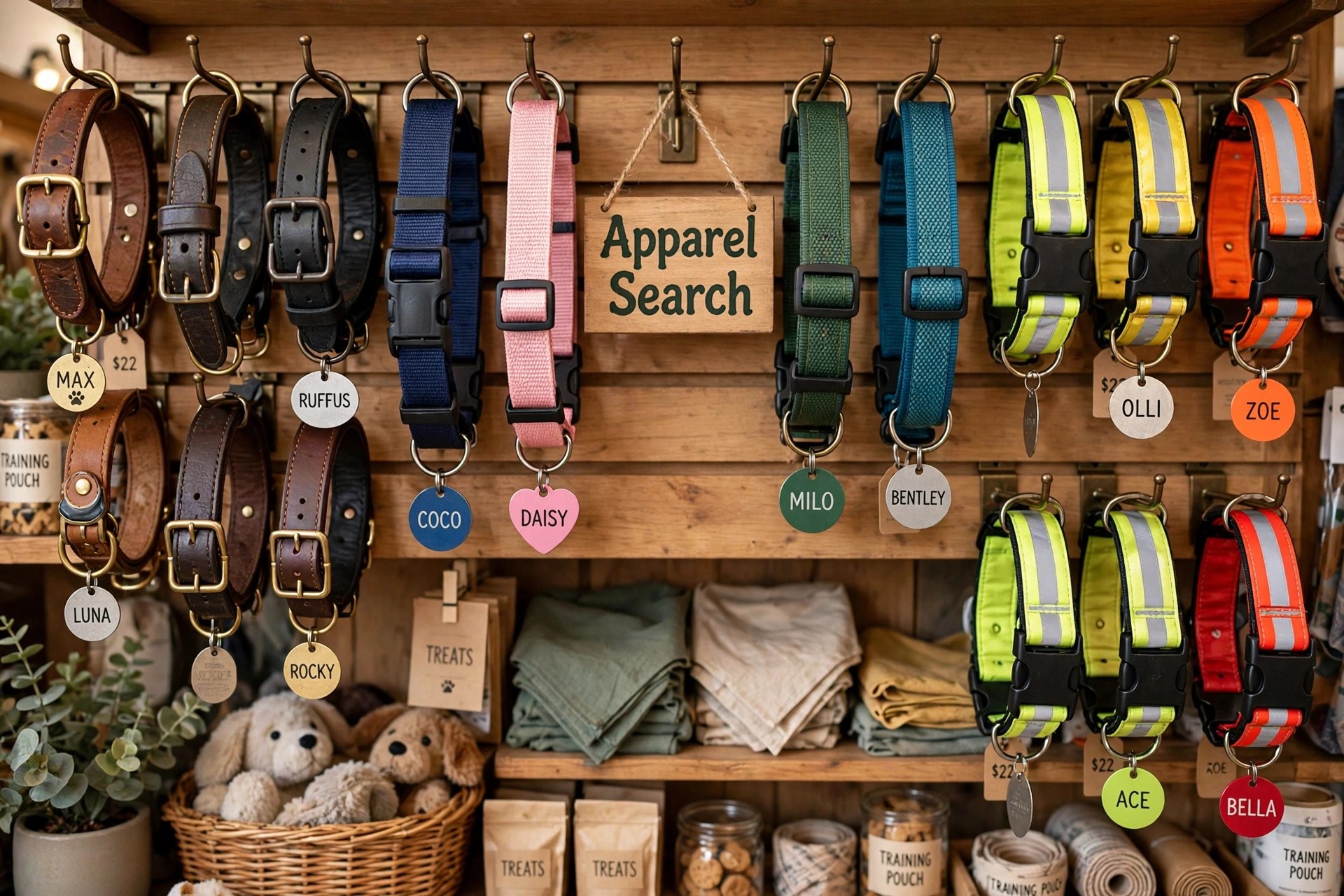
Dog collars come in a wide variety of styles, fabrics and sizes, and it is important to select the proper collar for your dog. The use of a collar is important for a variety of reasons — walking control, training, and identification. Don't forget to include an ID tag: include the dog's name and your phone number in case your furry friend gets lost.
Everyday collars can also help a dog express personal style; they have functionality as well. This page explains the main collar types — martingale, flat, head and GPS collars — how each should fit, and the types to approach with caution.
Start Here
Shop Dog Clothing
Shop Dog Clothing on AmazonShop Dog Clothing on eBayThese links open the Apparel Search shopping guides for Amazon and eBay, where the product links are kept in one place.
Martingale Collars
The martingale collar is also known as a limited-slip collar. It is designed for dogs with narrow heads such as Greyhounds, Salukis and Whippets, and its purpose is to help prevent the dog from slipping out. If you have a fearful dog that tries to back up, you understand how they can potentially slip out of some types of collars.
The martingale consists of a length of material with a metal ring at each end; a separate loop of material passes through the two rings, and the leash attaches to a ring on this loop. When the dog tries to back out of the martingale, the collar tightens around their neck. If the collar is properly adjusted, it will tighten just to the size of the dog's neck, without choking them. Carefully study the proper method for sizing, and periodically check the adjustments to make sure they are proper.
Flat Collars and Head Collars
A flat collar should fit comfortably on the dog's neck; it should not be so tight as to choke the dog nor so loose that they can slip out. The general rule of thumb says you should be able to get two fingers underneath the collar. The flat collar is the everyday default for most dogs, and the natural carrier for the ID tag.
The head collar is good for strong, energetic dogs who may jump and/or pull. Because the halter is around the dog's muzzle, instead of their neck, the dog loses a great deal of leverage and is unable to pull on the leash with the full weight of their body. To be effective, the head collar must be properly fitted — and you should NOT yank on the leash; gently steer your dog instead.
GPS Collars and Other Types
A GPS collar uses global positioning satellite technology to help locate your buddy if they get lost. Unfortunately, they often rely on the availability of satellites and battery life, so a GPS collar backs up — never replaces — a legible ID tag. Tracking-collar makers such as Garmin, SportDog and Dogtra serve the sporting-dog market, and Lion Country Supply in Pennsylvania supplies hunting dog gear.
Other types of dog collar include vibrating collars, shock collars, pinch collars, Elizabethan collars, bark control collars and flea & tick collars. Apparel Search recommends against using a choke chain collar: the problem with this type of collar is that you can't control how much it chokes. The martingale is a better option because you can set how much it can tighten. The Humane Society of the United States publishes guidance on selecting dog collars, linked in the references below.
More Pet Clothing Guides
Common Questions
How tight should a dog collar be?
Use the two-finger rule for a flat collar: you should be able to get two fingers underneath it. Tighter risks choking; looser risks the dog slipping out. Check the fit periodically, especially on growing dogs.
Why choose a martingale collar?
A martingale, or limited-slip collar, is designed for narrow-headed dogs such as Greyhounds, Salukis and Whippets, and for fearful dogs that back up and slip ordinary collars. Properly adjusted, it tightens only to the size of the dog's neck — unlike a choke chain, whose tightening cannot be controlled.
Do GPS collars replace ID tags?
No. GPS collars depend on satellite availability and battery life, either of which can fail when a dog is lost. Always include an ID tag with the dog's name and your phone number as the backup that always works.
Meet Coco
Coco, a German Shorthaired Pointer, shows off her favorite dog gear and outfits on her own YouTube channel.
Watch Coco on YouTubeSee Coco in action