Horse Blankets
Turnout and stable blankets, fill weights and denier ratings — and how to measure a horse for a blanket that fits.
A horse blanket is working equipment, not decoration: it manages the weather a horse lives in, protects a clipped or aging coat, and keeps a stabled horse clean enough to ride on short notice. Choosing one means choosing among blanket types, fill weights and shell strengths that sellers describe in a vocabulary of grams and denier — this guide translates that vocabulary and explains how to measure and fit a blanket correctly, as part of the wider horse clothing guide.
Not every horse needs blanketing — a healthy, unclipped horse with shelter and a full winter coat is well equipped by nature. Blankets earn their place for clipped horses, thin-skinned and older horses, horses in hard weather without natural shelter, and show horses kept clean and short-coated. Deciding whether to blanket comes first; this page is about doing it properly once the decision is made.
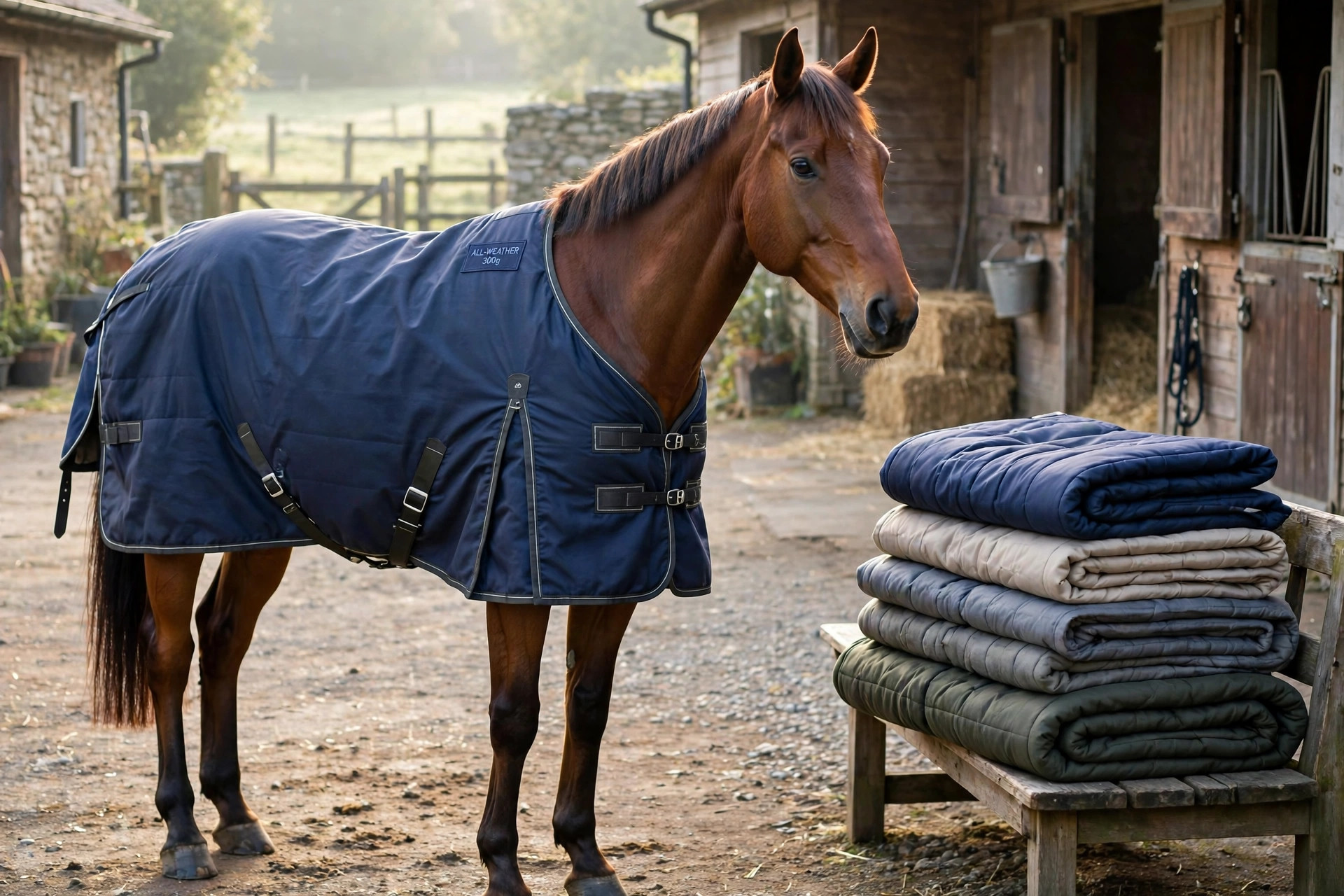
Turnout Blankets vs Stable Blankets
The fundamental divide is waterproofing. A turnout blanket is built for the field: a tough, waterproof and breathable outer shell that sheds rain and mud while the horse is outdoors, with fill underneath according to the weather. A stable blanket is built for the barn: a warm, quilted layer without a waterproof shell, meant for a horse standing in a dry stall. The two are not interchangeable — a stable blanket turned out in rain soaks through and becomes a cold, heavy liability, and a turnout worn permanently indoors is hotter and harder than the horse needs.
Many horses own both, with the stable blanket sometimes layered under a turnout in severe weather. A third, lighter category, the sheet, provides a no-fill layer for keeping a clean horse clean before a show, or a light barrier against flies and sun in summer versions. The pet clothing guide places blankets in the broader context of clothing for every animal on the property.
Fill Weights: Sheets, Light, Medium and Heavy
Blanket warmth is sold by fill weight in grams. A sheet has no fill (0 g) — wind and rain protection only. A lightweight blanket carries roughly 50 to 100 g of fill for cool, early-autumn weather. A medium weight, around 200 g, is the workhorse of most winters for clipped horses. A heavyweight carries 300 g and up, for hard cold, fully clipped horses, and animals that feel winter keenly.
The right weight depends on the horse, not just the thermometer: clipped horses need more fill than unclipped ones at the same temperature; horses with run-in shelter can wear less than horses standing in open weather; and an over-blanketed horse that sweats under its blanket is worse off than a slightly cool one, because a damp coat chills. Many owners keep two weights and change with the forecast, checking by sliding a hand under the blanket at the shoulder — the skin should feel warm, never hot or clammy.
Denier: How Tough the Shell Is
Turnout shells are graded by denier, a measure of the thickness of the fibers in the fabric. Common ratings run from about 600 denier for light-duty shells, through the very common 1200 denier, up to 1680 denier 'ballistic' weaves at the tough end. Higher denier resists tears from fences, branches, playful companions and the horse's own rolling — the leading causes of blanket death.
Denier buys durability, not warmth; a 1680D sheet is still a sheet. Horses that live alone and treat their clothing gently do fine at 600D, while group turnout with a known blanket-wrecker in the herd makes 1200D or higher the economical choice despite the price. Whatever the rating, waterproofing depends on the coating or membrane under the weave, which is why two blankets of equal denier can perform very differently in a week of rain.
How to Measure a Horse for a Blanket
Blanket size is a single measurement in inches, taken with a soft tape from the center of the chest, around the widest part of the body, to the point of the tail — the full method is laid out in the pet clothing sizes and measuring guide. Have the horse standing square on level ground and keep the tape level around the barrel; a measurement taken over a resting hip or a turned head can be two inches off, which is a full size.
Blankets are sold in steps of roughly three inches (…75, 78, 81, 84…). A horse that measures between steps usually takes the larger size, since a slightly generous blanket shifts less than a tight one that pulls at the chest. Note the horse's build as well as its number: high-withered and broad-chested horses suit particular cuts — high-neck and V-front closures respectively — and big-shouldered horses benefit from shoulder gussets that let the foreleg move without dragging the blanket backward.
Fit Checks and Blanket Care
On the horse, a correct blanket closes at the chest without gaping or strain, crosses its belly straps snugly enough that a leg cannot pass through a loop, and covers the hindquarters without hanging past the tail. Watch the horse walk: the blanket should stay centered, not creep to one side. After the first week of wear, check the shoulders and withers for rubs — the earliest warning of a poor fit — and consider a shoulder guard or a different cut if hair is being worn away.
Blankets should come off regularly — daily in an ideal routine — so the skin can be inspected and the horse groomed; a blanket left unchecked for weeks can hide weight loss, rain scald and rubs. Mud brushes off when dry; shells can be professionally washed and reproofed to restore water repellency, and every horse wearing blankets through winter needs a spare, because a soaked or damaged blanket has to come off immediately, whatever the weather. Store blankets clean, dry and folded away from rodents, and they will serve for years.
Shop Horse Blankets
Shop Horse Blankets on AmazonApparel Search may earn a commission from qualifying purchases made through links on this page.
Common Questions
What is the difference between a turnout blanket and a stable blanket?
A turnout blanket has a waterproof, breathable outer shell and is made for outdoor wear in rain and mud. A stable blanket is a warm quilted layer with no waterproofing, made for a horse standing in a dry stall. Turning a horse out in a stable blanket in wet weather leaves it soaked and cold, so the two are not interchangeable.
What weight of blanket does my horse need?
It depends on the horse and its clip as much as the weather. Sheets have no fill, lightweights carry about 50 to 100 grams, mediums around 200 grams, and heavyweights 300 grams or more. Clipped horses need heavier weights than unclipped horses at the same temperature. Check by hand under the blanket: the skin should feel warm, never hot or sweaty.
What does denier mean on a horse blanket?
Denier measures the thickness of the fibers woven into the shell fabric, and it grades toughness rather than warmth. Around 600 denier suits a gentle horse living alone; 1200 denier is the common all-round rating; 1680 denier ballistic weaves withstand hard wear and group turnout. Waterproofing comes from the coating beneath the weave, not from the denier itself.
How do I measure my horse for a blanket?
With a soft tape, measure from the center of the chest, around the widest part of the barrel, to the point of the tail, keeping the tape level while the horse stands square. The result in inches is the blanket size; sizes step by about three inches, and a measurement between steps usually takes the larger size.
Can a horse wear a blanket all winter?
A horse can be blanketed through the season, but the blanket should come off regularly — ideally daily — for grooming and skin checks, changing weight with the weather. Keep a spare so a wet or damaged blanket can be swapped immediately, and check shoulders and withers for rubs.