Pet Clothing Sizes & Measuring Guide
How to measure a dog, cat or horse for clothes, read a pet size chart, and choose a fit that stays comfortable all day.
Pet clothing only works when it fits. A sweater that rides up, a coat that restricts a shoulder, or a blanket that slips sideways will come off — or be chewed off — within the hour. This guide explains how to take the measurements every pet size chart is built on, how to read those charts when brands disagree, and how to check the fit of a finished garment on the animal that has to wear it. It sits alongside the wider Pet Clothing Guide, which covers clothing for every animal in the household.
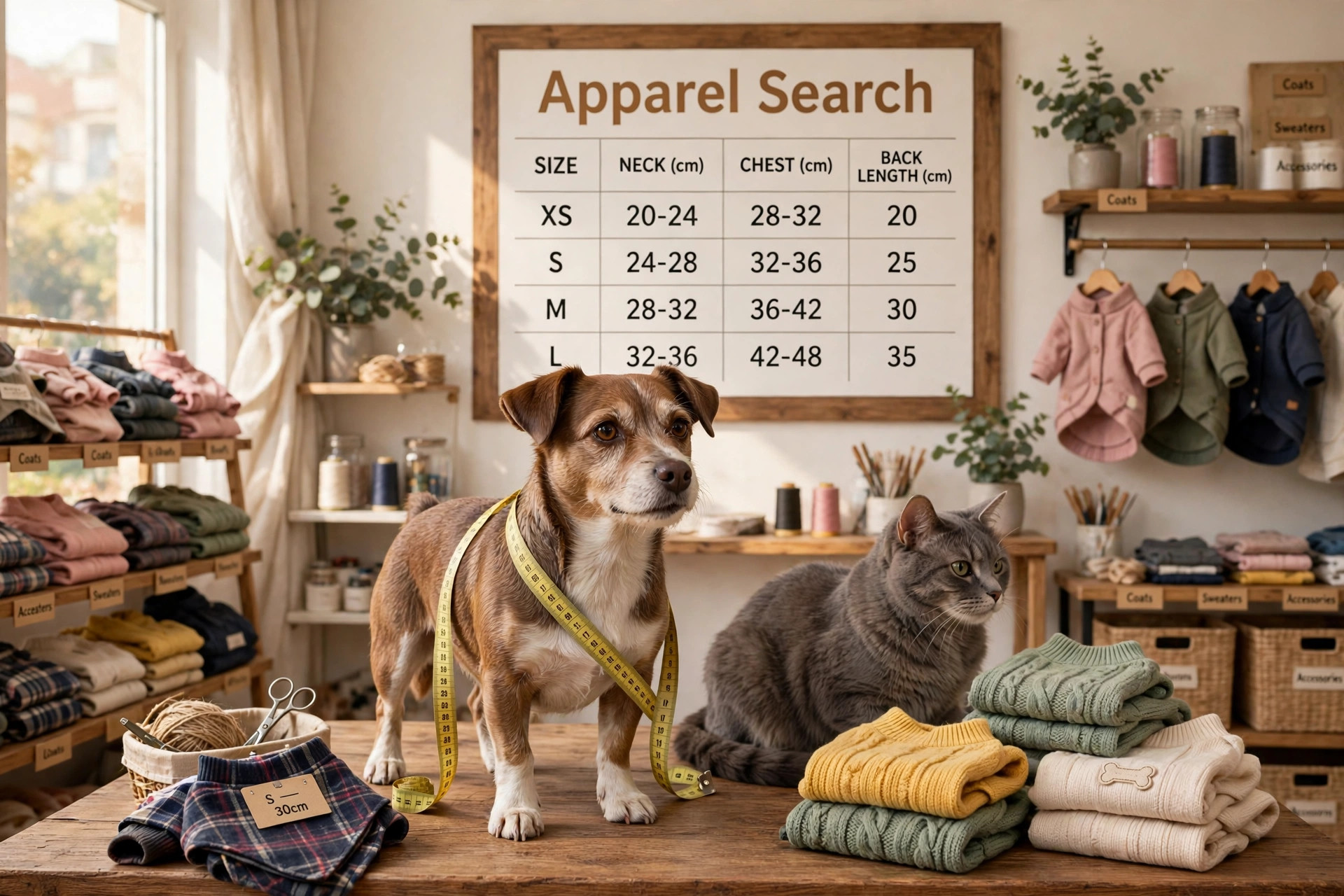
The method is the same for a Chihuahua and a Clydesdale: measure the animal, not the breed label. Dog clothing and cat clothing charts are built from neck, chest and length measurements, while horse blankets are sized from a single chest-to-tail measurement in inches. Five minutes with a soft tape measure prevents most returns.
Why Pet Sizing Is Not Like Human Sizing
There is no industry standard for pet sizes. One brand's medium is built for a spaniel, another's for a stocky bulldog, and both are labelled with the same letter. Weight ranges printed on packaging are a rough shortcut at best, because two dogs of identical weight can have completely different chests, necks and back lengths. Breed names on a chart are equally approximate — a 'dachshund size' assumes a standard dachshund that many real dogs are not.
The reliable approach is to ignore the letter on the label until the very end of the process. Take the animal's measurements first, then compare those numbers with the specific brand's own chart for the specific garment. Every reputable maker publishes one, and the chart for a raincoat from the same brand may differ from the chart for its sweaters.
The Measurements That Matter
Three measurements drive almost every dog and cat garment. The chest girth — around the widest part of the ribcage, just behind the front legs — is the most important of the three, because most garments fasten or stretch around the chest. The back length runs from the base of the neck, where a collar sits, to the base of the tail. The neck is measured where a collar naturally rests, snug but not tight.
For horses, blanket sizing uses one number: the distance in inches from the center of the chest, around the widest part of the body, to the tail. Blankets are sold in steps of about three inches (75, 78, 81 and so on), and that single measurement, taken carefully, is enough. A horse's height in hands and its breed are useful background, but the tape decides the size.
How to Measure a Dog
Use a soft tailor's tape and have the dog standing squarely on all four legs — a sitting or lying dog measures several inches differently around the chest. Wrap the tape around the ribcage just behind the front legs, keeping it level and snug enough that it does not slide, but not so tight that it compresses the coat. Note the number, then measure the back from the collar line to the tail base along the spine, and finally the neck at collar height, leaving room for two fingers.
Measure twice and write the numbers down. On thick double coats, rest the tape on the coat rather than pressing through it, because the garment must fit over that coat. Puppies grow out of sizes in weeks, so re-measure before every purchase.
How to Measure a Cat
Cats are measured with the same three numbers — chest, back length and neck — but the session should be shorter and calmer. Work on a surface the cat already likes, let the cat stay standing or lying naturally, and take the chest measurement first while patience lasts. Many cat garments are additionally sized by weight ranges, which is acceptable for stretchy knitwear but unreliable for structured coats.
Fit philosophy differs for cats: a cat garment should err on the roomy side, because cats slip out of — or panic in — clothing that compresses the torso. Between sizes, choose the larger in a lightweight, stretchy fabric — a point covered in more depth in the cat sweaters guide.
Reading a Size Chart — and Sizing Between Sizes
Match the chest measurement first. For dogs, the chest is the dimension that decides whether a garment can be worn at all; length can run a little long or short without ruining the fit, but a chest that is too small will bind at every breath. Then check the length against the garment's style: a raincoat is meant to reach the tail base, while a sweater that ends a couple of inches short is perfectly serviceable.
Between sizes, let the garment type decide. Coats, rain gear and anything with a belly panel generally size up, so straps close without strain. Soft stretchy knits can size down for a closer, warmer fit. Breed-specific charts, where offered, are a cross-check on the tape — never a replacement for it.
Breed and Body-Shape Caveats
Certain shapes defeat standard charts. Deep-chested, narrow-waisted breeds such as greyhounds and pointers need breed-cut garments with a long back and a chest that does not swamp the waist. Long-backed breeds such as dachshunds and corgis need length without chest bulk. Barrel-chested breeds such as bulldogs and pugs need the opposite: generous girth with a shorter back. Several makers cut specifically for these shapes, and for such dogs those lines are worth seeking out.
Hairless and single-coated animals measure smaller than they look in photographs, while heavily coated breeds measure larger than their body underneath. Measure the animal in front of you, in its current coat and condition — a dog that has gained winter weight or an elderly cat that has lost condition will not match last year's numbers.
Fit Checks Before You Keep It
A new garment should pass four checks before the tags come off. The two-finger check: two fingers should slide under every strap, collar and chest band. The walk check: the animal should walk, sit, lie down and climb stairs without the garment shifting, bunching or tripping a leg. The clearance check: male dogs need belly coverage that stops short of interfering when they relieve themselves, and litter-box access matters for cats. The skin check: after twenty minutes of wear, look for rubbed or red patches at the armpits, neck and belly.
If a garment fails any check, exchange it rather than hoping the animal adjusts. Most pet retailers accept returns on clothing tried on briefly indoors — one more reason to do the first fitting at home, on a calm animal, keeping the receipt until the checks are done.
Shop Pet Clothing
Shop Pet Clothing on AmazonShop Dog Clothes on AmazonApparel Search may earn a commission from qualifying purchases made through links on this page.
Common Questions
What are the most important measurements for dog clothes?
Chest girth comes first — around the widest part of the ribcage, just behind the front legs — because most garments fasten around the chest. Back length (base of neck to base of tail) comes second and neck size third. Match the chest to the size chart first, then check the length.
My dog is between sizes. Which size should I choose?
It depends on the garment. Coats, raincoats and anything with straps or a belly panel should usually go up a size so nothing strains or binds. Soft, stretchy sweaters can go down a size for a closer, warmer fit. When in doubt, choose the size whose chest range contains the dog's chest measurement without being at the very top of the range.
Can a cat be sized the same way as a dog?
The measurements are the same — chest, back length and neck — but the fit philosophy differs. Cat clothing should err on the roomy side in lightweight, stretchy fabrics, because cats resist compression and can panic in anything that feels restrictive. Many cat garments are sold by weight range, which works for soft knits but is unreliable for structured coats.
How are horse blankets sized?
By a single measurement in inches: from the center of the chest, around the widest part of the body, to the tail. Blankets are sold in steps of about three inches, so a horse measuring 77 inches usually takes a 78. Measure with the horse standing square, and round up when the number falls between steps.
Why does the same size fit differently between brands?
Because there is no shared standard for pet sizing. Each brand drafts its sizes around different reference animals, so a medium from one maker can equal a large from another. Always compare the animal's actual measurements against the chart published for that exact garment, rather than reordering a size that worked from a different brand.