Dog Raincoats
Waterproof shells, lined rain jackets and ponchos that keep dogs dry without slowing the walk down.
A dog raincoat does two jobs at once: it keeps the dog drier and more comfortable in wet weather, and it keeps most of the rain — and everything the rain loosens from the coat — out of the house afterward. For dogs that dislike rain, a good coat can be the difference between a proper walk and a reluctant dash to the nearest tree. This guide explains the types available, the harness and leash openings that make a coat practical, and how rain gear should fit.
Raincoats sit in the outerwear corner of dog clothing, alongside the insulated dog coats and jackets that handle cold. A raincoat's first specification is its shell, not its warmth — and its fit is measured by the same method as every other garment in the pet clothing sizes and measuring guide.
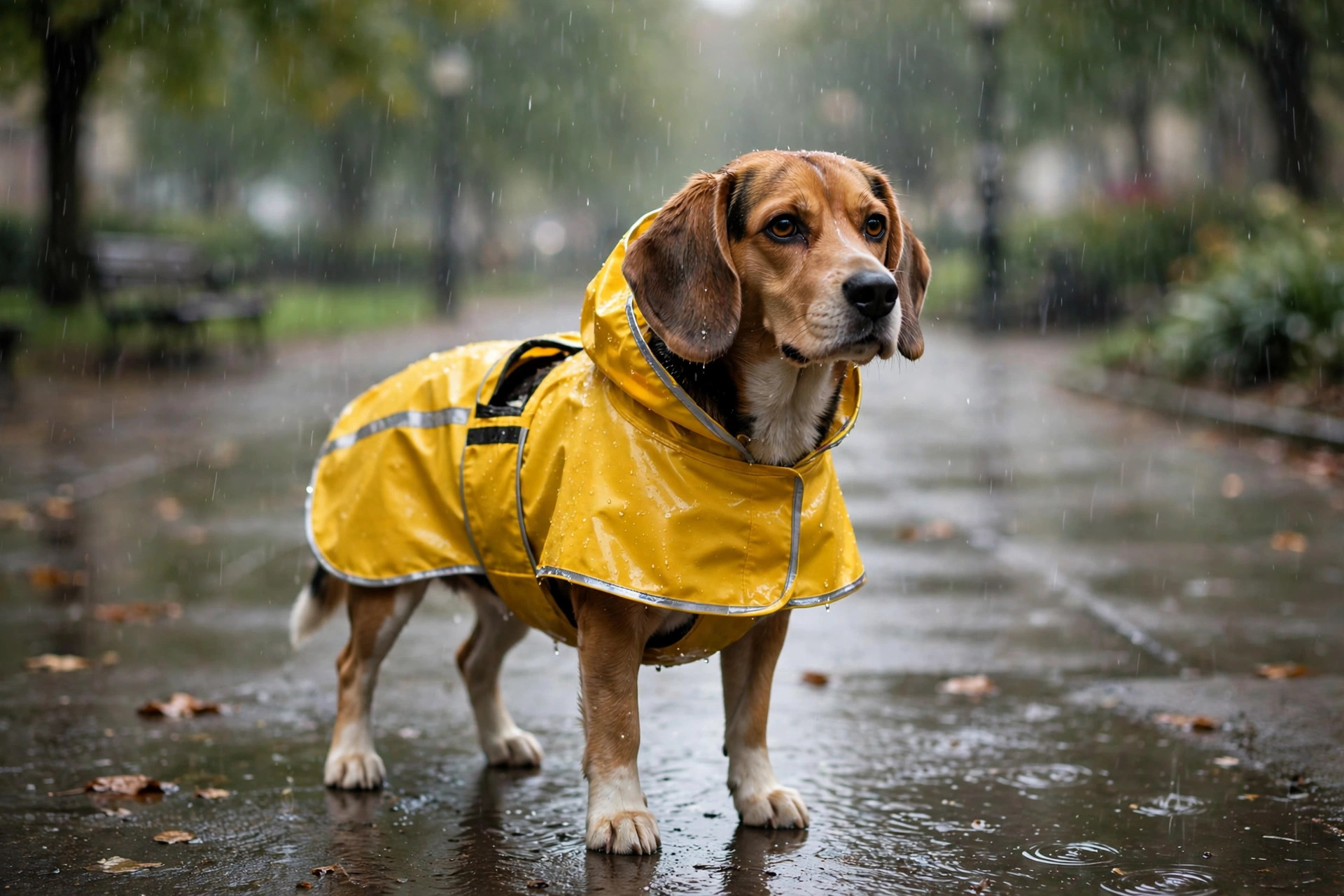
Why Dogs Wear Raincoats
Some dogs love weather; many do not. Small, short-haired and elderly dogs chill quickly once wet, and a soaked coat loses most of its insulation. Dogs that refuse or shorten walks in rain get less exercise and more restless evenings, so keeping them dry is a practical welfare measure, not a fashion indulgence. Long and feathered coats benefit differently: a raincoat keeps most of the coat dry, which cuts toweling and drying time at home and keeps wet-dog smell to a minimum.
There are limits. A raincoat covers the torso, not the legs, head or tail, so a dog will still come home with wet feet and a wet head — pairing a coat with dog boots is an option for dogs that tolerate them. And in warm summer rain, an unbreathable shell can overheat a dog faster than the rain would chill it; on mild days, a light breathable shell or no coat at all is the kinder choice.
Types of Dog Raincoats
Unlined waterproof shells are the lightest option: a single layer of coated nylon or polyester with taped or sealed seams, worn over the dog's own coat or over a sweater in cold rain. Lined rain jackets add a mesh or fleece lining for chillier, wind-driven weather and are the most versatile single purchase in wet climates. Rain ponchos drape over the back and fasten with a belly strap — the fastest style to put on a reluctant dog, though they flap in wind and cover less.
Full-coverage rain suits extend down the legs and under the belly. They suit long-coated breeds shown or kept in full coat, and dogs walked on muddy ground, at the cost of a slower fitting process and a dog that needs to accept clothing on its legs. Whatever the type, genuinely waterproof means a waterproof membrane or coating plus protected seams; 'water-resistant' shells shed drizzle but soak through in steady rain.
Harness Holes and Leash Openings
The feature owners use most is the leash opening. Dogs walked on a back-clip harness need a coat with an opening on the back — a zippered slit, a buttonhole-style slot, or a covered flap — positioned where that dog's harness ring actually sits. Dogs walked on a collar need only a coat whose neckline clears the collar and its ring. An opening in the wrong place is worse than none, because it lets rain in at exactly the point it was meant to seal.
Before buying, note where the harness ring falls on the dog's back and compare it with the coat's opening position in the size being ordered — positions shift between sizes. Owners who switch between collar and harness often choose coats with two openings or a longer zippered slot that covers both. After the first wet walk, check under the opening: a dry patch of harness and coat there means the alignment is right.
Fit, Coverage and Visibility
A raincoat should reach from the neck to the base of the tail and wrap enough of the chest and belly to deflect splash from below — the belly panel or strap is what stands between the dog's underside and every puddle on the route. Chest fastenings should be adjustable (hook-and-loop or snaps) so the coat can be snug over a bare coat in October and over a sweater in January. The neckline should sit behind the ears without covering them, and nothing should cross the throat where the dog swallows and barks.
Wet weather is dark weather, so visibility is a genuine safety feature rather than decoration. Bright colors, reflective piping and reflective prints make a dog visible to drivers at crossings — worth weighing as heavily as waterproofing for dogs walked near roads at dawn and dusk. A coat that fits well but disappears against wet pavement is only half a raincoat.
Care: Keeping the Waterproofing Working
Most raincoat failure is care failure. Shake the coat off and hang it to dry after every wet walk rather than leaving it balled up, which mildews both the lining and the waterproof coating. Mud usually sponges off with plain water; detergents strip factory water-repellent finishes, so use technical wash products made for waterproof garments when a real wash is needed.
When water stops beading on the shell and starts soaking in, the coating can often be revived with a spray-on or wash-in reproofing treatment for pet or outdoor gear. Store the coat dry, out of direct heat, and check hook-and-loop straps for trapped hair — the most common reason an older raincoat stops closing properly.
Meet Coco
Coco, a German Shorthaired Pointer, shows off her favorite dog gear and outfits on her own YouTube channel.
Shop Dog Raincoats
Shop Dog Raincoats on AmazonApparel Search may earn a commission from qualifying purchases made through links on this page.
Common Questions
Are dog raincoats waterproof or just water-resistant?
Both kinds are sold, and the difference matters. Water-resistant shells shed drizzle and brief showers but eventually soak through. Genuinely waterproof raincoats use a waterproof coating or membrane and sealed or covered seams, and they keep a dog dry through a full walk in steady rain. Check the product language and seams before buying.
Can a dog wear a harness under a raincoat?
Yes — that is exactly what back leash openings are for. The coat needs an opening (a zippered slit, slot or covered flap) positioned where the harness's back ring sits, so the leash clips through without lifting the coat. Positions vary by size, so check the opening's placement against the dog in the size being ordered.
How long should a dog raincoat be?
From the base of the neck to the base of the tail, covering the whole back. Belly coverage varies by style: straps keep the coat light and cool, while full belly panels deflect more road splash. The neckline should sit behind the ears without covering them, and the coat should never cross the throat tightly.
Do raincoats help dogs that hate walking in the rain?
Often, yes. Many rain-averse dogs are reacting to being wet and chilled rather than to the walk itself, and a coat that keeps the torso dry makes them noticeably more willing. Introduce the coat indoors first with treats, keep the first wet walk short, and let success build.