Dog Sweaters
Knit, fleece and quilted sweaters for dogs — which dogs need one, how they should fit, and how to pick the right weight for the weather.
A dog sweater is the simplest piece of cold-weather clothing a dog can wear: no straps to align, no waterproofing to maintain, just a soft layer that holds warmth against the body. For the right dog, it turns a brisk, shortened winter walk into a comfortable one. This guide covers which dogs genuinely benefit, the main sweater types, the fabrics that work, and how a sweater should fit — and it belongs to the wider dog clothing range covered on Apparel Search.
Not every dog needs one, and a sweater chosen for looks alone often ends up in a drawer. The deciding factors are the dog's coat, size, age and health, which is why this page starts with the dog rather than the garment. Sizing follows the method in the pet clothing sizes and measuring guide: chest first, then length, then neck.
Which Dogs Benefit From a Sweater
The clearest candidates are small dogs, whose bodies lose heat quickly; short-haired and single-coated breeds such as whippets, Chihuahuas and miniature pinschers; lean, deep-chested dogs with little body fat; elderly dogs, who regulate temperature less efficiently; and puppies in their first winter. Dogs recovering from illness, and dogs whose coats have been clipped short for grooming or surgery, also feel cold they would normally shrug off.
Double-coated breeds — huskies, malamutes, thick-coated shepherds and retrievers — are insulated by design and rarely need a sweater outdoors; on them a sweater can flatten the coat's insulating loft and cause overheating. For those dogs, a sweater is an indoor or photo garment at most, worn briefly. Between the two groups sit medium-coated dogs, for whom a light sweater on the coldest days is a judgment call their owners can make by watching whether the dog shivers, lifts its paws, or hurries the walk.
Types of Dog Sweaters
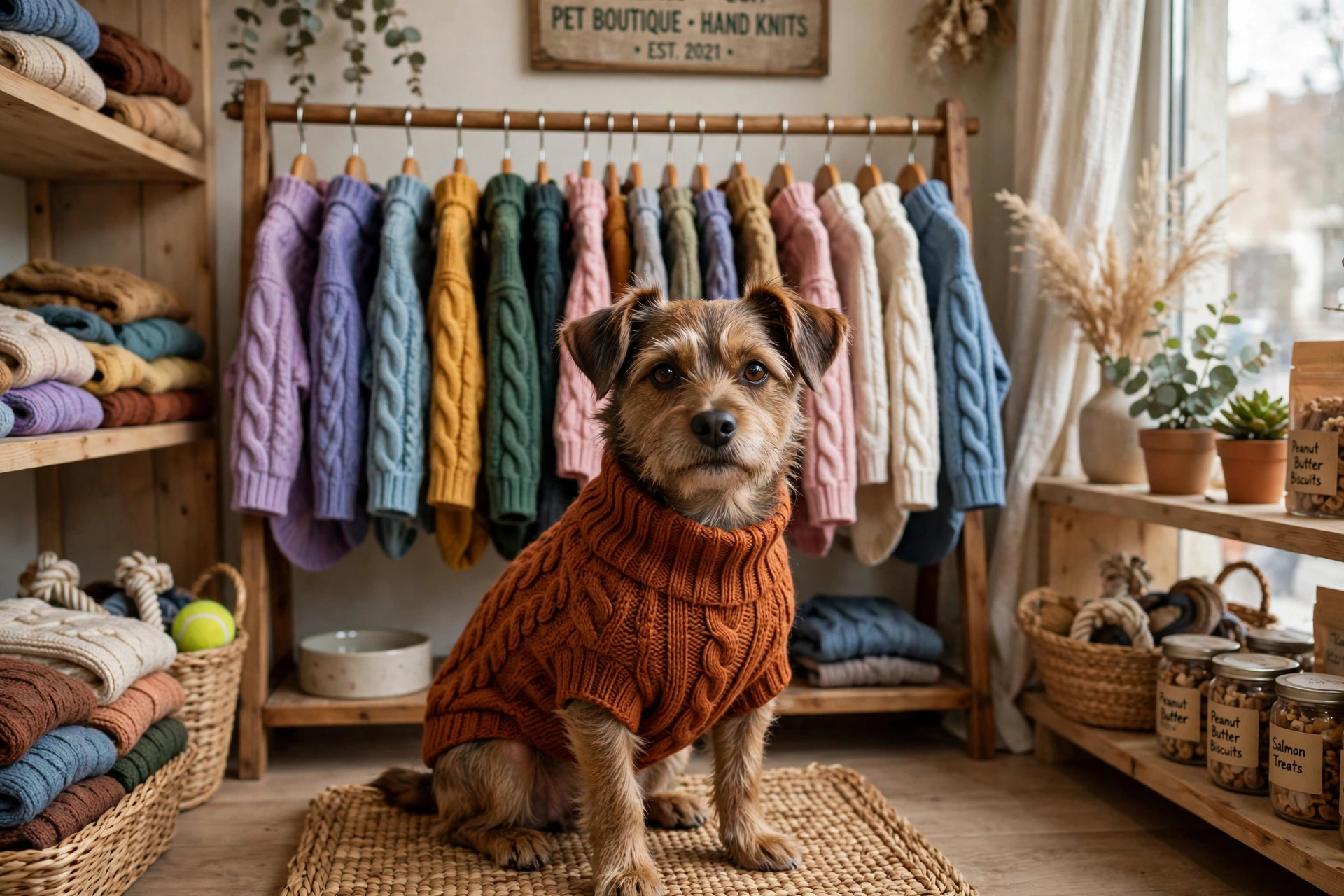
Pullover knits are the classic: a stretchy knitted body with two front-leg openings, slipped over the head. They are warm, quiet and simple, and suit most sweater-wearing dogs. Turtleneck sweaters add a folded neck that covers more of the throat — good for long-necked, lean breeds. Fleece pullovers trade the knitted look for a lighter, faster-drying warmth and are often the best first sweater for a dog new to clothing.
Sweater coats and quilted knits blur the line toward jackets, with sturdier shells and sometimes a belly strap; they suit dogs that need more coverage but dislike structured coats. Holiday and novelty sweaters are built for brief, cheerful wear at gatherings and in photographs — fine for an hour, but they follow the same fit rules as any sweater and come off if the dog objects. For full dress-up occasions, the pet costumes guide covers the safer options.
Fabrics: Wool, Acrylic, Fleece and Blends
Wool is the warmest traditional sweater yarn and breathes well, but it asks for gentle washing and can itch sensitive skin; merino blends soften it. Acrylic knits are the market's workhorse — inexpensive, machine washable, and available in every color — though they insulate a little less than wool and can pill. Cotton knits suit indoor wear and mild days, since cotton loses insulation when damp and is slow to dry on a wet walk.
Fleece (usually polyester) is light, warm for its weight, and dries quickly, which makes fleece sweaters practical for damp climates. Whatever the fiber, the inside of the sweater matters as much as the outside: seams should lie flat, and there should be no rough label or scratchy stitching against the dog's chest and armpits, the two places sweaters rub.
Getting the Fit Right
A sweater should sit snug without compressing: the knit can hug the chest so it traps warmth, but two fingers should still slide under the neck and chest bands, and the dog should breathe, bark and bend to a water bowl without the neck pulling. Leg openings must clear the armpits by enough room that the edge does not saw at the skin when the dog trots — the most common sweater complaint is a rubbed armpit from an opening cut too close.
Length should reach most of the way to the tail base without covering the tail itself. Belly coverage needs a sex check: male dogs need the underside cut high enough to stay clear when they urinate, and many sweaters are cut with exactly that in mind — a feature worth confirming before purchase. A sweater that twists sideways as the dog walks is usually too big in the chest, whatever the length says.
Care and Washing
Knitted sweaters last longest washed cool and gently, then reshaped and dried flat; hanging a wet knit stretches it out of size in a single wash. Fleece tolerates ordinary machine washing and tumble drying on low. Wash dog sweaters more often than their appearance suggests — the chest and belly pick up street splash and trap odor against the coat — and check after each wash for pilling, snagged loops a claw could catch, and stretched necks.
A dog that wears a sweater daily does better with two in rotation, so one is always clean and dry. Store sweaters folded rather than hung, out of reach of a dog that has decided a favorite sweater is also a favorite chew toy.
Meet Coco
Coco, a German Shorthaired Pointer, shows off her favorite dog gear and outfits on her own YouTube channel.
Shop Dog Sweaters
Shop Dog Sweaters on AmazonApparel Search may earn a commission from qualifying purchases made through links on this page.
Common Questions
Do all dogs need a sweater in winter?
No. Double-coated breeds such as huskies and thick-coated retrievers are insulated by their own coats and rarely need one. Sweaters genuinely help small dogs, short-haired and single-coated breeds, lean dogs, puppies and elderly dogs, and any dog that shivers or hurries through cold walks. Watch the dog, not the calendar.
How tight should a dog sweater be?
Snug enough to trap warmth without compressing the body. Two fingers should slide under the neck and chest, the leg openings should clear the armpits so they do not rub, and the dog should move, breathe and bend normally. A sweater that twists sideways as the dog walks is usually too large in the chest.
Can a dog wear a sweater all day indoors?
Usually it is unnecessary, and for most dogs it is not a good idea. Indoors, a healthy dog regulates its temperature well, and constant wear can overheat the dog and mat the coat underneath. Keep sweaters for cold outings and chilly rooms, in stretches of a few hours, and take them off if the dog pants or seeks a cool floor.
How do I wash a knitted dog sweater?
Wash cool on a gentle cycle or by hand, then reshape the sweater and dry it flat — hanging a wet knit stretches it out of size. Fleece sweaters can go in an ordinary wash and tumble dry on low. Check after washing for snags, pilling and stretched-out necklines.