Dog Pajamas
Soft four-leg and two-leg pajamas for warmth, calmer nights, cleaner bedding and gentle coverage after surgery.
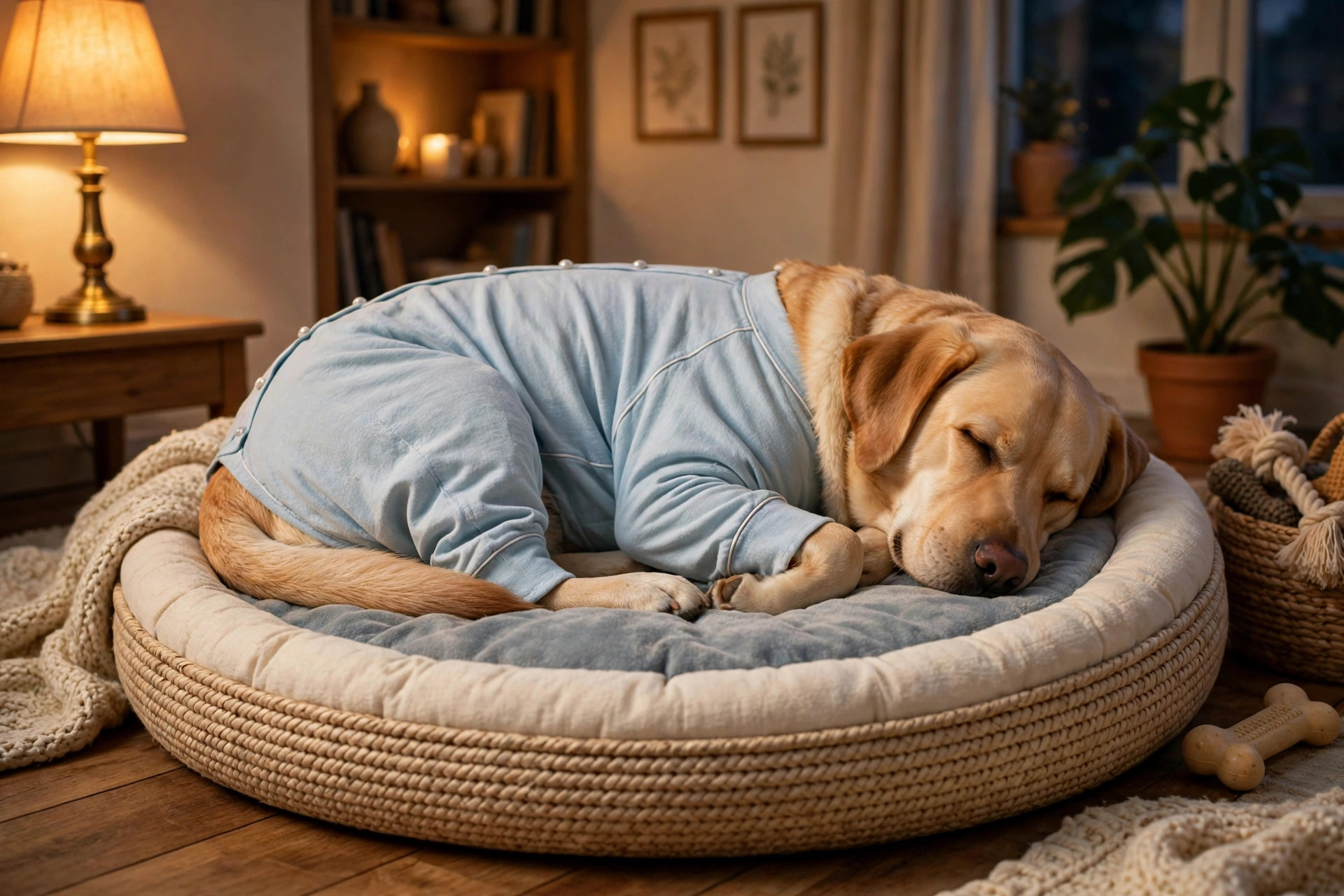
Dog pajamas look like a joke until the first night they solve a problem: the short-coated dog that shivers under a blanket it keeps kicking off, the shedding coat that redecorates the bed linen, or the healing incision a dog will not leave alone. Pajamas are soft, light, full-coverage clothing designed for indoors — closer to a onesie than to a coat — and this guide explains the styles, the fabrics, and the uses that make them a practical part of dog clothing.
Because pajamas are worn for hours rather than minutes, fit and breathability matter more here than in almost any other dog garment. The measuring method is the standard one in the pet clothing sizes and measuring guide, but the tolerance for a bad fit is lower: a pajama that binds will be worn — and resented — all night.
Start Here
What Dog Pajamas Are For
Warmth is the original purpose: short-haired, small, lean and elderly dogs lose heat overnight, especially in cool houses, and pajamas hold warmth the way a sweater does while covering the legs too. Shedding control is the second common use — a pajama collects loose hair that would otherwise land on beds, sofas and car seats, which is why many owners use them only when the dog is on furniture.
Coverage is the third use, and the most serious. A well-fitted pajama can shield healing incisions, hot spots and itchy skin from licking and scratching, and for some torso sites a veterinarian may accept one in place of a rigid cone; it can also reduce direct contact between a dog's skin and household allergens, or between an allergic household member and the dog's coat. Pajamas are sometimes said to calm anxious dogs through gentle, even pressure; the effect is similar in spirit to a snug wrap, and while many owners report calmer dogs, pajamas are comfort clothing, not a treatment for anxiety.
Styles: Four-Leg, Two-Leg and Onesies
Four-leg pajamas cover the torso and all four legs with cuffed openings. They give the fullest warmth and shedding control, and the design must include a rear opening or an easy-off cut so the dog can relieve itself — better designs make this a non-event, cheaper ones require full removal. Two-leg styles, essentially long t-shirts with front-leg sleeves, are faster to put on and suit dogs that object to clothing on their hind legs.
Onesie and recovery-suit styles fasten along the back or belly with snaps or hook-and-loop, covering the torso thoroughly; these are the styles used for post-surgery coverage. Whatever the style, fastenings should be quiet, flat and positioned where the dog will not lie directly on a hard snap all night.
Fabrics: Breathable First
Cotton jersey is the default pajama fabric for good reason: soft, breathable, washable, and warm enough for indoor temperatures. Cotton flannel adds warmth for cold houses and winter nights. Light fleece pajamas suit genuinely cold rooms and very short-coated dogs, but fleece indoors can overheat a dog that also sleeps under blankets.
Avoid heavy, non-breathable synthetics for overnight wear; a dog that cannot shed heat through its torso covering will pant, pace and eventually tear at the garment. Stretch matters too — a small percentage of elastane in the knit lets the pajama move with the dog through the dozen positions a sleeping dog adopts, instead of twisting into a spiral by morning.
Fit and Safety
Pajamas should be snug enough to stay in place without compression: the classic two-finger check applies at the neck and chest, leg cuffs should rest on the leg without gripping it, and the body should not twist when the dog walks. First wears should be supervised and short — an hour in the evening — while the owner watches for chewing at cuffs and fastenings, the one genuine hazard of the garment, since a swallowed button or chewed snap is a veterinary problem.
Heat is the other watchpoint. A dog in pajamas that pants, seeks tile floors, or repeatedly asks to go out on a cool night is telling its owner the layer is too much; remove it. Dogs that sleep under covers or in heated rooms rarely need pajamas at all. And any pajama used over an incision should be checked daily, kept clean, and swapped for a fresh one after washing, with the incision itself inspected at every change.
Meet Coco
Coco, a German Shorthaired Pointer, shows off her favorite dog gear and outfits on her own YouTube channel.
Shop Dog Pajamas
Shop Dog Pajamas on AmazonApparel Search may earn a commission from qualifying purchases made through links on this page.
Common Questions
Can dogs sleep in pajamas all night?
Many can, provided the pajamas are breathable, correctly fitted and the room is not warm. Start with a supervised evening hour, then a full night, and watch for overheating: panting, restlessness, or the dog moving to a cool floor. Dogs that sleep under blankets or in heated rooms usually do not need pajamas.
Do dog pajamas help with shedding?
They contain it rather than stop it. A pajama keeps loose hair against the dog instead of on beds, sofas and car seats during the hours it is worn, which is why many owners use pajamas only when the dog is on furniture. The collected hair shakes out outdoors and washes away in the laundry.
Can pajamas replace a cone after surgery?
Sometimes, for incisions on the torso that the pajama fully covers and the dog cannot reach around — but only with the veterinarian's agreement, and never for sites on the legs, tail or head. The pajama must fit closely enough that the dog cannot get its nose underneath, and the incision should be checked at every change.
How do I get a dog used to wearing pajamas?
Slowly and positively. Let the dog sniff the garment, put it on for a few minutes indoors with treats and play, and build the duration over several evenings. Never force a struggling dog into the leg openings, and stop if the dog freezes, trembles or tries persistently to remove it.