Dog Bandanas
Tie-on, snap and over-the-collar bandanas — the simplest, lightest way to dress a dog for any occasion.
The bandana is the gateway garment of dog clothing: one triangle of fabric, no leg openings, no straps to align, and most dogs forget they are wearing it within a minute. That simplicity makes bandanas the most-bought and most-worn item in the dog clothing wardrobe — and the most forgiving place for a new owner to start. This guide covers the three ways a bandana fastens, how to size one, and the occasions they are made for.
Because a bandana hangs from the neck, its sizing starts with the neck measurement described in the pet clothing sizes and measuring guide — with the two-finger rule borrowed from collar fitting. Get that one number right and almost any bandana style will work.
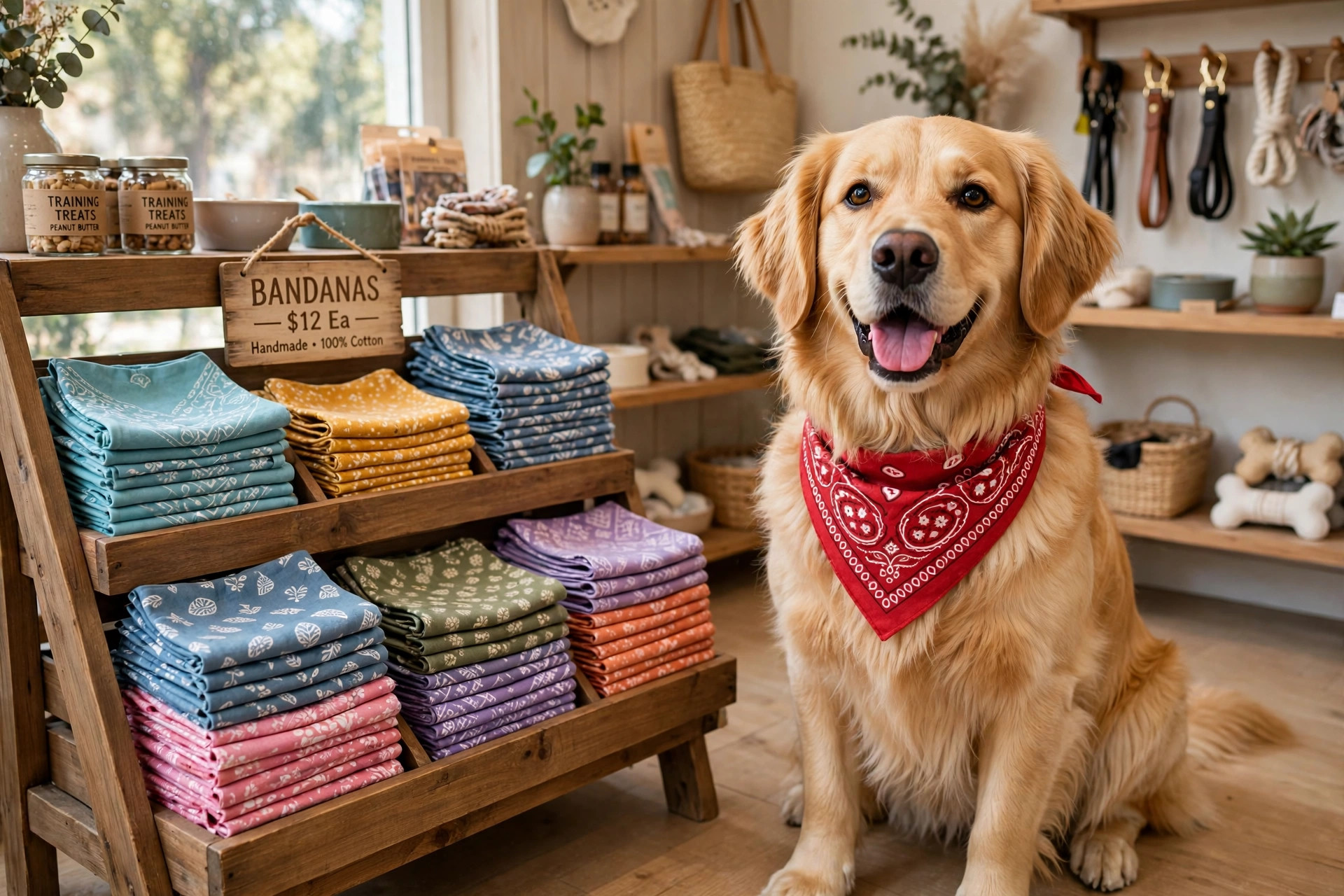
Start Here
Three Ways a Bandana Fastens
Tie-on bandanas are the classic square or triangle folded and knotted at the neck. They fit any neck within a wide range and are the cheapest and most common style; the knot should be snug enough to stay put and loose enough to pass the two-finger check, with ends short enough that they cannot be chewed. Snap-button bandanas replace the knot with two or three snap settings, giving a cleaner look and an adjustable fit that cannot tighten accidentally.
Over-the-collar bandanas have a channel along the top edge that the dog's own collar threads through, so the bandana cannot slip off, twist, or be pulled loose — the most secure option for active dogs, and the natural partner to the collars in the dog collars guide. They require a flat collar of matching width, which is the one measurement to check before ordering. A less common fourth style uses hook-and-loop fastening; it is quick to fit but collects hair in the fastener and loses grip over time.
Sizing a Bandana
Measure the neck where a collar sits and add the two-finger allowance; that number should fall inside the bandana's stated neck range with room to spare on tie-on styles. The second dimension is the drop — how far the point of the triangle hangs down the chest. On toy and small dogs a long drop tangles in the front legs and trips the dog; on large, deep-chested dogs a short drop looks lost against the chest.
Rough guides by size: small dogs typically wear drops of about 5 to 7 inches, medium dogs 7 to 9, and large dogs 9 to 12. When a dog falls between sizes, the style decides: size up for tie-ons, which can be folded down at the top edge to shorten the drop, and size for the collar width first on over-the-collar styles. Puppies outgrow bandanas slowly enough that a snap style with several settings often covers two growth stages.
Fabrics and Care
Most bandanas are cotton or cotton blends — breathable, printable in every pattern imaginable, and machine washable, which matters for a garment that drags through dinner bowls and muddy chins. Flannel bandanas add a little warmth and suit autumn and winter wear. Double-layer and reversible styles give two looks and a slightly sturdier drape.
One functional variant deserves its own mention: the cooling bandana, made from absorbent fabric or with a gel-free evaporative design, soaked in water before a warm-weather walk so evaporation at the neck helps the dog shed heat. It is a comfort aid, not protection against heatstroke — shade, water and rest still do the real work. All bandanas benefit from a wash after muddy wear, and tie-on styles last longer if the knot area is checked for fraying.
Bandanas for Every Occasion
Bandanas are the costume a dog will actually wear, which is why they anchor so many occasions: holiday prints for Christmas and the Fourth of July, team colors on game days, formal patterns for weddings and family photographs, birthday bandanas for the dog's own party, and adoption-day and gotcha-day designs for shelter celebrations. They are also the recommended first step toward fuller dress-up — a dog that happily wears a bandana may graduate to the outfits in the pet costumes guide, while a dog that dislikes a bandana has given a clear, cheap answer about costumes.
For Halloween specifically, a themed bandana pairs with — or replaces — the fuller outfits in the dog Halloween costumes guide, giving nervous dogs a way to join the evening without wearing a costume at all.
Meet Coco
Coco, a German Shorthaired Pointer, shows off her favorite dog gear and outfits on her own YouTube channel.
Shop Dog Bandanas
Shop Dog Bandanas on AmazonApparel Search may earn a commission from qualifying purchases made through links on this page.
Common Questions
How do I know what size bandana my dog needs?
Measure the neck where a collar sits, add room for two fingers, and choose a bandana whose neck range contains that number. Then check the drop: about 5 to 7 inches for small dogs, 7 to 9 for medium, and 9 to 12 for large. A drop that reaches the front legs is too long, whatever the neck size says.
Are over-the-collar bandanas better than tie-on styles?
They are more secure: the collar threads through a channel in the bandana, so it cannot slip off, twist around, or be pulled loose, which suits active dogs and long walks. Tie-on bandanas fit a wider range of necks and need no particular collar. Both are comfortable when fitted with the two-finger check.
Can a bandana be worn with any collar?
Tie-on and snap bandanas work with any collar, or with none. Over-the-collar bandanas need a flat collar that fits through the bandana's channel, so check the channel width against the collar's width before ordering — wide collars and very narrow channels do not mix. The bandana should never be used to tighten or replace a correctly fitted collar.
What is a cooling bandana?
A bandana made from absorbent, evaporative fabric that is soaked in water before wear. As the water evaporates at the neck it helps the dog feel cooler on warm walks. It is a comfort aid only — it does not prevent overheating, and dogs still need shade, drinking water and rest in hot weather.