Cat Clothing
Sweaters, coats, collars, costumes and everyday apparel for cats — with comfort, movement and security ahead of fashion every time.
Cats are primarily concerned with comfort, movement, and feeling secure. Fashion trends have no significance to cats — they are far more interested in their physical comfort, the texture of the clothing, and how it affects their mobility. Some cats may enjoy the extra warmth and security provided by certain clothing items, especially during colder seasons, and those are the cats — and the garments — this page is about.
Well-chosen cat clothing is soft, stretchy, and easy to move in, and it is put on a cat that tolerates it happily. This guide covers the main types of cat apparel, the clothing cats should never be made to wear, the genuine reasons to dress a cat, and where consumers can find cat clothing in stores and online.
Start Here
Shop Cat Clothing
Shop Cat Clothing on AmazonShop Cat Clothing on eBayThese links open the Apparel Search shopping guides for Amazon and eBay, where the product links are kept in one place.
Types of Cat Clothing
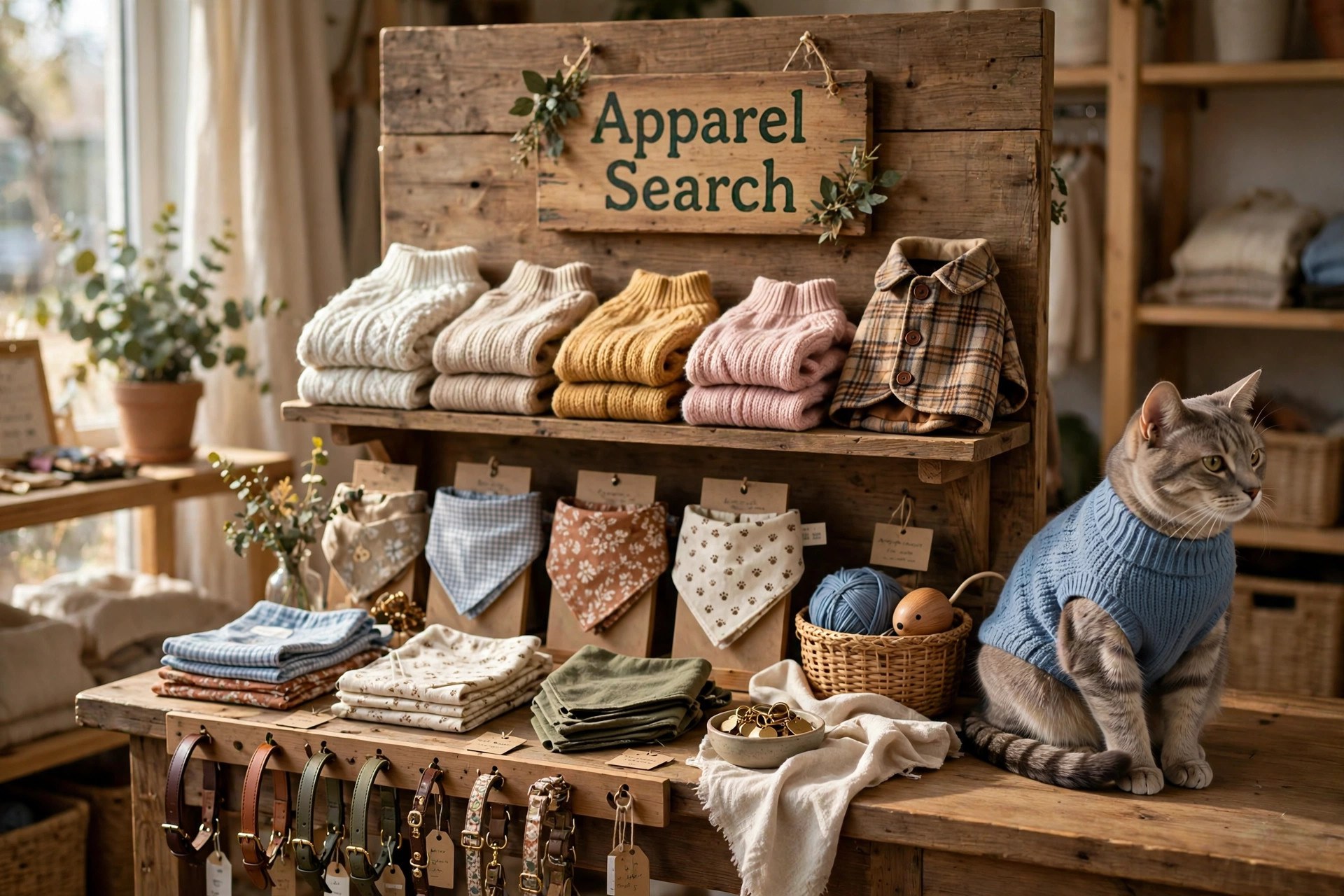
Cat sweaters and hoodies are typically made of soft, stretchy fabrics that provide warmth and comfort. They are great for colder weather, or for cats that enjoy the cozy feeling of being bundled up. Cat collars and bandanas are stylish and functional at once: collars often feature a bell for identification alongside a fashionable accessory, while bandanas are lightweight and add a cute or trendy touch without restricting movement.
Cat costumes and outfits are not for every cat, but some may enjoy wearing them for special occasions or for fun. They range from simple outfits like bowties and hats to more elaborate costumes like superheroes or animals. Cat t-shirts and tank tops, made from breathable materials, are ideal for cats in warmer climates or indoor environments — comfortable for the cat and a bit of style at the same time.
The wider cat apparel range runs to cat bandanas, cat coats, cat dresses, cat hats, cat holiday clothing, cat jackets, cat shirts, and cat wedding clothes, alongside cat clothing sales and the stores that carry them. Whatever the category, the test is the same: the garment serves the cat first.
Clothing to Avoid Making Cats Wear
Avoid tight or restrictive clothing: anything that constricts movement or applies pressure on the cat's body is uncomfortable and stressful. Cats prefer loose and non-restrictive clothing. Avoid clothing with dangling or small parts, which could pose a choking hazard or simply discomfort the cat. And avoid unnatural materials: cats are sensitive to certain materials, and clothing made from scratchy or rough fabrics can cause irritation or allergic reactions.
Reasons to Dress a Cat
The strongest reason is comfort and warmth: cat clothing such as sweaters or coats can provide both, especially for hairless or short-haired breeds during colder seasons. There are also medical and health reasons — in some cases cats need clothing to cover surgical sites or skin conditions, or to prevent excessive licking or scratching that can worsen wounds or irritations.
Beyond need, there are gentler reasons. Owners dress cats for special occasions, holidays, or themed events, involving them in celebrations and creating a festive atmosphere. Cat apparel is also a way of expressing a pet's personality, and it can create an entertaining, endearing image for social media. And dressing a cat, done patiently, can be a bonding activity between pet and owner, creating positive interactions that strengthen the human-animal relationship.
Where to Buy Cat Clothing
Consumers can find a wide assortment of cat clothing both online and in physical stores. Pet stores — the specialized shops in our Pet Clothing Stores directory — often carry a variety of cat clothing options, from sweaters and costumes to collars and bandanas, and may offer sizing guidance to ensure the best fit for your cat. Online retailers dedicated to pet products offer a vast selection: platforms such as Chewy, Amazon, Petco, and Etsy carry a range of styles, sizes, and designs. The wider Pet Clothing Guide covers clothing for the other animals in the household, too.
Pet boutiques offer curated collections of high-quality, fashionable cat clothing, often with unique and stylish designs that cater to various tastes. Local pet supply stores and chains usually keep a selection of cat clothing available for purchase, and craft fairs, markets, and pet events may have vendors selling handmade or unique cat clothing — the place to find one-of-a-kind pieces.
Comfort First, Always
Not all cats enjoy wearing clothing, and it is crucial to respect a cat's individual preferences. Some cats feel stressed, anxious, or restricted when wearing clothing, so pay attention to their reactions and remove any clothing that causes discomfort. Always prioritize your cat's well-being and comfort over the desire to dress them in fashionable attire: monitor the cat's reactions, remove the garment immediately if the cat appears distressed or uncomfortable, and tailor clothing choices to the individual cat's preferences and needs — every cat is different.
Common Questions
Do cats like wearing clothes?
Some cats do, and many do not — it depends on the individual cat. Cats care about comfort, movement, and feeling secure rather than fashion, and some genuinely enjoy the extra warmth and security of a soft sweater in colder seasons. Watch your cat's reactions closely, and remove any clothing that causes stress or discomfort.
Which cats benefit most from a sweater or coat?
Hairless and short-haired breeds benefit most, especially during colder seasons, when a soft, stretchy sweater or coat adds real warmth. Cats recovering from surgery or living with a skin condition may also need clothing to cover a site and prevent licking or scratching.
What clothing should a cat never wear?
Never put a cat in tight or restrictive clothing that constricts movement or presses on the body, clothing with dangling or small parts that could be a choking hazard, or garments made from scratchy, rough, or unnatural fabrics that can irritate skin or trigger allergic reactions.