What Is the Difference Between Coveralls and Overalls?
One covers the whole body in a single piece; the other adds a bib and straps to a pair of trousers.
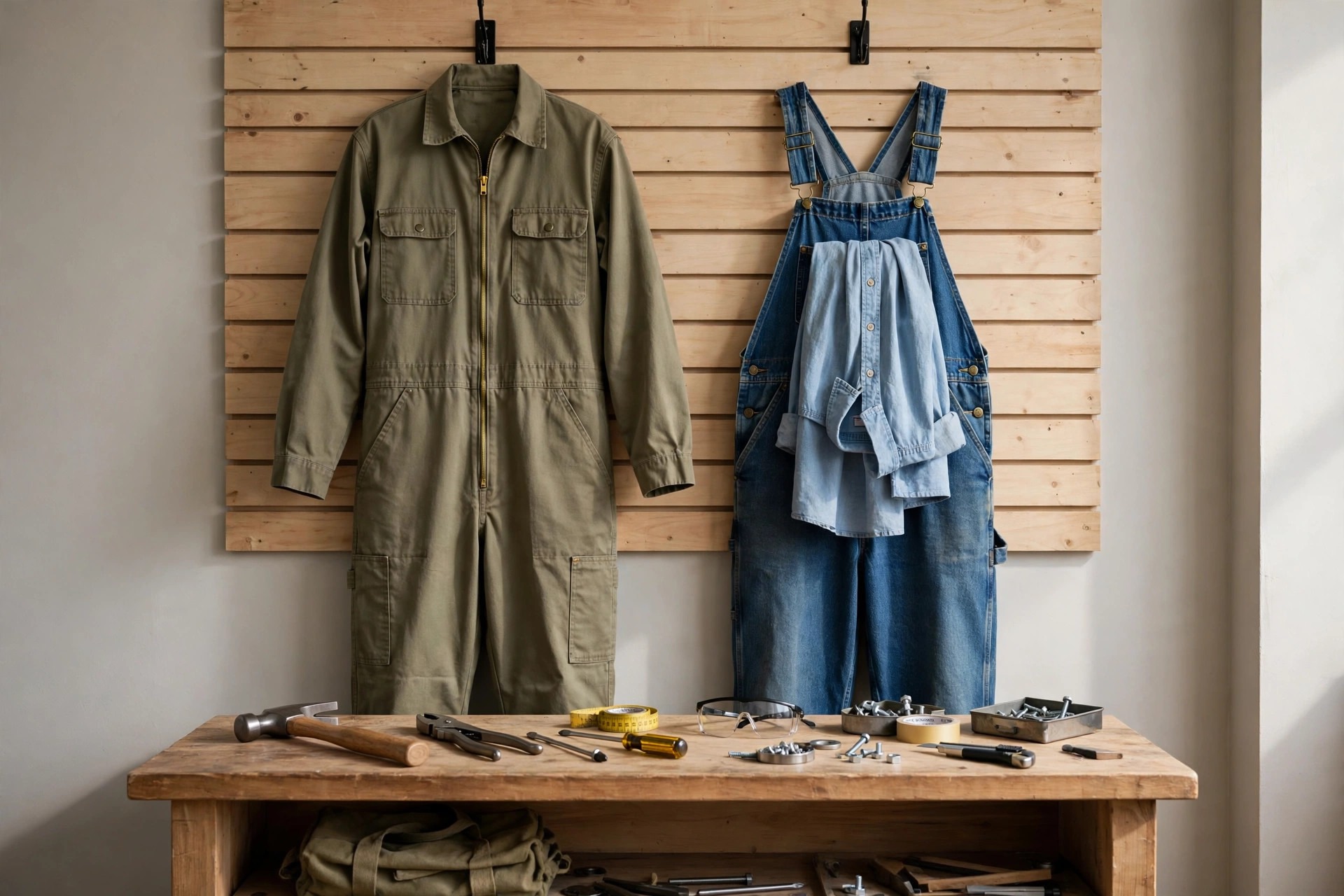
The short answer is coverage. Coveralls are one-piece garments that cover the entire body from the neck to the ankles, with long sleeves and full-length legs, while overalls are a bib-like top attached to a pair of trousers, worn over a shirt, leaving the arms and sleeves exposed. Both are hard-working garments, but they protect the body in noticeably different ways.
The two names are often used interchangeably in everyday conversation, which is where the confusion starts. Look at the construction instead of the label and the difference becomes obvious at a glance: if the top and bottom are a single sealed unit with sleeves, you are looking at coveralls; if there is a bib, two shoulder straps, and your own shirt underneath, you are looking at overalls.
Workwear Guides & Related Questions
How Coveralls Are Built
Coveralls are one-piece garments that cover the entire body from the neck to the ankles or feet. They resemble a jumpsuit, with long sleeves and full-length legs joined to a torso section, and they usually close at the front with a zipper or buttons. Because there is no gap at the waist, nothing worn underneath is exposed while the wearer bends, reaches, or climbs.
That complete coverage is the point of the design. Coveralls provide comprehensive protection for the wearer's entire body against dirt, chemicals, and other hazards, which is why they are designed for maximum coverage and are commonly used in industrial and work settings. A worker can step into a pair over ordinary clothes, work through a messy or hazardous task, and step out again with the clothing underneath still clean.
How Overalls Are Built
Overalls, also known as bib overalls or dungarees, work differently. They consist of a bib-like top attached to a pair of trousers. The bib rises up the chest and is held by shoulder straps that come over the shoulders, and it often carries a chest pocket. The garment is worn over a separate shirt, so the wearer's arms and sleeves remain exposed, and the shirt can be changed with the weather or the job.
Coverage is therefore partial rather than complete. Overalls protect the front of the torso and the legs, while the back above the waist, the arms, and the sides rely on whatever is worn with them. That open construction is also what makes overalls comfortable for long wear: air circulates more freely than inside a sealed one-piece garment, and the straps can be adjusted for fit.
Function, Pockets, and Practical Details
Both garments were designed for work, and both earn their keep with pockets and durability. Coveralls are highly functional, with multiple pockets for storing tools and equipment, and they are built to withstand demanding work environments while still offering ease of movement and practicality. The one-piece cut means weight carried in the pockets is distributed across the whole garment rather than hanging from a waistband.
Overalls are functional in a different way. The bib portion provides a convenient chest pocket, handy for small tools, pencils, or a phone, and it gives the trousers additional support, holding them up by the straps and preventing them from slipping down during work activities. Instead of a belt, the load sits on the shoulders, which many wearers find more secure when bending and lifting through a full day.
Choosing Between the Two
The choice between coveralls and overalls depends on the level of coverage and protection required for a particular task or activity. Where the whole body needs shielding — around paint, dust, chemicals, machinery, or heavy grime — coveralls are the safer and more practical answer, because sleeves and torso are covered as fully as the legs.
Where the job is lighter, the weather is warm, or freedom and ventilation matter more than total protection, overalls usually win. They layer easily over anything from a T-shirt to a flannel shirt, they have a long history as everyday workwear and casual clothing, and they can be worn far beyond the job site. In short: choose coveralls for complete one-piece protection, and overalls for bib-and-strap practicality with your own top underneath.
Common Questions
Are coveralls and overalls the same thing?
No. Although the names are often used interchangeably, coveralls are one-piece garments with long sleeves that cover the body from the neck to the ankles, while overalls pair a bib top and shoulder straps with trousers and are worn over a separate shirt. The quickest check is the sleeves: attached sleeves mean coveralls, exposed arms mean overalls.
Why do overalls have a bib and chest pocket?
The bib supports the trousers through the shoulder straps, preventing them from slipping down during work activities, and it provides a convenient chest pocket for small tools and everyday items. Because the weight hangs from the shoulders instead of a belt at the waist, overalls stay secure and comfortable through bending, lifting, and a full day of physical work.
Which gives better protection at work, coveralls or overalls?
Coveralls give more complete protection because they cover the entire body, including the arms and torso, against dirt, chemicals, and other hazards. Overalls protect the chest front and legs but leave the arms and the shirt underneath exposed. For messy or hazardous tasks choose coveralls; for lighter work where ventilation and layering matter, overalls are usually more comfortable.
More to Explore
If You Have More Questions About Fashion
You may want to try these sections here on Apparel Search: