What Is the Difference Between Skinny and Slim?
Skinny means tight all the way down; slim means close fitting, with room to move.
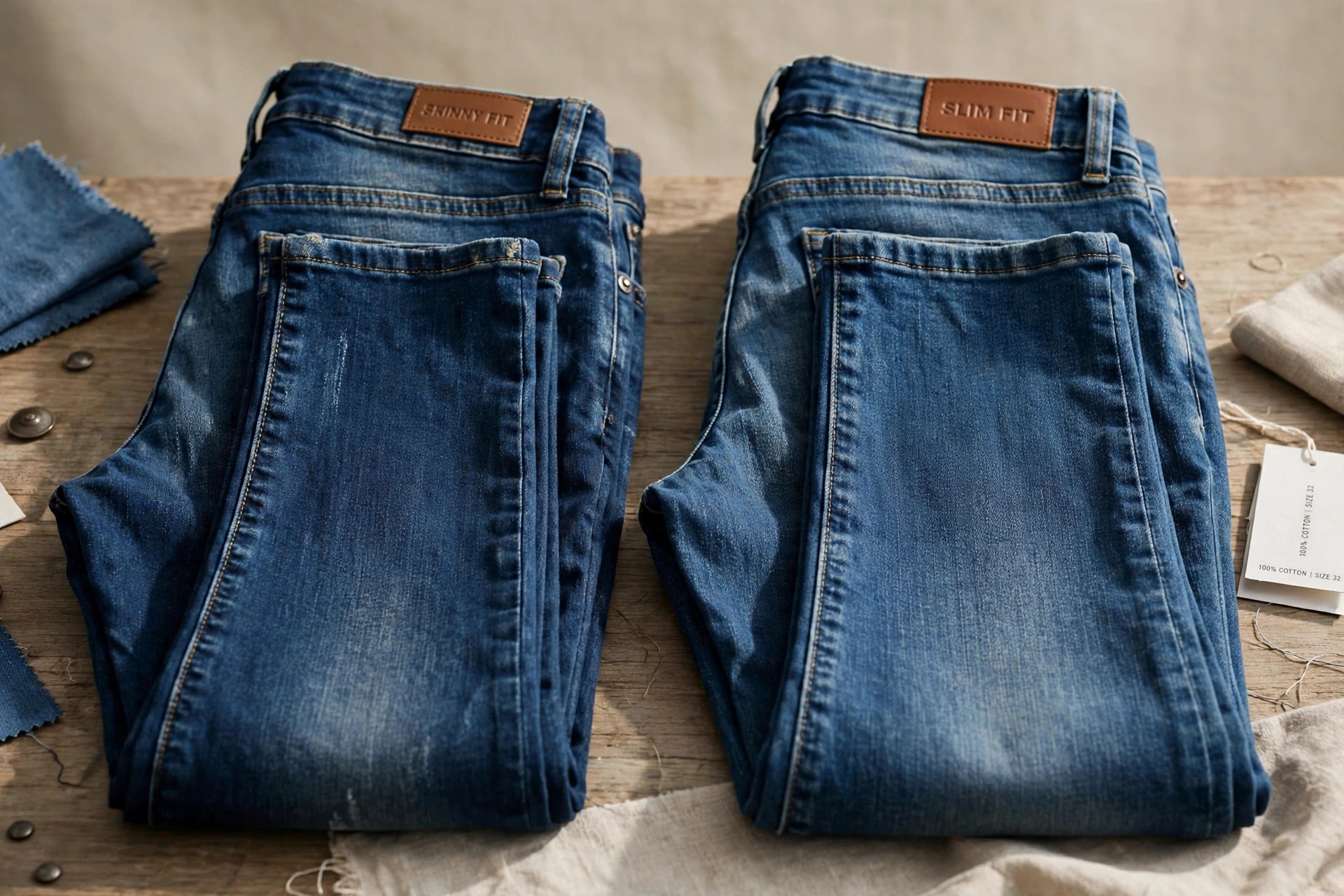
The short answer is tightness. Skinny pants are tight fitting — the fabric virtually hugs the legs, hips, and seat, much like leggings — while slim pants are close fitting, cut with less fabric around the leg than typical pants, but not actually tight against the body. Slim sits between a regular cut and a skinny cut on the fit scale.
The wording around the two fits adds to the confusion. In regard to pants, the words skinny and skinnies mean the same thing, and the words slim and slimming are likewise the same as each other — but skinny and slim are different terms describing different cuts. Once you separate the pairs of synonyms, the choice in the fitting room becomes much clearer.
Denim & Pants Guides
Skinny: Tight From Hip to Ankle
Skinny, as in skinny jeans, describes tight fitting pants. The fabric virtually hugs the legs, hips, and the seat, following the shape of the leg closely from top to bottom. You can think of them as similar to leggings in the fact that they are tight to the body, which is why skinny styles almost always rely on stretch in the fabric to remain wearable through a day of sitting and walking.
Because the fit is so close, skinny pants show the outline of the leg completely. That is the look wearers choose them for: a clean, narrow silhouette that tucks easily into boots and pairs well with longer or looser tops that balance the tight bottom half. If a pant leg needs to be pulled and adjusted over the calf to get it on, it is firmly in skinny territory.
Slim: Close Fitting, Not Tight
Slim, as in slim jeans, describes close fitting pants. They are cut with less fabric around the leg area than typical pants, so the silhouette is trim and tidy, but they are not actually tight like a legging. A slim pant follows the leg at a small distance, skimming rather than squeezing, and it usually keeps that neat line without depending heavily on stretch.
That small amount of ease makes a practical difference. Slim pants move more freely, crease less dramatically at the knee, and generally read as more polished and versatile — suitable for casual offices and evenings out as well as weekends. For many wearers, slim is the middle path: noticeably trimmer than a regular or relaxed cut, noticeably more forgiving than a skinny one.
Not Just Jeans
Jeans are the most common example of both fits, which is why the terms are usually explained with denim, but these two versions of pant legs come in different types of pants as well. Skinny and slim cuts appear in chinos, trousers, and casual pants of many fabrics, and the same rule applies in every case: judge the fit by how the fabric behaves on the leg, not by the garment type.
Fit names are not perfectly standardized between brands, so one maker's slim may approach another maker's skinny. The most reliable test is physical: a skinny pant touches the leg nearly everywhere and needs stretch to flex, while a slim pant keeps a narrow outline with a little air between fabric and skin. Trying both cuts in the same store, in the same size, shows the difference faster than any label.
Choosing the Fit for You
Choose skinny when you want the narrowest possible leg line — for tucking into boots, layering under tunics and longer sweaters, or achieving a distinctly sleek silhouette. Choose slim when you want a trim, tailored appearance that still allows easy movement and a slightly more traditional look. Neither is better in absolute terms; they answer different style and comfort preferences.
Comfort over a full day is the deciding factor for most people. A skinny fit that feels fine standing in a fitting room can feel restrictive after hours of sitting, while a slim fit tends to stay comfortable in more situations. Consider the fabric as well: stretch content helps skinny pants considerably, while slim pants work in a wider range of fabrics, including firmer weaves with little give.
Common Questions
Are slim pants the same as skinny pants?
No. Skinny and slim are different terms. Skinny pants are tight fitting and hug the legs, hips, and seat much like leggings, usually with stretch fabric. Slim pants are close fitting and cut with less fabric than typical pants, but they are not tight. Slim is the middle option between a regular cut and a skinny cut.
Do skinny and slim fits only apply to jeans?
No. Jeans are simply the most familiar example used to explain the two fits. Skinny and slim versions of pant legs are made in many types of pants, including chinos and trousers. In every fabric the same distinction holds: skinny fits tight against the leg, while slim fits close with a little ease.
Which fit is more comfortable, slim or skinny?
For most wearers, slim is more comfortable over a full day because the fabric skims the leg instead of hugging it, allowing easier movement when sitting and bending. Skinny pants depend on stretch to stay comfortable and give a sleeker, more defined silhouette. The better choice depends on whether you prioritize the tight look or all-day ease.
More to Explore
If You Have More Questions About Fashion
You may want to try these sections here on Apparel Search: