What Is the Difference Between Lyocell, Modal and Tencel?
Three wood-pulp fibers from one family tree — and the brand name behind most of the confusion.
The short answer is this: lyocell is the generic name for a regenerated cellulose fiber made from wood pulp in a closed-loop solvent process, modal is a close relative in the same family prized above all for softness, and Tencel is not a separate fiber at all — it is a brand name for high-quality lyocell produced to demanding standards. All three begin as trees and end as soft, breathable, biodegradable fabrics.
Because the three names appear side by side on clothing labels, bedding, and underwear, shoppers often assume they are three unrelated inventions. In fact they overlap so much that the useful questions are narrower ones: what tree did the pulp come from, how was it processed, and is the word on the label a generic fiber name or a trademark? This page sorts out those questions one by one.
Fiber Guides & Related Questions
Where Each Fiber Comes From
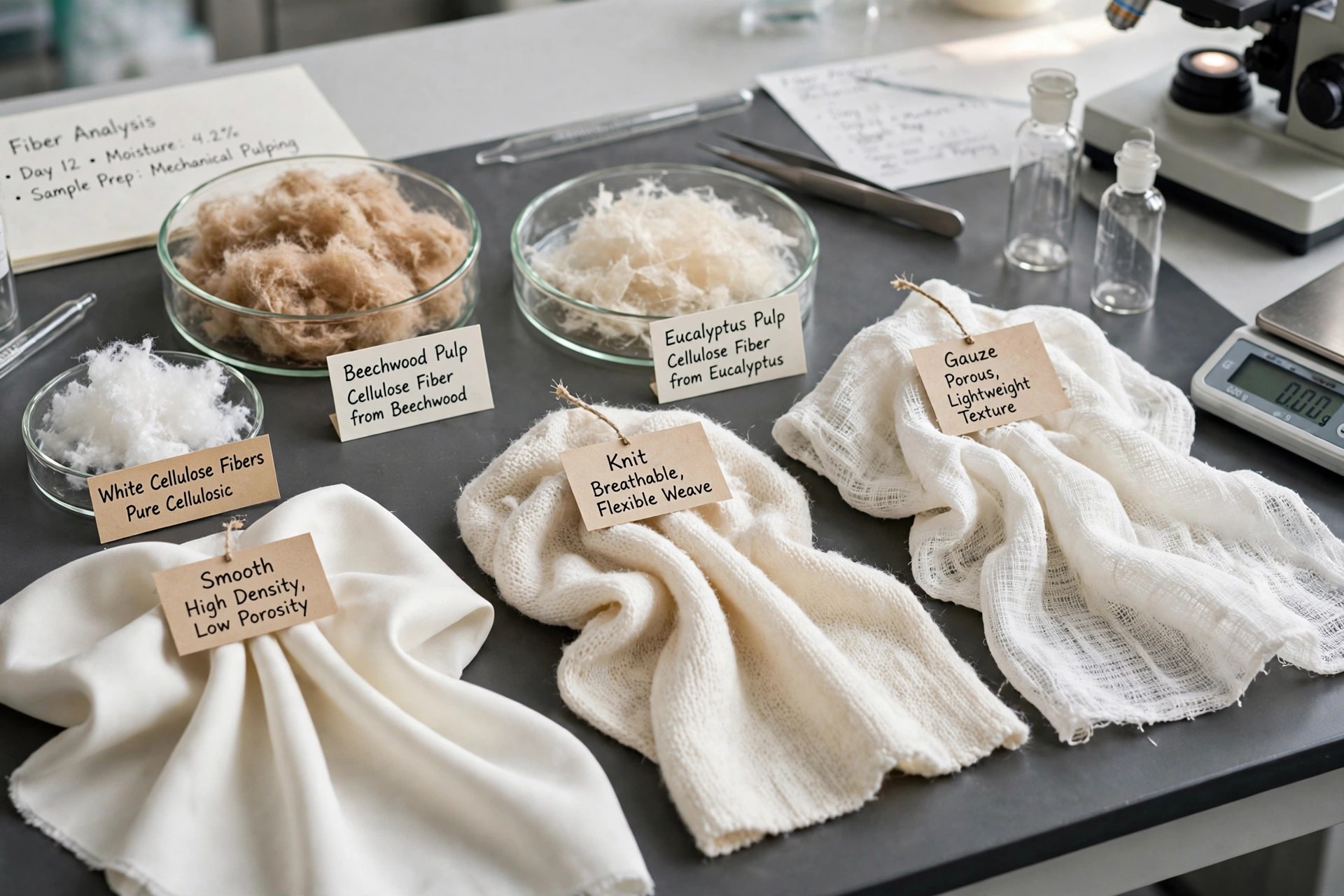
All three fibers are semi-synthetic: they start with natural cellulose and are regenerated into a new fiber by an industrial process. Lyocell is derived from wood pulp, usually from eucalyptus trees, though it can also be sourced from bamboo and other wood sources. Modal is also made from wood pulp, primarily sourced from beech trees. Tencel, as a brand of lyocell, is specifically known for high-quality lyocell made from eucalyptus wood pulp.
That shared wood-pulp origin explains most of what the fibers have in common. None of them is a plastic-based synthetic like polyester, and none is used exactly as it grows, the way cotton or linen can be. They sit in the middle ground of the fiber world: plant material, heavily and carefully processed, which is why they are grouped together as regenerated or manufactured cellulosic fibers.
How They Are Made
Lyocell utilizes a closed-loop process with a non-toxic organic solvent. The wood pulp is dissolved, the solution is extruded into fibers, and the fiber is then regenerated into its final form, while the solvent is recovered and reused rather than discharged. That closed loop is the heart of lyocell's reputation for cleaner production, because the chemistry stays inside the system instead of flowing out of it.
Modal follows a similar path. It also uses a closed-loop production process, but it may involve different chemicals and methods during processing, tuned toward softness and strength in the finished yarn. Tencel production is the lyocell production process carried out under the brand's high standards of production and sustainability, so a Tencel fiber and a well-made generic lyocell fiber are close cousins in method as well as in raw material.
How They Feel and Perform
Lyocell exhibits a silky smooth texture, excellent moisture-wicking properties, and breathability, and it is known for its biodegradability and sustainability. Modal is known for its supreme softness, similar to that of silk, with excellent moisture absorption, breathability, and color retention; it is also biodegradable, and it tends to stay soft and hold its shape well through repeated washing, which is why it is so common in underwear, loungewear, and T-shirts.
Tencel is renowned for exceptional softness, breathability, and moisture-wicking ability, and it is highly sustainable, biodegradable, and environmentally friendly. In practice, all three fibers manage moisture better than cotton in many warm-weather and next-to-skin uses, feel smooth rather than fuzzy against the skin, and drape fluidly. The differences a wearer actually notices are matters of degree — modal often feels the plushest, lyocell the smoothest and coolest — rather than differences of kind.
Names, Brands and Where You Will Find Them
Think of the three names as three different kinds of label. Lyocell is the generic term for this type of fiber and is often associated with eco-friendly and sustainable practices. Modal is a specific type within the family, known for luxurious softness and sustainability. Tencel is a brand name for a specific high-quality lyocell, often associated with premium products and sustainability — so a garment tagged Tencel is telling you who made the fiber, not a different fiber category.
All three fibers find applications across a wide range of clothing and textile products, including apparel, bedding, home textiles, sportswear, and intimates. When you shop, the practical takeaway is simple: choose lyocell or Tencel-branded lyocell for smooth, cool, moisture-managing pieces, choose modal when maximum softness against the skin is the priority, and check the blend, because these fibers are frequently combined with cotton or elastane to balance cost, stretch, and durability.
Common Questions
Is Tencel the same thing as lyocell?
Essentially, yes. Tencel is a brand name for lyocell fiber made to high production and sustainability standards, most often from eucalyptus wood pulp. Lyocell is the generic fiber category, so every Tencel garment is lyocell, but not every lyocell garment carries the Tencel brand. The brand name mainly signals a controlled, certified source and process rather than a fundamentally different fiber.
Which of the three fibers is the softest?
Modal is usually considered the softest of the three, with a smooth, silk-like hand that holds up well through washing, which is why it dominates in underwear, loungewear, and soft T-shirts. Lyocell and Tencel-branded lyocell are also exceptionally soft, with a slightly cooler, silkier surface. In real garments the weave, finish, and fiber blend often matter as much as which of these three names appears on the label.
Are lyocell, modal and Tencel biodegradable?
Yes. All three are made from wood-pulp cellulose, and all three are biodegradable under suitable conditions, unlike petroleum-based synthetics that persist for very long periods. Lyocell and Tencel are particularly associated with closed-loop production, in which the solvent is recovered and reused. Blends change the picture, though: a modal garment blended with polyester is only partly biodegradable, so check the full fiber content if that matters to you.
If You Have More Questions About Fashion
You may want to try these sections here on Apparel Search: