What Is the Difference Between Dungaree and Denim?
One is the broad cotton-twill family; the other is its most familiar blue member.
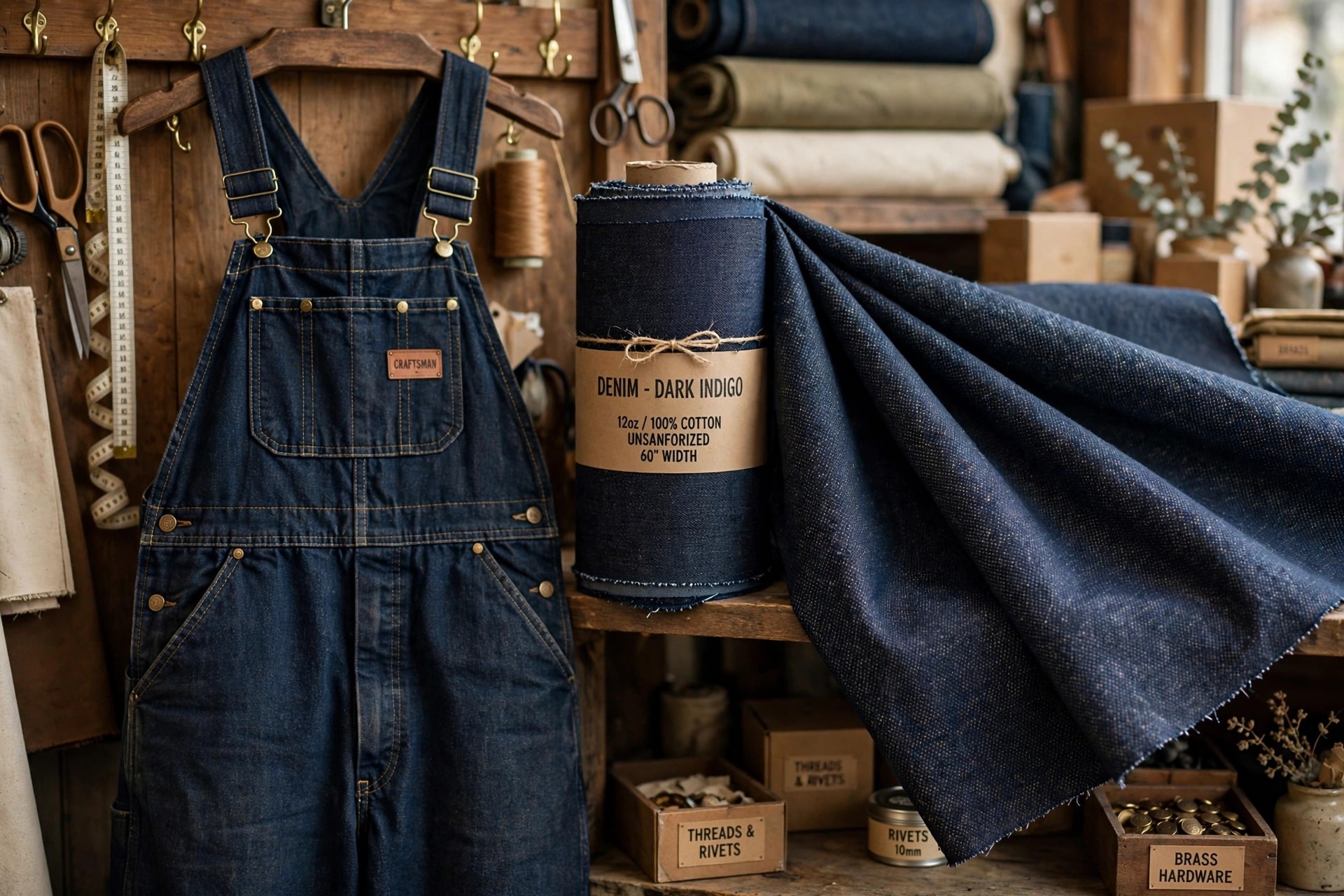
Dungaree is best understood as a subset of denim. The word typically refers to the most common style of blue denim: a cotton twill in which only the warp threads are pre-dyed with the traditional coloring agent indigo while the weft threads are left uncolored, or white. Denim is the wider category — cotton twill that may be warp dyed, undyed, or dyed after weaving.
That one distinction, narrow term versus broad term, explains nearly every point of confusion between the two words. If a fabric is dungaree, it is denim; but plenty of denim — black, ecru, colored, or garment-dyed — is not what most people mean when they say dungaree. The sections below walk through the weave, the dye, and the famous fading that the indigo-and-white construction produces.
Questions & Answers
Denim: The Broad Category
Denim refers to cotton twill, full stop. It may be warp dyed, undyed, or dyed after weaving, which means the category covers far more than blue jeans fabric. Ecru denim that was never dyed, black denim dyed through, brightly colored denim, and denim dyed as a finished garment all belong to the same family, because what defines them is the cotton twill construction rather than any particular color.
The twill itself comes in different structures. Denim may be 2x1 or 3x1 twill, meaning the warp yarn passes over two weft yarns and under one, or over three and under one. That diagonal weave is what gives denim its visible diagonal lines, its strength, and its characteristic way of softening with wear. When people talk about denim weights, selvedge edges, or right-hand and left-hand twills, they are still talking about variations inside this one broad category.
Dungaree: The Classic Blue Subset
Within that broad category, dungaree points to the traditional, most common style of blue denim. Typically only the warp threads are pre-dyed with indigo, the traditional coloring agent, and the weft threads are left uncolored and white. Hold a pair of classic blue jeans inside out and you can see the arrangement at once: deep blue on the face of the fabric, pale and almost white on the inside, because you are looking at the undyed weft from the back.
In everyday speech, the word dungaree has also been used for the garments themselves, especially sturdy jeans and work trousers made from this blue fabric. That garment usage follows naturally from the fabric usage: for generations, the most familiar object made from indigo-warp cotton twill was a pair of working trousers, so the name of the cloth and the name of the clothing became nearly interchangeable in casual conversation.
Weave, Dye and the Famous Fade
The unique fade patterns of the fabric are a direct result of the dungaree dyeing arrangement. Because the indigo sits on the warp threads only, and because indigo coats the surface of the yarn rather than soaking evenly through it, abrasion gradually rubs the blue away at points of friction — thighs, knees, pockets, and creases — revealing the white yarn beneath. That is why jeans fade in personal patterns that map the wearer's habits, while the protected areas stay dark.
Denim that is dyed after weaving, or dyed through in both warp and weft, behaves differently. Its color is more uniform and it tends to fade more evenly, or hold its color longer, because there is no white core waiting underneath the surface. Neither behavior is better; they are simply different tools. Designers who want dramatic whiskers and honeycombs choose indigo-warp constructions, while designers who want a flat, consistent color choose a through-dyed denim.
How to Use the Two Words
A reliable rule of thumb: use denim when you mean the fabric family, and dungaree when you mean its classic blue, indigo-warp member — or the jeans and workwear made from it. A black twill jacket is denim but not dungaree. A pair of traditional blue jeans is both. An undyed natural-cotton tote is denim if it is cotton twill, but nobody would call its pale fabric dungaree.
The distinction matters most when you are buying fabric or describing a garment precisely. Order denim and you may receive any color or dye method in a cotton twill. Order dungaree and you are asking for the familiar blue cloth with the white weft and the fading character that made it famous. Knowing which word you actually mean saves a great deal of back-and-forth with suppliers, tailors, and sellers.
Common Questions
Is dungaree a type of denim?
Yes. Dungaree is a subset of denim, typically the most common style of blue denim, in which only the warp threads are dyed with indigo and the weft threads are left white. Denim is the broader term for cotton twill that may be warp dyed, undyed, or dyed after weaving. So every dungaree fabric is denim, but not every denim fabric qualifies as dungaree.
Why do dungaree jeans fade the way they do?
The fading comes from the dyeing arrangement. Only the warp threads carry indigo, and indigo sits largely on the surface of those yarns. Everyday abrasion at the thighs, knees, and creases rubs the blue surface away and exposes the undyed white weft and yarn cores beneath, producing the unique fade patterns dungaree is known for. Through-dyed denims, by contrast, fade more slowly and more evenly.
Are dungarees and jeans the same thing?
In everyday speech they often are. Dungaree began as a fabric word for the classic blue indigo-warp denim, and because jeans and work trousers were the garments most commonly made from it, the name transferred to the clothing itself. In precise fabric language, though, dungaree still describes the cloth, while jeans describes a style of trouser that can be made from many denims — and even from other fabrics entirely.
If You Have More Questions About Fashion
You may want to try these sections here on Apparel Search: