Delivery Order in Shipping and Apparel Imports
The document that releases your cargo at the port — who issues it, what it says, and how it differs from a bill of lading
A delivery order is a document issued by the shipper, carrier or freight forwarder instructing the shipping line and the port operator to turn over the cargo to the party responsible to carry out the import activities. In plain terms, it is the release instruction for an import shipment: it tells the people holding the goods that the named consignee, or that consignee's appointed agent, is entitled to take the cargo away.
For an apparel importer, the delivery order is often the last document standing between a landed container and the warehouse. The garments may have crossed the ocean, cleared customs and been unloaded at the terminal, but the terminal will not hand them over until the carrier's release has been confirmed — and the delivery order is the paper (or electronic) evidence of that release. Understanding what it is, and what it is not, prevents expensive delays at exactly the point where a seasonal clothing shipment can least afford them.
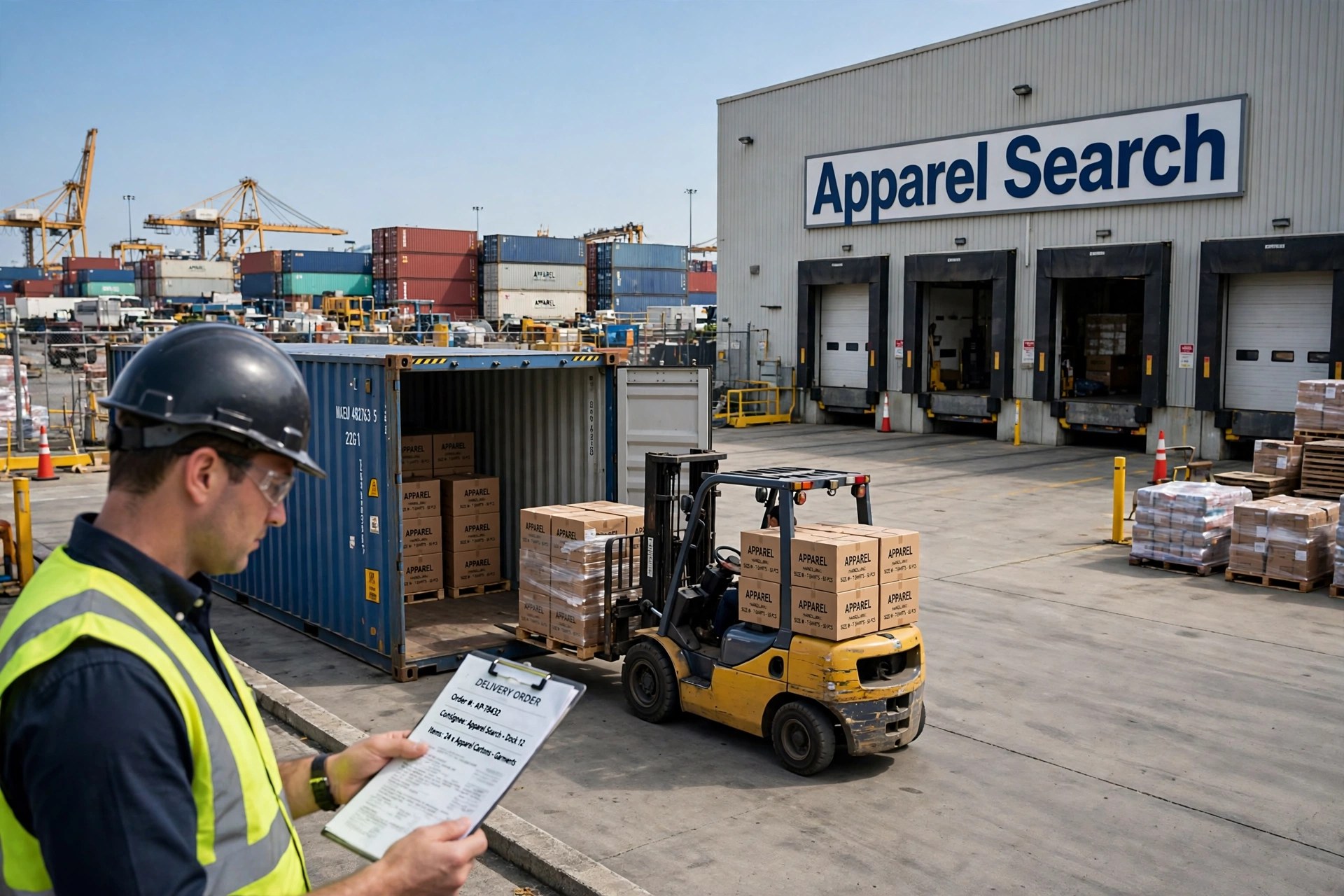
What a Delivery Order Does
The delivery order only facilitates the release of cargo. It works by formally advising the carrier — and, through the carrier, the shipping line and the port operator holding the goods — that all obligations have been settled and that the appointed agent or consignee can now secure the cargo. Freight charges have been paid or arranged, the original transport document has been surrendered or an electronic release has been authorized, and any carrier-side requirements have been met. Until that advice is given, the terminal's job is to keep holding the goods; once it is given, the terminal's job is to let the named party collect them.
That release function is why the delivery order is normally issued at destination, near the end of the import process, rather than at the port of loading. It belongs to the arrival side of the shipment: the consignee or their customs broker deals with the carrier's destination office or agent, settles what is owed, and receives the delivery order in return. The trucker collecting the container or the cartons then works against that release — the terminal checks the delivery order before the cargo leaves the gate.
Delivery Order vs. Bill of Lading
The bill of lading (B/L) is often confused with a delivery order, as both of these documents are handed over to the consignee or their agent at some point in the supply chain process. The two documents do different jobs, and treating one as the other is a common source of confusion for first-time importers.
A bill of lading is a document of title, a contract for the receipt of goods, and a negotiable instrument. It is issued at origin, it evidences the contract of carriage, and — in its negotiable form — whoever lawfully holds it controls the goods it describes. A delivery order carries none of those properties: it is not a document of title, it is not negotiable, and it does not evidence the contract of carriage. It simply instructs the party holding the cargo to release it to a named party. In the usual sequence, the bill of lading side of the transaction is settled first — surrendered, endorsed or released electronically — and the delivery order follows as the practical instruction that gets the goods out of the terminal.
What a Delivery Order Contains
A delivery order identifies the shipment and the party entitled to collect it. Expect to see the consignee's name (and the notify party or appointed agent where one is acting), the vessel and voyage, the port and terminal, the bill of lading number the release relates to, the container numbers for a full-container load, and a description of the cargo — the number of packages or cartons, their marks and numbers, and the gross weight. For an apparel shipment, that description should match the packing list carton for carton: style assortments travel in mixed cartons, and a mismatch between the delivery order, the bill of lading and the cartons actually presented is a reason for the terminal to hold the load while it is sorted out.
A delivery order also commonly carries a validity date. The release is good until a stated day, and collecting within that window matters because terminal storage and container demurrage or detention charges run on their own clocks. If the validity expires before collection, the consignee generally has to have the delivery order extended or revalidated by the carrier's agent — a small administrative step that becomes a large problem if it is discovered by a trucker already waiting at the gate.
How the Release Process Works for Apparel Importers
In practice, the sequence runs like this. The carrier or its destination agent issues an arrival notice as the vessel reaches port. The consignee or customs broker completes customs clearance and settles the carrier's destination charges. The bill of lading is surrendered or its electronic release is confirmed. The carrier or agent then issues the delivery order, and the consignee's trucker or warehouse team uses it to collect the cargo from the terminal within its validity period, inside any free-time allowance the terminal and the carrier allow before storage and demurrage charges begin.
Timing is the commercial point for clothing importers. Garments are seasonal and often sold against delivery dates agreed months earlier, so a shipment that sits at the terminal while paperwork is corrected is not merely an inconvenience — it can miss a store launch or a promotional window, and the storage and demurrage bills keep growing while it sits. Experienced importers therefore chase the delivery order before the vessel arrives: pre-lodging documents, confirming destination charges in advance, and making sure the party named on the delivery order matches the party who will actually collect the goods.
Delivery Orders, Agents and Electronic Release
Many importers never handle a delivery order themselves because their freight forwarder or customs broker acts as the appointed agent: the delivery order may be issued to that agent, who arranges collection and onward delivery to the importer's warehouse. That is normal practice, but the importer should still know whose name the release is in and when it expires, because the importer carries the storage and demurrage risk if collection slips.
Increasingly, the release itself is electronic: carriers and terminals exchange the release instruction through their systems, and the 'delivery order' the consignee receives may be a printed confirmation, a release reference or a PIN-style code the trucker presents at the gate rather than a signed paper form. The legal function is unchanged — it remains the carrier's instruction that the cargo may be turned over to the responsible party — and the checks behind it (identity of the collecting party, container and bill of lading numbers) matter just as much in electronic form, since a release code sent to the wrong party can send a container out of the gate to the wrong hands.
More Shipping & Freight Guides
Common Questions
What is a delivery order in shipping?
A delivery order is a document issued by the shipper, carrier or freight forwarder instructing the shipping line and the port operator to turn over the cargo to the party responsible to carry out the import activities. It formally advises the carrier that all obligations have been settled and the appointed agent or consignee can now secure the cargo.
What is the difference between a delivery order and a bill of lading?
A bill of lading is a document of title, a contract for the receipt of goods, and a negotiable instrument issued at origin. A delivery order is none of those: it is not a document of title and it is not negotiable. It only facilitates the release of cargo at destination once the bill of lading side of the transaction has been settled.
Why does a delivery order have an expiry date?
A delivery order is valid until a stated date, and the cargo must be collected within that window. If it expires before collection, the carrier's agent generally has to extend or revalidate it, and terminal storage and container demurrage or detention charges can keep running in the meantime — which is why apparel importers track the validity date closely.