Men's Custom Fit Fashion on Amazon
Slim, tailored, athletic — what the fit labels really mean
Fit is the difference between clothing that is worn and clothing that merely covers. Amazon's men's fashion uses fit as a primary language — slim fit, tailored fit, athletic fit, classic fit — across dress shirts, suits, trousers and casual wear. Understanding what each label promises, and how it maps to your measurements, turns a wall of listings into a shortlist.
A word of honesty about the word “custom”: most custom fit fashion is ready-to-wear cut to a defined fit profile, not made-to-measure from your personal pattern. This guide explains both — how to shop the fit labels well, and what genuinely individualized options look like — so expectations and trousers both fit.
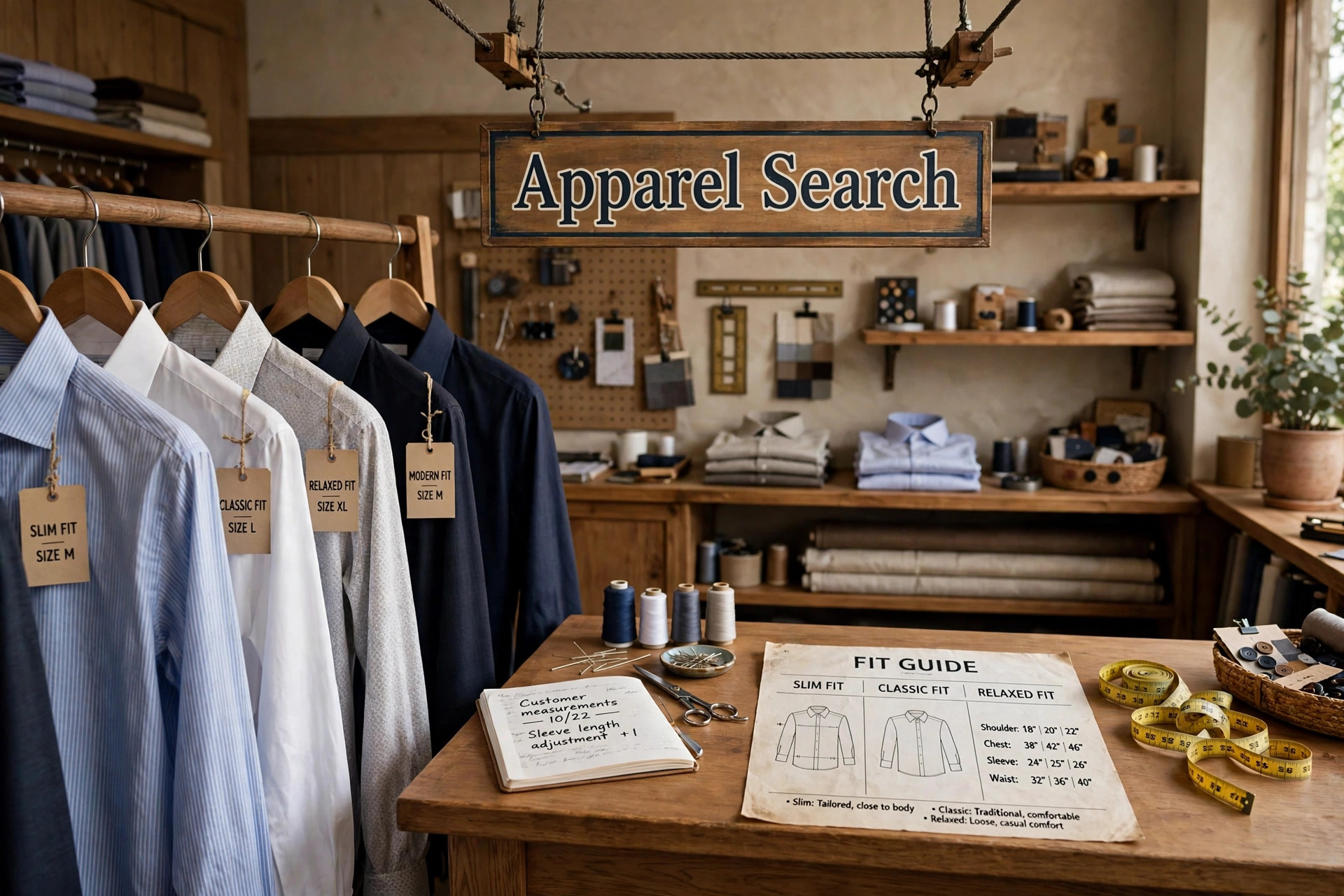
Once the fit is understood, the Apparel Search Amazon clothing guide leads to every Amazon department where it applies — shirts, suits, trousers and more.
The Fit Labels Decoded
Classic (or regular) fit is the traditional cut: room through the chest and waist, comfort first. Slim fit narrows the chest, waist and sleeve and raises the armhole for a closer silhouette. Tailored fit sits between the two — shaped without squeezing. Athletic fit solves the lifter's problem: broad shoulders and chest with a tapered waist, so the shirt fits the top without billowing at the middle.
Trousers carry a parallel vocabulary — slim, straight, relaxed, athletic taper — describing thigh room and leg taper. The labels are not standardized across brands, which is why measurements, not labels, are the final authority. Two brands' slim fits can differ by two inches at the waist of the garment.
Measure Once, Shop Forever
The custom-fit mindset starts with a tape measure: neck, chest, waist (natural and trouser), sleeve length, inseam, and shoulder width from a jacket that fits. Dress shirts are sold by neck and sleeve — the two numbers that decide whether a shirt can ever fit — and suits by chest and length. Record everything in a note you can reach from the product page.
When a listing gives garment measurements, compare them against a garment you own and love, laid flat. That single habit — garment-to-garment, not body-to-chart — is how experienced online shoppers achieve a tailor's hit rate.
Close to Custom: Alterations and Options
Ready-to-wear plus a local tailor is the classic route to a custom result: buy the fit that matches your largest dimension, then have waists taken in, sleeves and hems shortened. The alterations that are cheap and reliable are hems, waist adjustments and sleeve lengths; shoulders and chest are effectively fixed, so fit those at purchase.
Some sellers on Amazon offer expanded size grids — short and long lengths, exact sleeve sizes, extra collar sizes — that approximate made-to-measure for most men. Combined with the fit labels understood properly, they deliver what most shoppers actually want from “custom”: clothes that look made for them.
Common Questions
What does custom fit mean on Amazon men's fashion?
Usually a defined ready-to-wear fit profile — slim, tailored, athletic or classic — rather than a garment made from your individual pattern. The label tells you the cut; your measurements tell you the size.
Which measurements do I need for dress shirts?
Neck size and sleeve length decide a dress shirt's size; chest and waist measurements tell you which fit label will sit right on your frame.
Can alterations make ready-to-wear fit like custom?
For most purposes, yes: fit the shoulders and chest at purchase, then tailor hems, waists and sleeves — the affordable adjustments — for a made-for-you result.