Draped Ball Gown
The Apparel Search guide to finding your perfect gown.
Shop Draped Ball Gowns Now
Shop Draped Ball Gowns on eBay Shop Draped Ball Gowns on AmazonThe eBay and Amazon links on this page are affiliate links. If you make a purchase through them, Apparel Search may earn a commission.
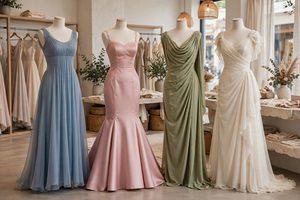
Draping — fabric gathered, folded, and arranged in soft waves rather than cut in flat panels — is one of the oldest and most flattering techniques in dressmaking. On a ball gown, draping creates a Grecian-goddess effect: the fabric seems to flow like water, skimming the body in ways that structured seaming never could.
Draped gowns are wonderfully forgiving: the folds camouflage everything while creating gorgeous dimension and movement. They suit soft, fluid fabrics — jersey, chiffon, charmeuse — and they photograph with a painterly, romantic quality.
Who It Flatters
Almost universally. Draping skims over tummies, hips, and thighs while creating beautiful vertical movement that elongates. It's particularly lovely on softer, curvier figures — the fabric follows curves instead of fighting them. Petite wearers should keep the draping scaled small so it doesn't overwhelm.
What to Look For When Buying
Quality draping is pinned and hand-set, not just gathered randomly — look for intentional, even folds. The draping should be secured at multiple points so it doesn't shift during wear. Check both sides for symmetry. Heavier draping needs a substantial lining to support it; unlined draped bodices can stretch and sag.
Styling Draped Gowns
Match the softness: loose waves, glowing skin, delicate jewelry. The gown's mood is romantic and effortless — let your styling follow. Avoid anything too structured or severe, which fights the draping's fluidity. A simple metallic sandal keeps the look modern.