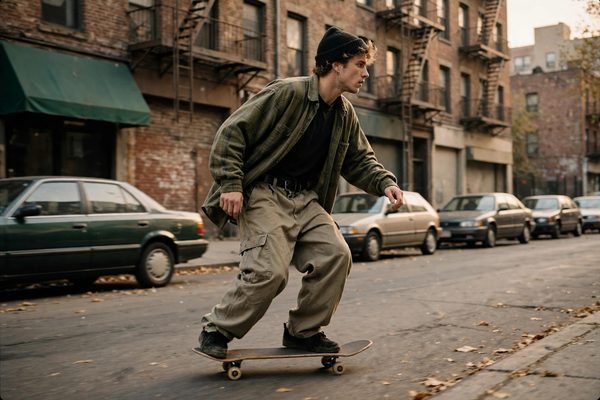
Surf and Skate Roots (1980s)
Streetwear began in California surf and skate culture. Surfboard shaper Shawn Stussy started printing his signature on t-shirts in the early 1980s, selling them from his car alongside surfboards. Skate shops became community hubs where kids mixed surf graphics, punk attitude, and hip-hop style.
Hip-Hop Takes Over (1990s)
As hip-hop went mainstream, its fashion followed: baggy jeans, Timberland boots, oversized jerseys, and bold logos. Brands like FUBU, Cross Colours, and Karl Kani dressed the culture from within. In New York, Supreme opened its Lafayette Street skate shop in 1994, and in Tokyo, Nigo launched A Bathing Ape amid the Harajuku scene.
The Drop Model (2000s)
Supreme perfected the weekly "drop" - limited products released in small quantities, creating lines around the block and a thriving resale market. Collaborations became the currency of cool, as streetwear brands partnered with artists, musicians, and heritage companies.
Luxury Crossover (2010s)
The wall between streetwear and high fashion collapsed. Louis Vuitton collaborated with Supreme in 2017; Virgil Abloh, founder of Off-White, became artistic director of Louis Vuitton menswear. Sneaker culture, driven by Nike and Adidas collaborations, became a multi-billion-dollar resale economy.
Streetwear Today
Streetwear's influence now touches every corner of fashion, from fast-fashion basics to couture runways. The aesthetic - relaxed fits, graphic statements, sneaker-first styling - has become the default uniform of casual dress worldwide.