Fashion Editorial
Apparel Search fashion summary — a short guide to fashion editorial.
Editorial means relating to the commissioning or preparing of material for publication. An editorial itself is an article — in a newspaper, magazine, blog or research publication — that gives an opinion on a topical issue, written by or on behalf of an editor. A fashion editorial applies that form to clothing, footwear, accessories and the wider fashion industry.
Fashion Editorial — Explore & Resources
Opinion, the Editorial Page and the Op-Ed Page
A newspaper editorial presents the opinion of the publication itself. It often reflects the majority view of the editorial board — the body of editors and business managers that governs the paper — and it is frequently unsigned, precisely because it speaks for the institution rather than for one writer. Editorials traditionally appear on a dedicated editorial page, which also carries letters to the editor from readers.
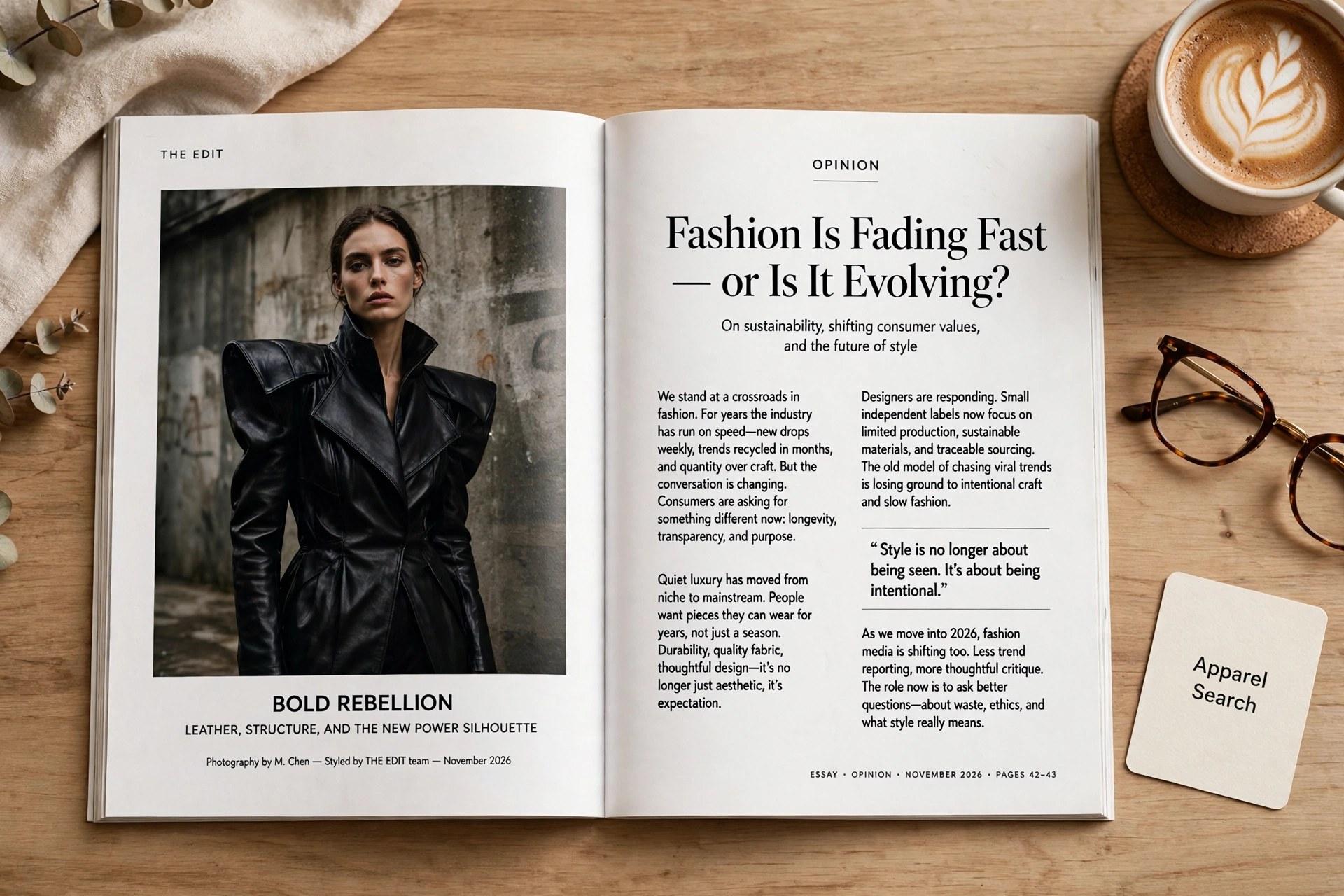
The page opposite is the op-ed page, and the distinction matters: op-ed pieces are opinion articles by writers who are not directly affiliated with the publication. Fashion coverage uses both forms. A magazine's own editorial line on a trend or an industry issue is institutional opinion; a guest column by a designer or critic arguing a position is op-ed, even when both appear in the same issue and look alike on the page.
Editorial Images and Fashion Stories
In fashion, the word also covers the visual side of publishing. Fashion editorial images are photographs or illustrations made to accompany text: they illustrate a story, article or idea inside a magazine, newspaper or blog, embellishing a theme visually rather than simply recording a product. A fashion editorial shoot is styled and sequenced to tell that story across several pages, which is what separates it from catalogue photography.
The term is used loosely online — some websites call any fashion news article an editorial — so readers should judge by content rather than by label. Genuine editorials argue, interpret or stage a theme; news reports events. Publications known for their fashion editorials, from specialist editorial sites to magazine features, are linked in the references from this page for readers who want examples of the form done well.
How to Read an Editorial Critically
Reading editorials well means separating their three ingredients. First, the facts the piece relies on, which can be checked like any reporting. Second, the interpretation placed on those facts, which is where the publication's position lives. Third, in visual editorials, the styling argument: the choice of garments, casting and setting puts a case about how fashion should look now, and it can persuade without stating a single claim. Readers who can name which ingredient is doing the persuading are the readers editorials are written for — everyone else is simply being carried along by good photography.
Common Questions
What is a fashion editorial?
Material prepared for publication that presents fashion through opinion or visual storytelling: an article giving a publication's or writer's view on a fashion issue, or a styled photographic story illustrating a fashion theme in a magazine, newspaper or blog.
What is the difference between an editorial and an op-ed?
An editorial voices the publication's own position, often unsigned and reflecting its editorial board. An op-ed is an opinion piece by an outside writer who is not affiliated with the publication.
Are fashion editorials the same as fashion news?
No. News reports what happened; editorials interpret, argue or present a theme. Some websites label news articles as editorials, but the content — reporting versus opinion and visual storytelling — is the real distinction.