Fashion Editor Jobs
Apparel Search fashion summary — a short guide to fashion editor jobs.
An editor is the person in charge of the final content of a text, and a fashion editor does that job for fashion: supervising the creation, development and presentation of content for a magazine's fashion department, a fashion website, a newspaper or a fashion television programme. It is one of the most visible jobs in fashion media — and one of the least predictable.
Fashion Editor Jobs — Explore & Resources
What Fashion Editors Actually Do
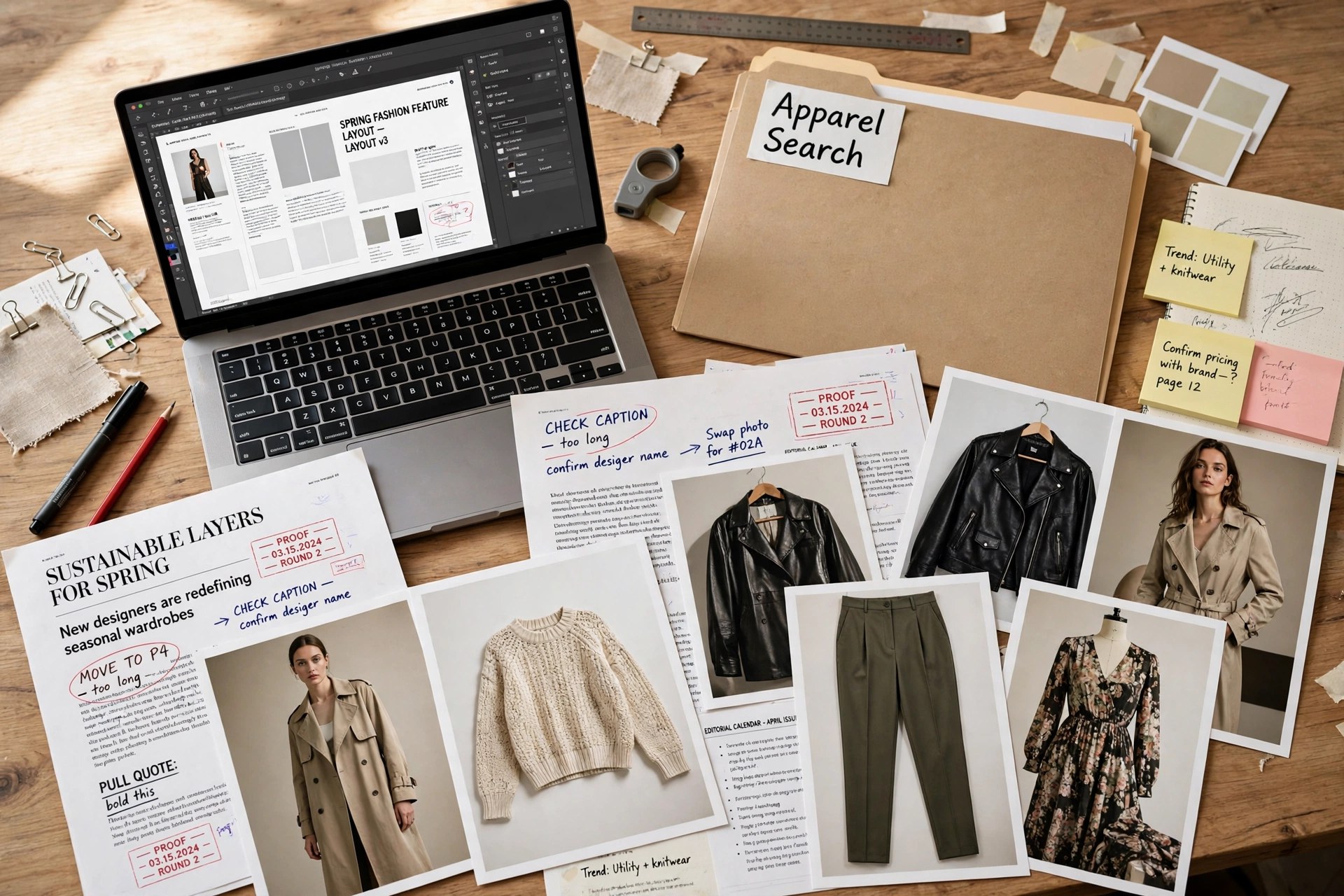
Typical duties mix the creative and the managerial. Fashion editors supervise other editors and writers, write and edit articles themselves, formulate and style photo shoots, choose the photographs that get published, and select the fashion items and trends a publication will feature. They research trends across the industry and network constantly with photographers, designers and public relations professionals, because a fashion desk runs on access and early information.
The editor works inside a team: closely with the editor-in-chief on direction, with advertising staff on the commercial shape of an issue, and with photographers and models to produce the finished pages. The influence is real — an editor at a leading media company can shape what readers around the world perceive as trendy — which is why the jobs are competed for so hard and why there are no certainties in the role from one season to the next.
Getting Into Fashion Editor Jobs
There is no single required route, but two foundations recur. Writing and journalism skill is essential: an editor who cannot write and restructure copy cannot do the core of the job, whatever their eye for clothes. Fashion schooling helps — attending a fashion school cannot hurt, and a fashion-specific programme adds industry knowledge and contacts — but a strong grounding in journalism serves candidates who did not take that route.
Job hunting runs through the obvious industry channels: job boards listing fashion editor openings, the careers sections of fashion media companies such as the major magazine publishers, and the writers and editors job descriptions collected in the employment section linked from this page. Long hours and a fast pace are part of the offer, and employers look for people who are smart, hard-working and genuinely stylish in their judgement — taste, demonstrated in a portfolio of work, is the credential that matters most.
Editors in Digital Media
The editor's job has widened with digital publishing. A fashion editor at a website or social-first publication commissions and edits on a daily or hourly cycle rather than a monthly one, works with analytics on what readers actually opened, and thinks in headlines and images sized for feeds as well as for pages. The core skills have not changed — judgement about trends, clean editing, shoot production and industry contacts — but the tempo has, and job advertisements for digital editor roles say so plainly, asking for speed alongside taste. Candidates who can show both traditional editorial training and digital output stand out in that market.
Common Questions
What does a fashion editor do?
A fashion editor supervises the creation and presentation of fashion content for a magazine, website, newspaper or television programme: managing writers, editing and writing articles, styling shoots, choosing photographs, and selecting the items and trends to feature.
Do I need a fashion degree to become a fashion editor?
No single degree is required. A fashion school background helps, but strong writing and journalism skills are the essential foundation, and many editors enter through journalism, internships and junior editorial roles.
Where are fashion editor jobs advertised?
On general job boards, through the careers sections of fashion media companies, and in industry employment listings such as the writers and editors descriptions linked from this page.