Fashion Zipper
Apparel Search fashion summary — a short guide to fashion zipper.
Nothing is more annoying than a broken zipper — but when it works, the zipper is one of fashion's hardest-working components, used on pants, jackets, handbags and countless other items to open, close, attach and detach.
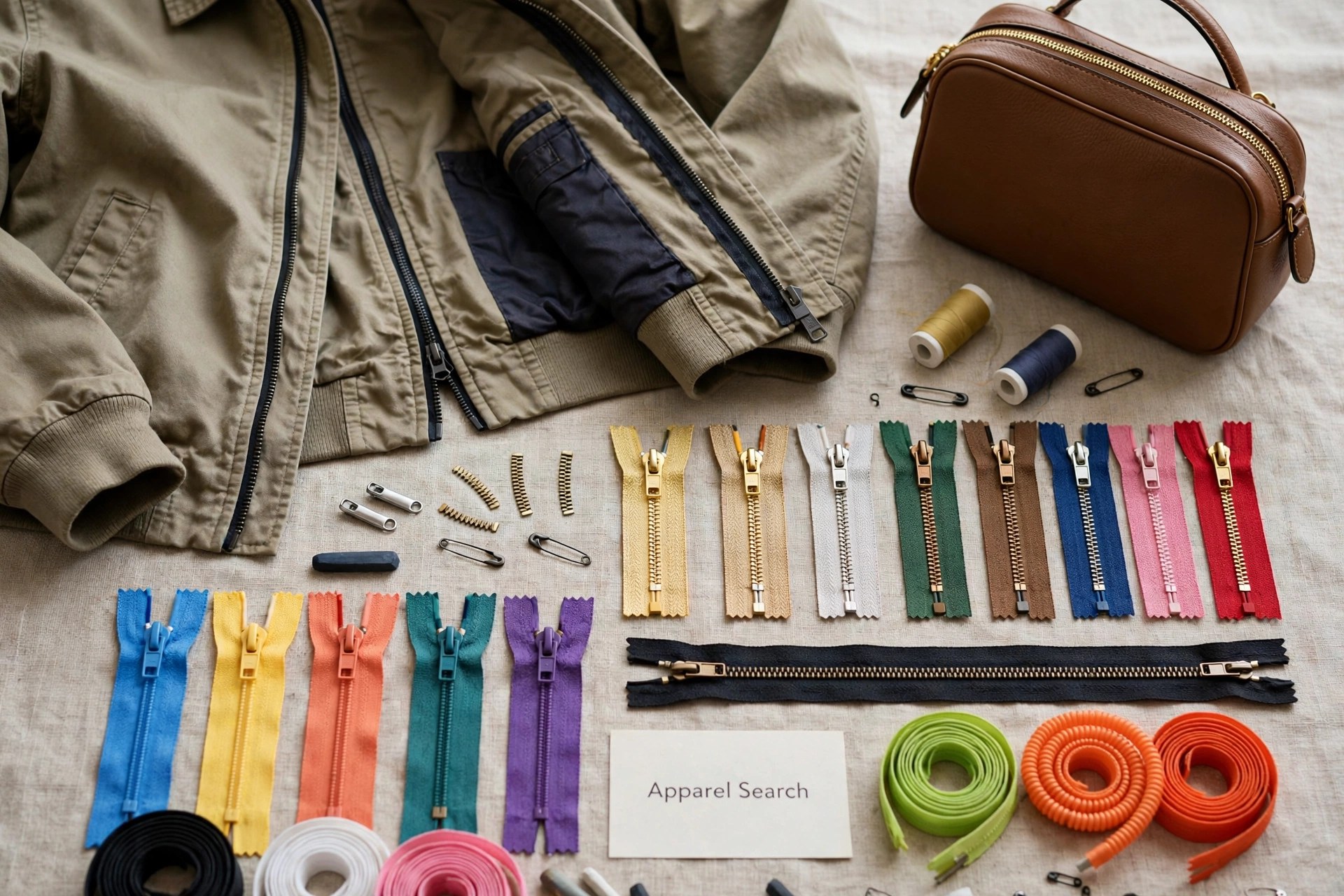
Fashion Zipper — Explore & Resources
How a Zipper Works
A zipper can increase or decrease the size of an opening to allow or restrict the passage of objects: the zipper on a trouser fly restricts passage, and the zipper on a handbag limits access to the valuables inside. Zippers can also attach or detach parts of a garment — some hoods zip off entirely.
The teeth, also known as elements, are the parts on each side of a zipper that mesh, or engage, with each other when passed through the slider. Everything in zipper design — materials, tooth shapes, slider forms — is a variation on that single meshing action. The zipper history and zipper manufacturers pages linked from this page cover where the device came from and who makes it.
The Main Types
Metal zippers are the classic type, found mostly in jeans, jackets and handbags; their teeth are individual pieces of metal — brass, aluminium or nickel — moulded into shape and set on the tape at regular intervals. Plastic-moulded zippers are identical except that the teeth are plastic. Coil zippers now form the bulk of zipper sales worldwide: the slider runs on two coils, in spiral form with a cord inside, or in ladder form, the Ruhrmann type.
Invisible zippers hide their teeth behind tape so the zipper disappears into skirts and dresses, the tape, slider and puller coloured to match the garment. Reverse coil zippers put the coil on the back and show stitching on the front, the usual configuration for water-resistant zippers whose coating covers the stitching. Open-ended zippers lock with a box and pin, as on jackets; two-way open-ended versions carry a puller at each end, so a long coat can open from the bottom for leg movement; two-way closed-ended zippers, closed at both ends, serve luggage; and magnetic zippers allow one-handed closure in sportswear. The invisible zippers term page and the invisible zipper factories directory are linked here.
Buying and Fixing
For a single project, zippers are sold by craft and fabric retailers such as Joann Fabrics, Hobby Lobby and Michaels; larger quantities for clothing production come from wholesalers such as Mood Fabrics, or direct from factories when quantities justify it.
Broken zippers repay simple first aid: straighten bent teeth, remove build-up and lint, and apply laundry soap to lubricate the track. Sometimes, though, a zipper cannot be fixed and needs replacing — knowing which case you have saves both the garment and the temper.
Zippers as Design
Because a zipper is a mechanism, it is easy to forget it is also a design decision. An exposed metal zipper on a dress states something different from an invisible one in the same dress: the first treats the closure as jewellery, the second erases it so the fabric speaks alone. Designers place zippers where no closure is needed — on pockets that do not open, along seams that do not part — because the zipper's teeth have become a recognised fashion texture, industrial and precise. The types listed on this page are therefore also a palette: coil for discretion and curves, metal for weight and statement, invisible for ceremony, magnetic for speed. Choosing among them is specification and styling at once — which is exactly what a component that appears on everything from jeans to evening dresses has to be.
Common Questions
What are zipper teeth called, and how do they work?
The teeth are also known as elements. They sit on each side of the zipper and mesh — engage — with each other when passed through the slider, closing the opening.
Which zipper type sells most worldwide?
Coil zippers form the bulk of zipper sales worldwide. Their teeth are the windings of two coils, in spiral form with a cord inside or in ladder (Ruhrmann) form.
What can you try before replacing a broken zipper?
Straighten bent teeth, remove build-up such as lint, and lubricate the teeth with laundry soap. If those fail, the zipper generally needs replacing.