PLM Fashion Software — Page 2
Product lifecycle management directory, page 2: enterprise platforms and apparel specialists
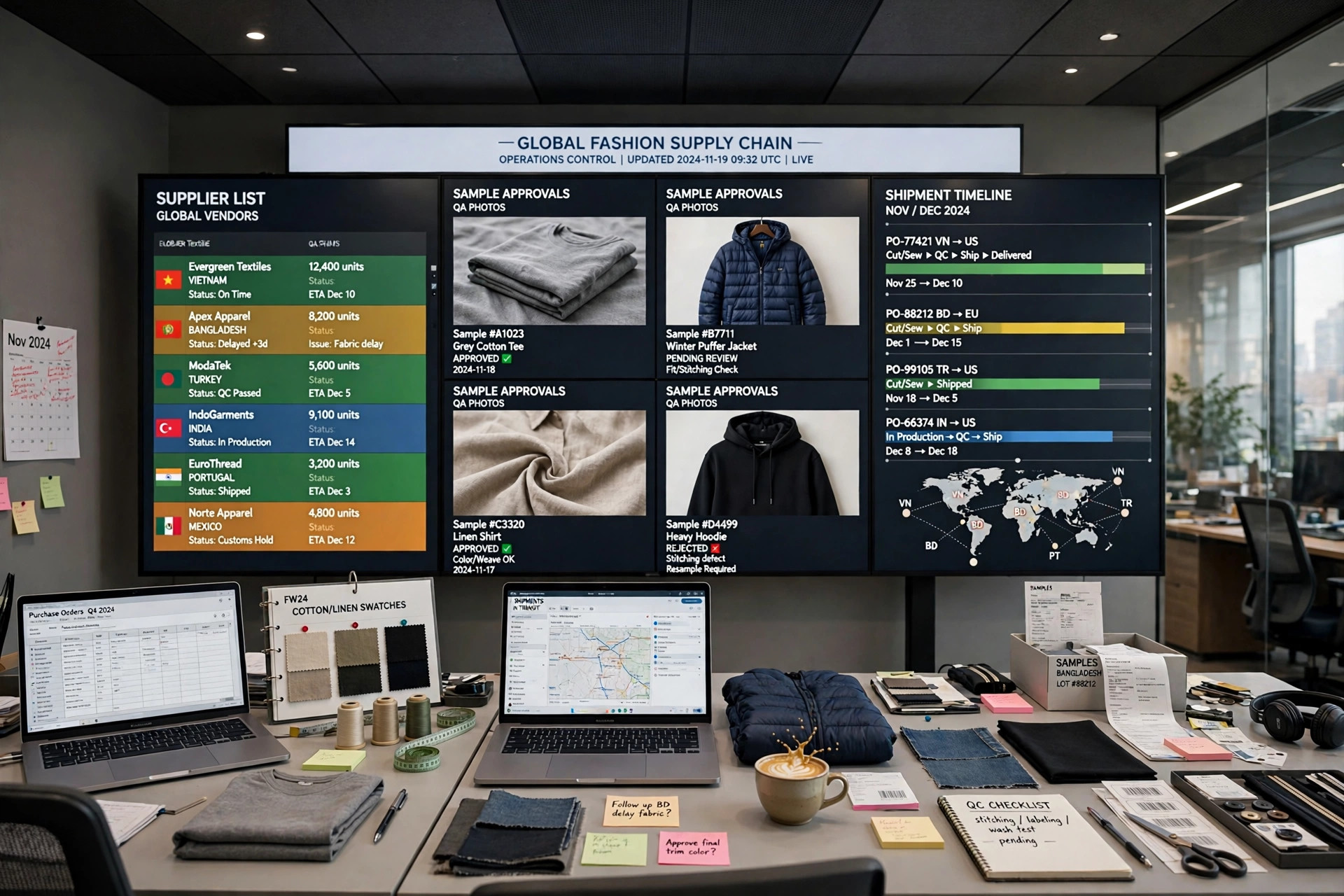
What is PLM fashion software? PLM refers to product lifecycle management — in other words, the product development lifecycle. The faster a company can develop and bring a product to market the better, and PLM software helps the fashion industry systematically manage the product development process: the line plan, the product data, the samples, the costs and the calendar, in one system every partner can see.
This is the second page of the Apparel Search PLM directory; the first page is linked in the series navigation below and in the guides above. Page 2 leans toward the enterprise end of the market — the platforms serving companies with complex, global supply chains — alongside apparel specialists and the industry's best-known PLM information resource.
Related Software Guides
PLM at Enterprise Scale
A global fashion business develops thousands of styles a season across offices, agents and factories on several continents. At that scale PLM is infrastructure: it synchronizes supply and demand in real time, ties product development to the ERP that runs finance, manufacturing, distribution and the supply chain, and gives every region the same product truth. The enterprise suites on this page pair PLM with human capital management, customer relationship management, business intelligence and reporting, delivered on site or through solution centers and certified partner networks.
Scale changes what matters in selection. Data governance — who may change a spec, and how changes propagate — matters as much as features. So does the creative end of the chain: collection development tools that let designers work visually while their work structures itself into the product record, so the line the merchants cost is the line the designers actually drew.
PLM Suppliers — Directory Page 2
Lectra, a world leader in technology for industries using textiles, leather and other soft materials, offers Lectra Fashion PLM, designed specifically for fashion companies, integrating process optimization with collections lifecycle management across line planning, creative collection development, product data management, product engineering and workflow management. Its Kaledo Collection shares the PLM database platform to encourage artistic creativity while structuring collection creation, and Kaledo Textile covers print, knit and weave design; Lectra serves more than 20,000 customers in more than 100 countries. NGC (New Generation Computing) and Simparel supply apparel-focused PLM and supply chain suites; Porini brings a Microsoft-based platform from Italy; Polygon Software's PolyPM ties product lifecycle to production; Tukatech is better known for pattern and 3D systems and appears here for its product development tools; and WhichPLM is the industry's independent PLM information and evaluation resource. World Fashion Exchange completes the page.
Lawson Software's listing describes Lawson for Fashion, enabling companies with complex global supply chains to synchronize supply and demand in real time, with more than 4,500 customers and 1,700 professional consultants across its enterprise business; the Lawson website no longer responds — the company was acquired by Infor — so the entry is kept unlinked as a record. The same applies to Plural Technology (Apparel Innovator), StyleFile by Patternworks and Trade Stone Software, whose sites no longer respond, and to RunTime (GEAC). Live vendor pages are in the references below.
More Software Guides
Common Questions
How do I choose between the PLM suppliers on pages 1 and 2?
Start with scale and fit. Apparel-specific suites on page 1 suit small and mid-sized companies that want PLM inside their operational system. The enterprise platforms emphasized on this page suit global, multi-division businesses that need PLM integrated with worldwide ERP, and independent resources such as WhichPLM exist to help evaluate them.
Does PLM include design tools, or only data?
Both exist. Some platforms, such as Lectra's, include creative collection development tools sharing the PLM database, so sketches and textile designs structure themselves into the product record. Others focus on data, workflow and costing and connect to separate CAD and design systems.
What does PLM have to do with speed to market?
Development time is mostly waiting and rework: waiting for approvals, re-entering data, correcting outdated specs. PLM attacks all three with one current record, visible sample status and managed workflow — which is why the faster a company can develop product, the more directly PLM pays.
References & Further Reading
- Lectra
- New Generation Computing
- Porini USA
- Polygon Software
- Simparel
- Tukatech
- WhichPLM
- World Fashion Exchange
- Plural Technology Private Limited
- Lawson Software — enterprise software supplier (Lawson for Fashion); its website no longer responds following the company's acquisition by Infor, so the entry is kept unlinked as a record.
- Plural Technology Private Limited (Apparel Innovator), StyleFile by Patternworks, Inc., Trade Stone Software and RunTime (GEAC) — PLM suppliers listed in this directory whose websites no longer respond; entries kept as records without links.
More to Explore
PLM Software Directory — All Pages
- Page 1 — PLM Software for the Fashion Industry
- Page 2 — PLM Fashion Software (you are here)