Tapestry Definition: Definitions for the Clothing & fabric Industry
Fabric Search Fiber Directory Definition List Fashion Industry News
Guess which handbag brand loves Tapestry? Well, the company that started the Coach brand, changed their name to Tapestry in 2017. Below is the actual meaning of the word.
Tapestry is a form of textile art. It is woven by hand on a weaving-loom. The chain thread is the carrier in which the colored striking thread is woven. In this way, a colorful pattern or image is created. Most weavers use a naturally based chain thread made out of linen or wool. The striking threads can be made out of silk, wool, gold or silver, but can also be made out of any form of textile.
Both craftsmen and artists have produced tapestries. The 'blueprints' on cartboard were made by a famous artist, while the tapestries themselves were made by the craftsmen.
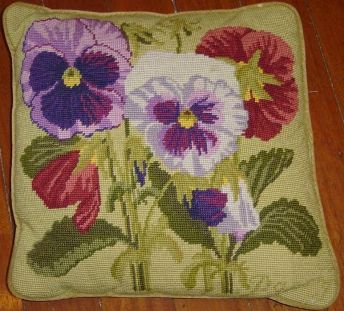
The term is commonly (though incorrectly) applied to embroidered items made in canvas work or needlepoint, probably because this type of embroidery mimics the woven effect.
Function
The success of the decorative tapestry can be partially explained by its portability. Kings and noblemen could transport the tapestry from one residence to another. In churches, it could be displayed on special occasions.
Iconography
The iconography of most Western tapestries goes back to written sources, the Bible and Ovid's Metamorphoses being two popular choices.
Apart from the religious and mythological images, hunting scenes are the subject of many tapestries produced for indoor decoration.
Historical development
Tapestry has been known since at least Hellenistic times. Samples of Greek tapestry have been found preserved in the desert of Tarim Basin dating from the 3rd-2nd century BCE.Tapestry found a new stage in Europe since the early fourteenth century. The first wave of production originated from Germany and Switzerland. Over time, the market expanded to France and the Netherlands.
In the 14th and 15th centuries, Arras, France was a thriving textile town. The industry specialised in fine wool tapestries which were sold to decorate palaces and castles all over Europe. Few of these tapestries survived the French Revolution as hundreds were burnt in to recover the gold thread that was often woven into them. Arras is still used to refer to a rich tapestry no matter where it was woven.By the 16th century, Flanders had become the centre of European tapestry production. By the end of the 16th century, the Northern Netherlands became the most important producers of tapestries, and Delft and Amsterdam became the most important tapestry cities.
Famous tapestries
- The six-part piece
La Dame
la Licorne (The Lady and the Unicorn), stored in the Hotel de Cluny, Paris. - The Bayeux Tapestry, which depicts the events surrounding the Battle of Hastings; note that this is not, strictly speaking, a tapestry, but is instead embroidery.
- The Hunt of the Unicorn is a seven piece tapestry from 1495 to 1505, currently displayed at the The Cloisters, Metropolitan Museum of Art in New York.
 |
| The above article is licensed under the GNU Free Documentation License. From Wikipedia, the free encyclopedia (https://en.wikipedia.org/wiki/tapestry). 5/29/06 |
| Discussion boards are a great place to meet other members of the fashion industry, get advice, and share information. This forum was created to discuss the topic of this page. If you have questions, or information to improve this page, please join in the community discussion below. Please keep the communication on topic and for the purpose of education. |
|
|