Women's Maternity Clothing Guide
Maternity clothing fit is a system, not a guess: your pre-pregnancy size, three measurements, and an understanding of what changes each trimester.
Shop Women's Maternity Clothing Now
Shop Women's Maternity Clothing on Amazon Shop Women's Maternity Clothing on eBayThe Amazon and eBay links on this page are affiliate links. If you make a purchase through them, Apparel Search may earn a commission.

Ask the fitting-room question every pregnant shopper asks — what size am I now? — and maternity clothing gives a surprisingly simple answer: in a true maternity garment, you are your pre-pregnancy size. Maternity patterns are graded from regular women's sizes with the pregnancy changes already built in: more room through the belly, bust and hips, extra length at the front, while neck, shoulders and armholes stay close to standard. A maternity 12 is a regular 12, redistributed.
This page is the fit companion to our maternity clothes wardrobe guide. Where that page lists what to buy, this one explains how it should measure, what changes each trimester, and how to convert when you are shopping regular clothing, vintage, or brands that size maternity differently.
Measuring for Maternity
Three measurements do the work. Bust: around the fullest part, keeping the tape level under the arms — remeasure each trimester, because the bust changes independently of the belly. Belly: around the fullest part of the bump, usually at the navel by mid-pregnancy; this is the measurement that decides panel and dress fit. Hips: around the fullest part, which for panel trousers decides whether the garment stays up. Measure over light clothing, and write the numbers down — they change, and online size charts are only useful against current figures.
Then match the numbers to the brand's maternity chart, not its regular chart. If you fall between sizes in bottoms, most fitters size up for the third trimester; in tops, between sizes usually means choosing by bust. Twins and multiples change the arithmetic — expect to size up earlier and lean on panels with the most stretch.
What Changes, Trimester by Trimester
First trimester changes are small but real: a thickening waist, a fuller bust, and bloating that makes firm waistbands miserable by evening — fit is about forgiveness, not size. Second trimester is the growth spurt: the bump becomes the dominant measurement, rises of trousers stop working, and front lengths of regular tops fall short. This is when true maternity patterns earn their price.
Third trimester, the ribcage has expanded (band sizes go up even when cup size holds), the belly drops lower late in the term, and swelling can move shoe and ring sizes. Postpartum, nothing snaps back on schedule: expect to wear maternity fit for weeks to months, with the belly measurement shrinking gradually. Fit for the body you have at each stage — the clothes are tools, not a test.
Conversions and Fit Checks
Converting from regular clothing: a regular garment works in maternity service if it has the three things maternity patterns add — stretch or give through the middle, length at the front, and a neckline and shoulders that still sit right. Empire-line dresses, wrap tops, and low-rise bottoms worn under the bump convert best; structured, waist-defined pieces convert worst, whatever size you buy. When in doubt, size up one regular size for tops and dresses in the second trimester, two in the third — and accept that trousers rarely convert at all.
Final fit checks for any maternity garment: sit down and stand up (panels should stay put, hems should stay level), reach overhead (front length should still cover), and check the profile — fabric should skim the bump, not strain across it or hang from it like a tent. If a piece only fits today exactly, it fits for a fortnight; leave growth room in anything you want to wear for a trimester.
Reading a Maternity Size Chart
A maternity size chart repays a slow read, because it encodes the grading logic. Most charts give bust, belly (or 'bump') and hip measurements per size, and the belly column is the one regular charts don't have — it is measured at the fullest point of the bump and is the deciding figure for dresses, panels and one-piece garments. If your three numbers land in two different sizes, split the difference by garment type: bottoms follow the hip and belly, tops follow the bust, dresses follow whichever of bust or belly is larger. Charts differ between brands by an inch or more in every column, which is why the same woman is a 10 in one maternity line and a 12 in another while being a consistent 10 in neither brand's language — trust your tape measure over your memory of your size, and re-measure each trimester. Two minutes with a tape is the cheapest fitting room there is.
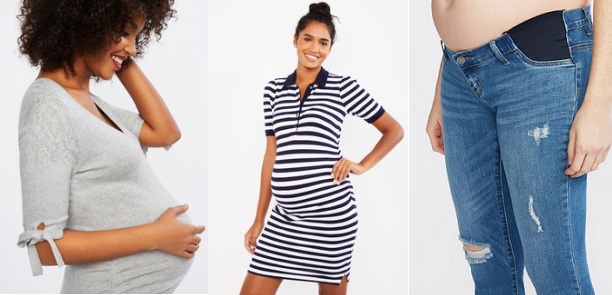
Photos From Our Original Guide
Related Women's Guides
More to Explore
Looking for Women's Clothing Stores?
This guide helps you choose women's maternity clothing. To browse where to buy, visit our women's clothing store directory, where you can find retailers that carry them.