Coco Chanel Profiles
The life behind the liberation — orphanage, singer, shopkeeper, couturier.
Gabrielle Bonheur Chanel was a French fashion designer and founder of the Chanel brand — and the only fashion designer to appear on Time magazine's list of the 100 most influential people of the 20th century. This profiles page tells her story: the orphanage childhood, the sewing lessons that became a trade, the brief singing career, and the shop of 1910 that grew into the house at 31 rue Cambon. Of all the pages in this series, this is the one the others depend on: every claim made for the collections, the seasons and the runway traces back to the life set out here.
Chanel was raised in an orphanage and taught to sew. She had a brief career as a singer before opening her first clothes shop in 1910. The biography searches in the references gather the wider career coverage; the official CHANEL website is also linked there.

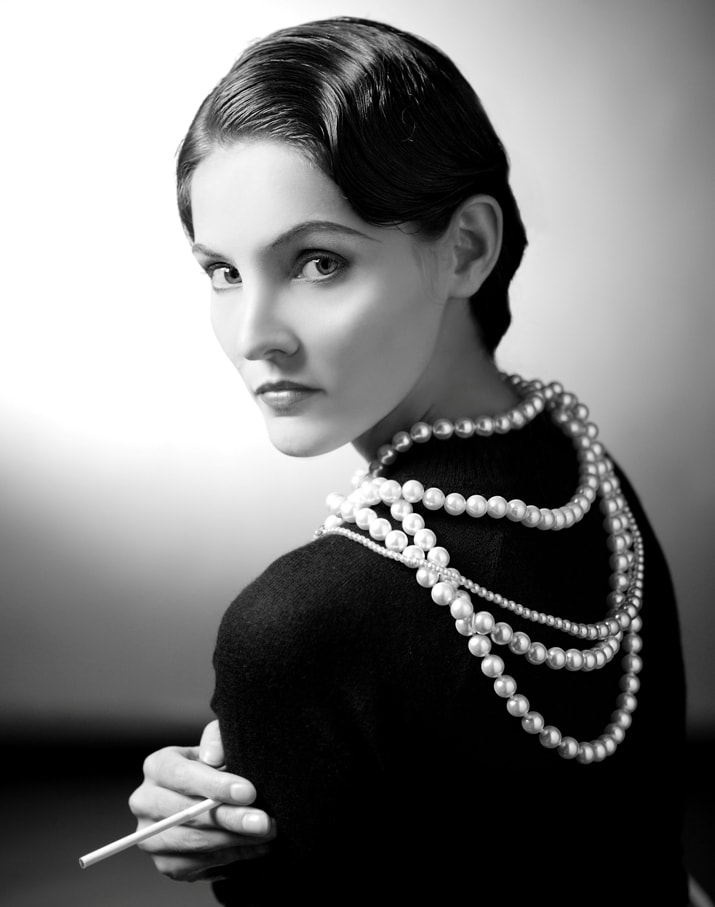
Illustrative image created for this guide — an artistic impression, not this designer's own garments.
News, Photos & VideoCollectionsFall FashionsFashion WeekNewsProfilesRunwaySpring Fashions
From the Orphanage to 1910
The beginning explains the clothes. A girl raised in an orphanage and taught to sew learned dressmaking as a practical skill, in plain cloth, without ornament to hide behind — and the designer she became never lost that grounding: Chanel's elegance was always constructed, cut first and decorated second. The brief career as a singer that followed gave her the name the world knows — Coco — and in 1910 she opened her first clothes shop. The house that grew from it, Chanel S.A., is a French fashion house well established in haute couture, specializing in luxury goods: haute couture, ready-to-wear, handbags, perfumery and cosmetics among them.
Along with Paul Poiret, she was credited with liberating women from the constraints of the corseted silhouette and popularizing a sportive, casual chic as the feminine standard in the post-World War I era. The profiles record is where that liberation belongs: not as a slogan but as a working method learned young — clothes cut for the woman who wears them, learned at a sewing table where nothing impractical survived.
The 1920s: Perfume, Suit and Little Black Dress
In the 1920s, Chanel took her thriving business to new heights. She launched her first perfume, Chanel No. 5, which was the first to feature a designer's name — a couturier's signature carried into scent, and an iconic product ever since. In 1925 she introduced the now legendary Chanel suit with collarless jacket and well-fitted skirt, and the decade also gave fashion the little black dress: black promoted from mourning to elegance, plain enough to be universal and exact enough to be couture.
She died on January 10, 1971, at her apartment in the Hotel Ritz in Paris. She never married, having once said, "I never wanted to weigh more heavily on a man than a bird." Read with the collections page, the profile completes its arc: the orphanage seamstress became the founder whose tweed suit, little black dress and signature scent still organize how the house she founded presents itself — and whose influence, as Time's list records, reached far beyond fashion's own borders.
Photos
Common Questions
Who was Coco Chanel?
Gabrielle Bonheur Chanel was a French fashion designer and founder of the Chanel brand. She was the only fashion designer to appear on Time magazine's list of the 100 most influential people of the 20th century.
How did Chanel start in fashion?
Raised in an orphanage, she was taught to sew there. After a brief career as a singer, she opened her first clothes shop in 1910 — the beginning of the house that became Chanel S.A.
What did Chanel introduce in the 1920s?
Her first perfume, Chanel No. 5 — the first perfume to feature a designer's name — and the garments that defined her: in 1925 the now legendary Chanel suit with collarless jacket and well-fitted skirt, alongside the little black dress.