Coco Chanel Runway
The Chanel show — tweed, black dresses and freedom, walking.
A Chanel runway show is judged against a standard set a century ago: clothes that free the woman wearing them. Gabrielle Chanel — credited, along with Paul Poiret, with liberating women from the corseted silhouette and popularizing a sportive, casual chic as the feminine standard in the post-World War I era — built a house whose presentations still walk that argument down the Paris catwalk: tweed suits that move, little black dresses, day looks in black, white and beige, finished with pearls and the white camellia. This page follows the runway strand of her record in this guide.
The Photos section gathers runway photography across the house's history, and the search routes in the references run Coco Chanel runway news, photo and video searches. Pair this page with the fashion week page for the calendar around the shows, and with the collections page for the seasons filed in order. The official CHANEL website is linked in the references.

Illustrative image created for this guide — an artistic impression, not this designer's own garments.
News, Photos & VideoCollectionsFall FashionsFashion WeekNewsProfilesRunwaySpring Fashions
The Show as a Wardrobe Argument
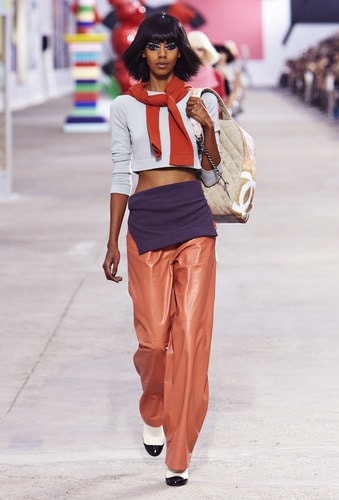
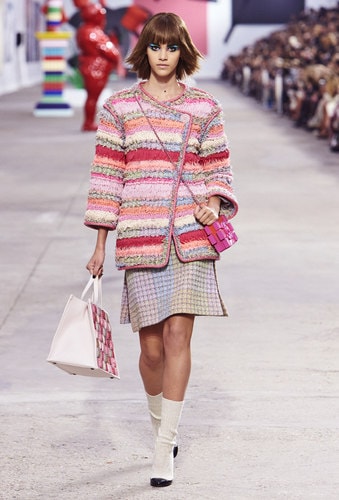
A house with permanent signatures presents differently from a house chasing novelty. The Chanel show proposes the standard — the collarless jacket and well-fitted skirt of the suit she introduced in 1925, the little black dress, the relaxed separates — and then proves it across the whole wardrobe, look by look, so the photographs gathered in the Photos section read as chapters of one argument rather than a catalogue of separate pieces. The variation is in the proportions, the tweeds and the finishing; the argument does not change, because it was settled by the founder: elegance and freedom are not a trade.
Runway photographs reward sequence for exactly that reason. A single image shows the famous shape; a full set shows the system beneath it — soft tailoring engineered to move with the body, the accessories completing every look, the jewelry, handbags and fragrance of a house whose design aesthetic was always realized beyond clothing alone. Video adds what stills cannot: a tweed suit at walking pace, which is where Chanel's liberation is actually visible — in cloth that follows the stride instead of fighting it.
Reading the Runway Record
Filed show over show, the runway record becomes the most vivid part of the house's archive: dated, photographed, and inseparable from the founder's biography on the profiles page — the orphanage sewing lessons behind the construction, the 1910 shop behind the house, the 1920s inventions behind every look. The spring fashions page follows the runway's lighter strand and the fall fashions page its autumn weight; the news page gathers the reviews each showing receives.
For the calendar view of the same events, turn to the fashion week page in this series. The runway is where that calendar becomes visible — the standard, re-presented in Paris twice a year, in front of the photographers whose pictures fill the Photos section here.
Photos
Common Questions
What is the Chanel runway record known for?
Complete wardrobe statements built on permanent signatures: the tweed suit, the little black dress and relaxed day looks in black, white and beige, with pearls and camellias — the casual chic Gabrielle Chanel made the feminine standard, renewed on the Paris catwalk season after season.
Where does the house Chanel founded show its collections?
In Paris, the city of the house's historic home at 31 rue Cambon. Its seasonal presentations anchor the Paris calendar, whose cycle is covered on the fashion week page in this series.
How is this runway page different from the fashion week page?
The fashion week page covers the house's place in the calendar and the season cycle. This page follows the shows themselves: the order of looks, the signatures as they move, and what a Chanel presentation asks its audience to judge.