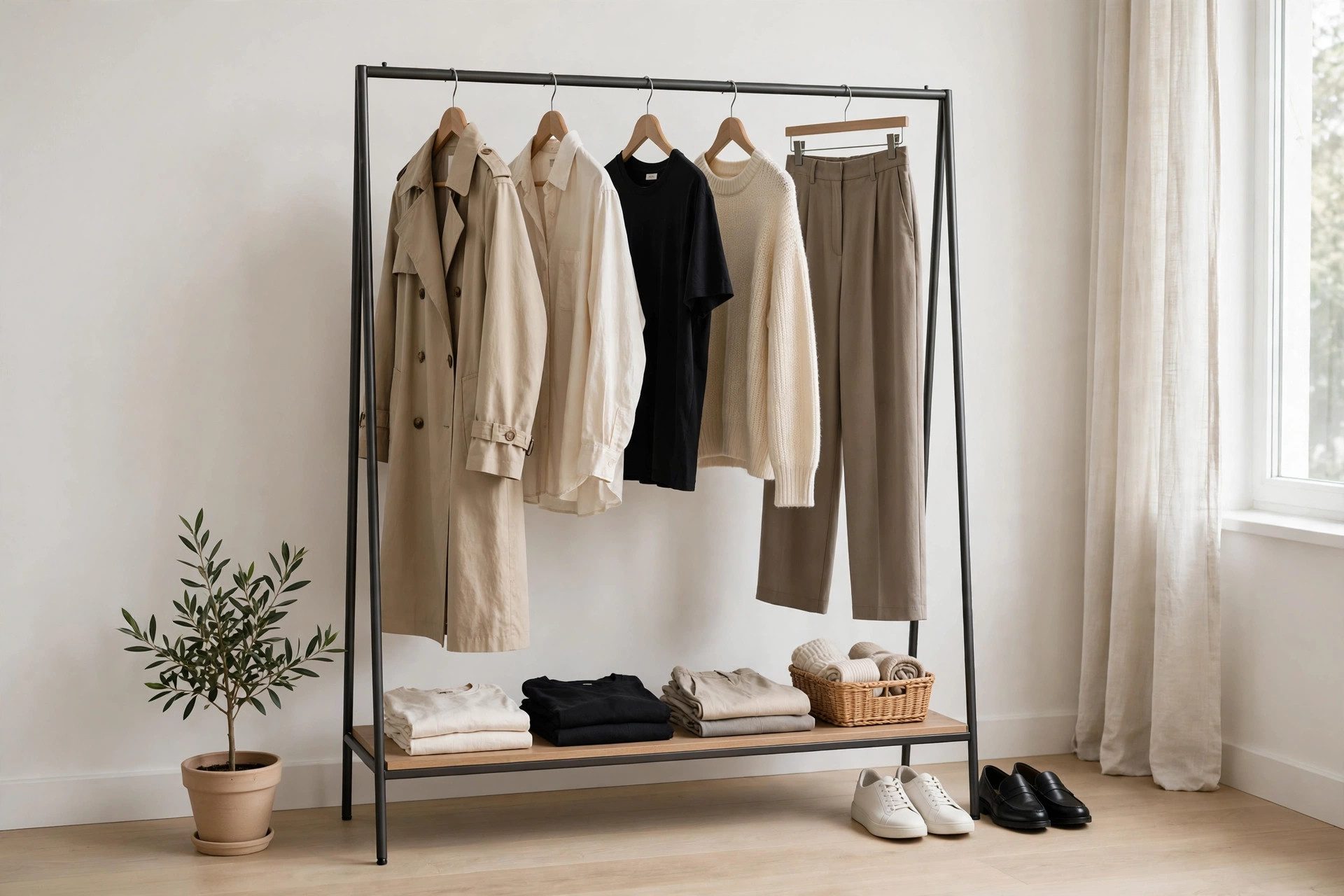
Why a capsule wardrobe works
Most closets are full of clothes and empty of outfits — pieces bought on impulse that match nothing. A capsule wardrobe flips that: a limited set of versatile, coordinated pieces (typically 30 to 40, including shoes) chosen so nearly any combination works. The result is less decision fatigue, less money spent on unworn clothes, and a clearer personal style.
Note the terminology: a capsule wardrobe is a personal closet strategy, not to be confused with a designer's capsule collection — a small limited-edition line. Apparel Search covers the industry term separately in its capsule collections definition.
Explore this section
What Is a Capsule Wardrobe?
The concept, the 30-to-40-piece framework, and who the approach suits best.
How to Build a Capsule Wardrobe
Step by step: audit your closet, define your palette, list essentials, and calculate cost per wear.
Capsule Wardrobe Checklists
Piece-by-piece checklists for spring, summer, fall, and winter capsules.
The core principles
Versatility over variety
Every piece should work in at least three outfits. A white button-down that pairs with jeans, trousers, and a skirt earns its place; a neon statement top that matches one thing does not.
A defined color palette
Capsules run on neutrals (black, white, navy, gray, beige) plus one or two accent colors. When everything shares a palette, everything coordinates by default.
Quality over quantity
With fewer pieces in heavier rotation, construction matters. The math favors it too: a $120 coat worn 100 times costs less per wear than a $40 coat worn five times.
Seasonal rotation
Most people run four seasonal capsules or two (warm/cool). Out-of-season pieces get stored, keeping the active closet small and current.