The Finish
Hats, Belts, Pouches and Footwear
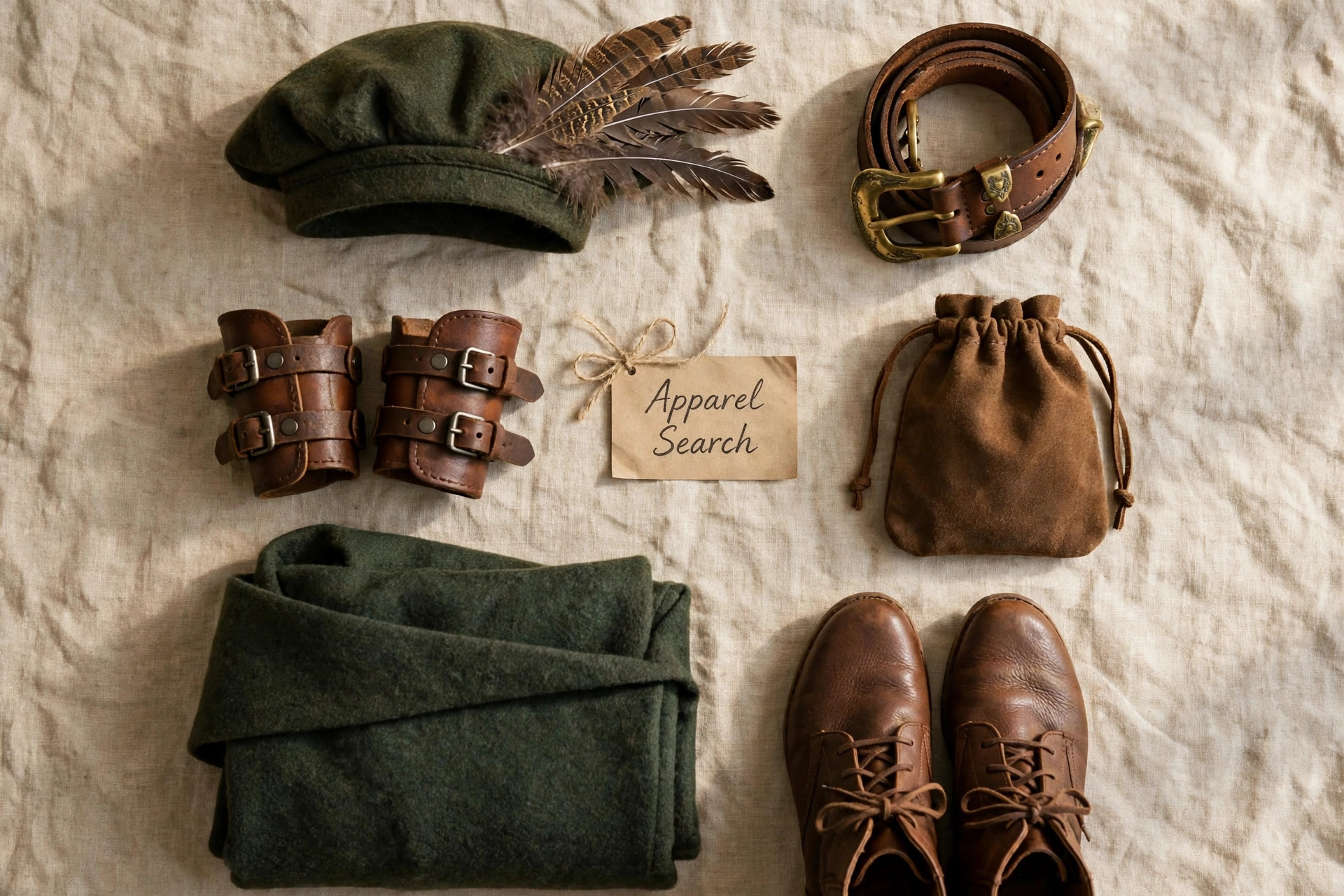
Accessories are where a faire outfit stops being clothes and becomes a character — and they are the most forgiving place to spend money, because one good piece upgrades every outfit you ever build around it. Four categories do almost all the work. Hats and headwear set the period at a glance and provide real shade. Belts carry the outfit's storage. Pouches hold what pockets would. Footwear decides whether you are still happily walking at closing time.
Buy accessories in natural materials where you can — leather belts and pouches age into the look instead of out of it — and in colors that match more than one outfit. A brown belt, a neutral pouch and a plain cap will serve a villager this year and a pirate the next. The general Halloween costumes category shows the wider costume-accessory landscape these pieces belong to.
The Order
Building a Full Outfit on a Budget, Piece by Piece
- First: the base layer. One chemise or tunic. Cheap, washable, and it makes everything worn over it look more finished.
- Second: the belt and pouch. The highest-value purchase in garb. It finishes street clothes worn underneath and carries your phone, cards and keys all day.
- Third: the silhouette piece. One bodice or doublet, bought carefully and fitted over your layers. This is the piece to spend on.
- Fourth: headwear. A cap, hat or headscarf for period line and sun protection.
- Last: the extras. Cloak, tankard, jewelry and character props, added one per season as taste and budget allow.
Thrift stores, faire-season sales and the make-it route all stretch the budget further; Apparel Search's DIY Halloween costumes guide teaches the same build-and-adapt skills costume-makers use for faire pieces.
Care & Storage
Care, Storage and Making Pieces Last
Garb works hard outdoors, so care is simple and regular: air everything after a faire day before it goes back in the closet, brush dust from wool and leather, and wash only the base layer every time. Leather belts and pouches want occasional conditioning and storage away from damp; laced bodices store flat or loosely hung so boning does not warp. Kept this way, the core pieces of a faire outfit last for years of seasons, which is the real economics of the budget build: the expensive piece is the one you replace, not the one you buy.
More to Explore
Good to Know
Common Questions
What is the most important Renaissance faire accessory?
The belt and pouch. Period outfits have no pockets, so the belt carries everything you need during the day, and visually it finishes even a simple outfit of a tunic over plain trousers. It is also the piece most likely to be reused across different characters and seasons.
How can I build a faire outfit cheaply without it looking cheap?
Spend on one structured piece — a bodice or doublet — and keep everything else simple, natural-colored and well fitted. Cheap costumes look cheap through shiny synthetic fabrics, modern prints and visible modern fastenings; matte natural fibers, a real leather belt and broken-in footwear hide a small budget completely.
What shoes work for a Renaissance faire if I do not own period boots?
Any plain, broken-in leather shoe or short boot in brown or black works. What matters is a full day of walking on grass and gravel: sturdy soles, no new leather, and no visible logos, mesh panels or athletic styling, which are the details that break the period effect.
Search Apparel Search