The Pieces
Dresses, Bodices, Chemises and Skirts
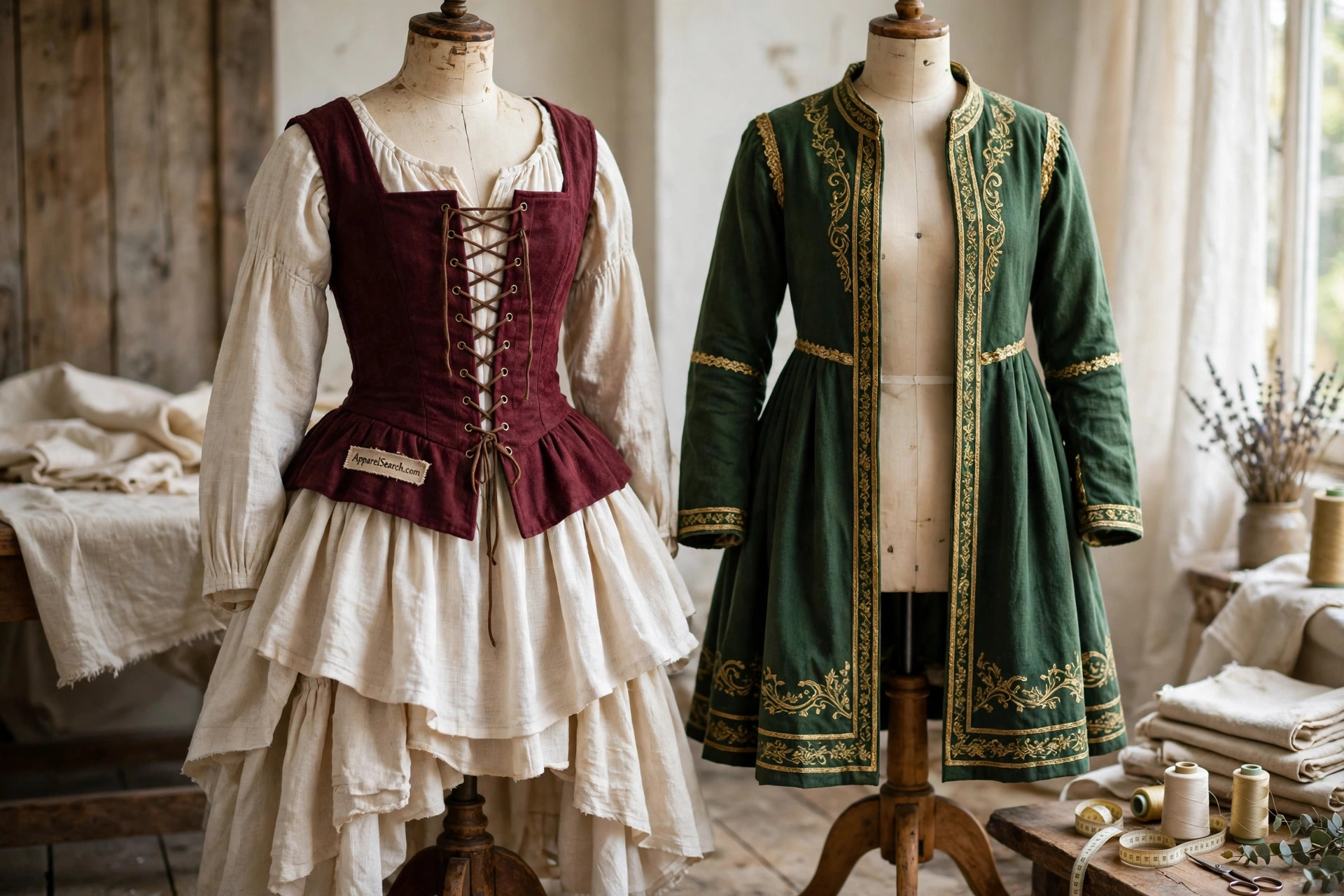
The classic women's faire outfit is three pieces worn together: a chemise, a bodice and a skirt. The chemise is the soft, washable base — usually white or natural linen or cotton, with a gathered neckline and full sleeves. Over it goes the bodice, the structured, laced piece that creates the period silhouette and provides support. The skirt is long, full and sturdy, often worn in two layers with the overskirt hitched up at the front to show a contrasting underskirt and to keep hems out of the dust.
Variations swap one element at a time. A one-piece overdress with a laced front replaces bodice and skirt for a simpler, more formal line. A partlet — a short, sheer or velvet shoulder piece — changes a plain outfit into court dress. The corset guide explains the structured underpinnings some wearers choose for longer days, though most modern faire bodices are boned lightly, if at all, and are worn as outerwear rather than underwear.
Character Types
Styling by Character Type
- The villager. Earth-tone skirt, natural chemise, a plainly laced bodice and an apron. Comfortable, washable, and the easiest look to build on a budget.
- The noblewoman. A full overdress in a rich color, a partlet or decorative neckline, and a structured bodice under it. More fabric, more presence, more heat — plan shade breaks.
- The pirate. A striped or solid skirt worn shorter, an off-shoulder chemise, a wide belt and a sash. Apparel Search's women's pirate clothing guide covers this faire favorite in depth.
- The fantasy character. Cloaks, flowing sleeves and storybook colors. Faires welcome elves, fairies and original characters alongside historical dress.
Whichever type you choose, keep the same practical base: a washable chemise, footwear you can walk miles in, and a belt with a pouch, since the outfit has no pockets.
Fit & Fabric
Fit, Fabric and a Full Day Outdoors
Sizing is the most common first-timer mistake. Faire bodices are sized by bust and waist over the chemise, and lacing gives several inches of adjustment, so measure over the layers you will actually wear. Leave breathing room: a bodice laced for a photograph at 10 a.m. feels very different after a hot afternoon, and loosening laces is normal faire behavior, not a failure.
For fabric, natural fibers earn their keep outdoors. Linen and cotton chemises breathe and wash clean; wool-blend skirts shed dust. Save delicate or dry-clean-only pieces for the overdress layer, which sits protected above the rest. If you are adapting pieces you already own, the broader women's costume guide covers Halloween, theatre and party costumes with the same piece-by-piece approach.
More to Explore
Good to Know
Common Questions
What should a woman wear to a Renaissance faire for the first time?
Start with the three-piece formula: a washable chemise, a laced bodice and a long, full skirt, worn with sturdy flat shoes and a belt with a pouch. It reads clearly as faire dress, stays comfortable all day, and each piece can be upgraded separately in later seasons.
Are Renaissance faire bodices uncomfortable?
A well-fitted modern faire bodice should not be. Most are lightly boned or unboned, lace over several inches of adjustment, and are worn as outerwear over a chemise. Discomfort usually means the bodice is sized for bare skin rather than over layers, or laced too tightly for a hot, active day.
Can I wear a dress I already own to a faire?
Often, yes. A plain, full-skirted dress in a natural color can work as the base of an outfit when it is layered with a laced bodice or wide belt, a chemise-style blouse underneath, and period accessories. Avoid obvious modern prints, zippers on show and athletic fabrics, which break the effect fastest.
Search Apparel Search