Search Apparel Search
Start Here
What Faire Dress Actually Involves
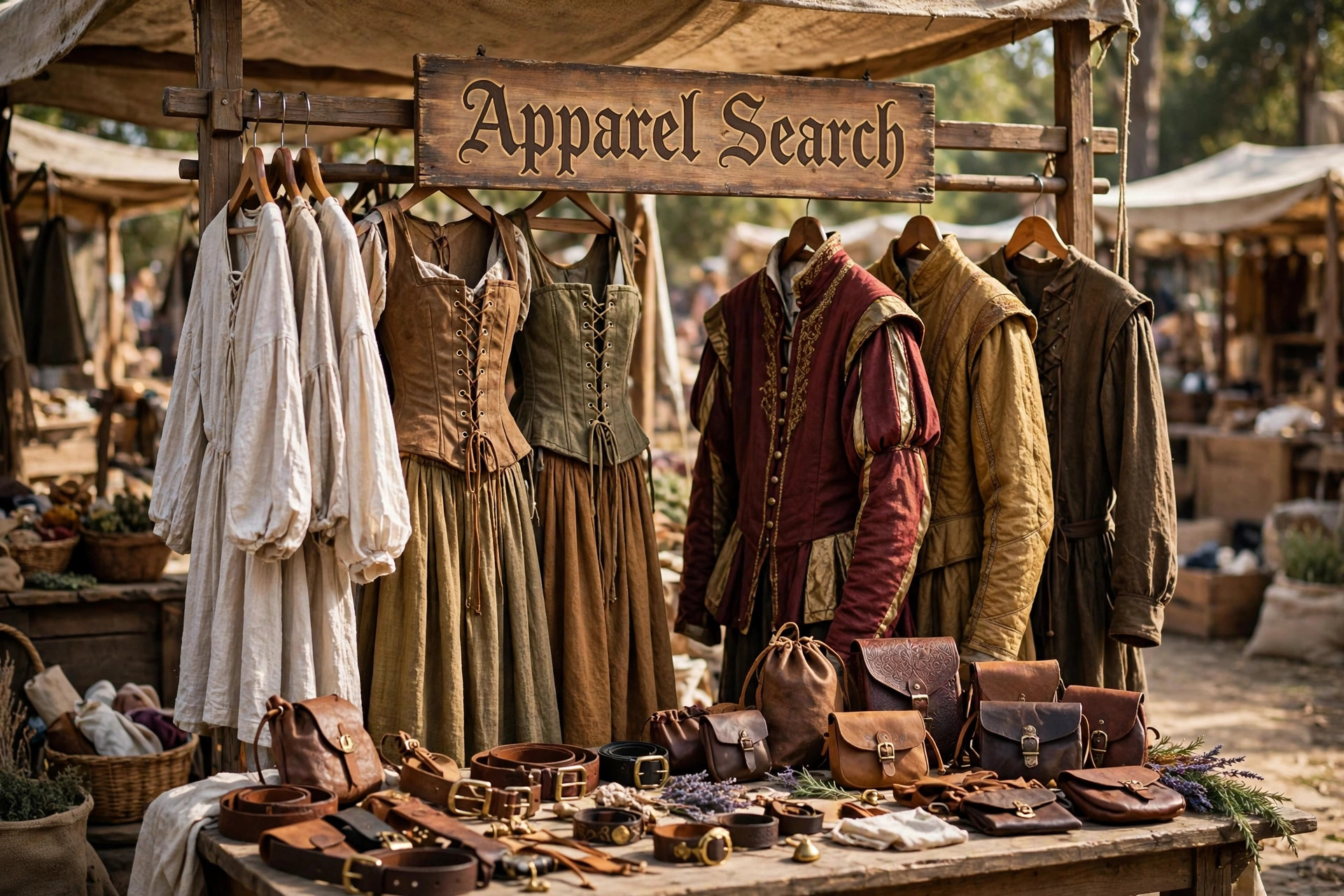
A Renaissance faire outfit — regulars call it garb — is a layered costume built to suggest Europe roughly between the 1400s and the early 1600s. Unlike a one-night Halloween costume, garb has to survive sun, dust, uneven ground and hours on your feet, so experienced faire-goers build it like clothing, not a disguise: a washable base layer, a structured middle layer that gives the silhouette, and accessories that carry the period detail. If you are new to costumes generally, the Halloween costumes category shows how Apparel Search organizes costume guides by audience and theme.
Most faires welcome everything from a single rented bodice over street clothes to fully researched historical dress. Nobody checks credentials at the gate. The useful question is not “is it accurate?” but “what do I want from the day?” — photographs, comfort, or the pleasure of building something elaborate over several seasons.
The Layers
Garb Layers, From Skin Out
- The base layer. A chemise, smock or simple tunic in linen or cotton. It absorbs sweat, protects the layers above it, and is washed after every visit.
- The silhouette layer. A bodice, doublet, jerkin or overdress — what makes the outfit read as period rather than fancy dress, and where most of the budget sensibly goes.
- The lower half. Full skirts, breeches or loose trousers, cut roomy enough for grass, mud and dancing.
- Feet and finish. Sturdy, broken-in footwear first; then a belt, pouch, hat and one or two character details. Period clothing has no pockets, so everything you carry hangs from the belt.
Build in that order and any piece can be upgraded later without starting over.
Accuracy vs Comfort
Accuracy vs Comfort: Picking Your Level
Faire dress sits on a spectrum. At one end is historical reenactment: natural fibers only, hand-finished seams, patterns from surviving garments. At the other is faire fantasy: the same silhouettes in modern fabrics, with elves, pirates and storybook characters mixed freely in. Most visitors land in the middle — period shapes, modern practicality.
Comfort decisions that never show in photographs: breathable fibers against the skin, a hat for shade, layers you can shed at noon, and shoes chosen for miles rather than looks. Period dress from other eras follows the same logic, which is why the fashion by decade guide is a useful companion: every era's silhouette can be suggested with a few key pieces instead of a museum copy.
The Guides
Routes Through This Section
Start with the women's or men's guide for the core outfit, use the accessories guide to finish the look, and borrow the couples and group guides whenever the costume must coordinate with someone else's.
Chemise, bodice and skirt combinations and overdresses, styled by character type.
Women's Renaissance Faire CostumesTunics, doublets and jerkins over breeches, styled by character type.
Men's Renaissance Faire CostumesHats, belts, pouches and footwear, and the order for building on a budget.
Renaissance Faire Accessories & Budget BuildsCoordinated costumes for two, group themes, and inflatable costumes explained.
Couples Costumes · Group Costumes · Inflatable CostumesMore to Explore
Good to Know
Common Questions
Do I have to wear a costume to a Renaissance faire?
No. Most visitors wear ordinary clothes, and dressing up is optional. Costumes add to the fun and the photographs, and rental booths at larger faires let you try garb for a day before buying or building your own.
What is the difference between garb and a costume?
Regulars use garb for clothing-style faire outfits built in layers and worn repeatedly across a season, while costume usually means a single-occasion outfit. The distinction is about construction and reuse, not quality: good garb is made like real clothing so it survives many days outdoors.
How much does a first faire outfit cost?
A workable first outfit can cost roughly the price of a good pair of shoes if you build it piece by piece: a chemise or tunic, one structured piece such as a bodice or doublet, and a belt with a pouch, worn over skirts or trousers you may already own. The accessories and budget guide sets out the order to buy in.