Men's Costumes Guide
Men's costumes are clothing worn to become someone else: Halloween and fancy-dress outfits, historical and theatrical dress, mascot and cosplay builds, and the period clothing of reenactment. The category runs from a bagged one-night costume to museum-grade reproduction tailoring, and the buying skill is matching the build to the mission - one party, a season of stage work, or a hobby measured in decades.
Shop Men's Costumes Now
Shop Men's Costumes on Amazon Shop Men's Costumes on eBayThe Amazon and eBay links on this page are affiliate links. If you make a purchase through them, Apparel Search may earn a commission.
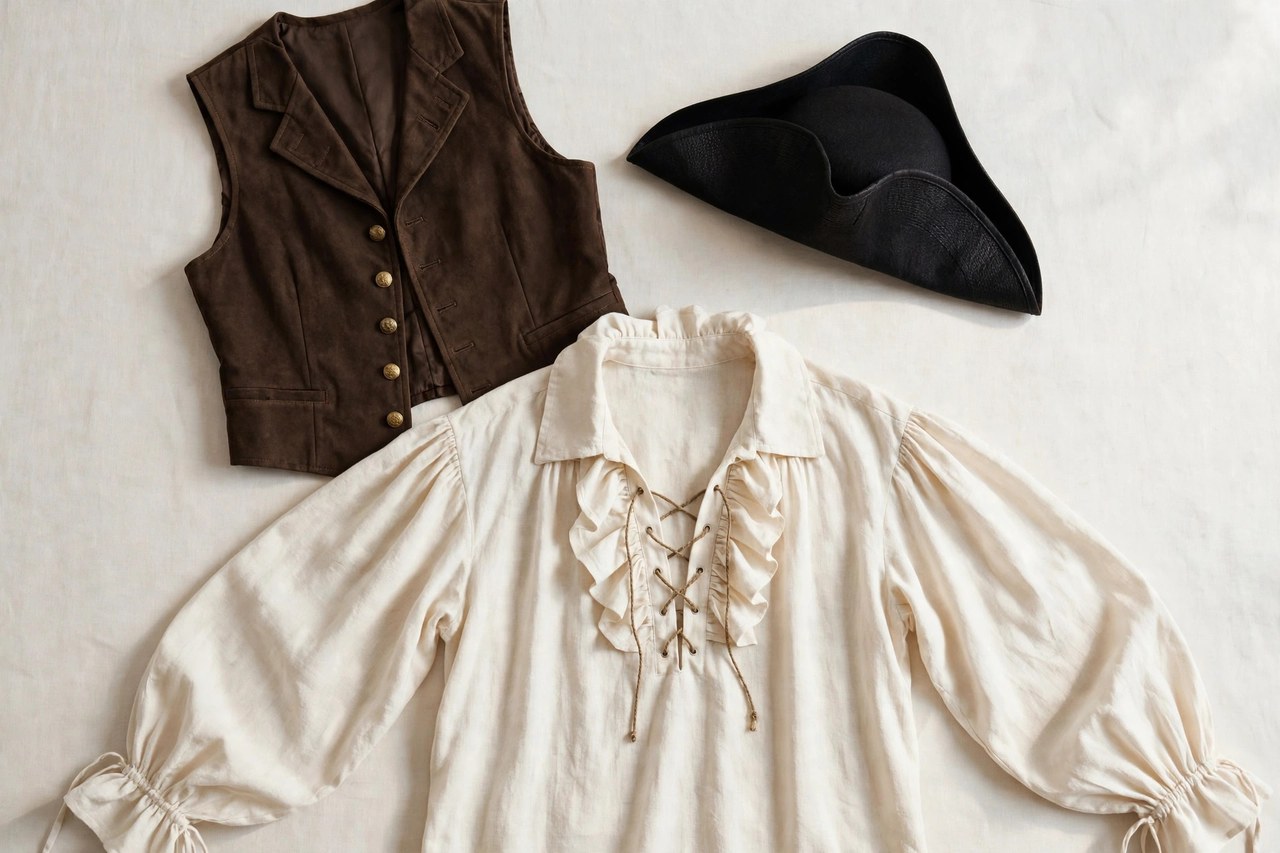
Men's costumes are clothing worn to become someone else: Halloween and fancy-dress outfits, historical and theatrical dress, mascot and cosplay builds, and the period clothing of reenactment. The category runs from a bagged one-night costume to museum-grade reproduction tailoring, and the buying skill is matching the build to the mission - one party, a season of stage work, or a hobby measured in decades. This guide is built around the questions buyers actually ask: which style, which size, which fabric, and what will it look like after a year of real use - answered in order, with the trade-offs stated plainly.
Styles and Construction
Divide by construction honestly. Packaged costumes are printed polyester approximations built to a price and a single evening; they photograph better than they wear. Rental and theatrical costumes are real garments built for repeated wear and quick changes. Historical reproductions and serious cosplay are tailoring - correct cloth, period cuts, hand finishing - and priced like it. Accessories carry more of the transformation than shoppers expect: the hat, wig, weapon prop and footwear sell the character while the base garment merely supports them, so budget follows the silhouette and the props first.
The durable buying order is job, specification, budget - in that sequence. Decide what the garment must do, translate that into fiber, weight, construction and size numbers, and only then shop price. Read labels as specifications, inspect the garment inside out where finishing is unposed, and prefer the maker who publishes measurements to the one who publishes adjectives. A garment that matches your measurements, climate and laundry will be worn; one that misses any of the three becomes expensive storage.
Fit and Sizing
Fit is the difference between a costume and a disguise that fights you: measure chest, waist and inseam and buy to the largest, because costumes are rarely cut generously and alterations on printed polyester are nobody's hobby. Plan for the evening's physics - sitting, eating, weather, photographs - and for layers beneath or over. Shoes deserve real money if the night involves walking: character-correct footwear that cripples is a failure of planning, not of authenticity.
Measure yourself once a year and keep the numbers - chest, waist, inseam, foot, head - because bodies drift gradually while size habits never do. Shop from measurements, try garments under real conditions (over layers, in your own shoes, late in the day for footwear), and be honest about alterations: lengths and small waist changes tailor beautifully; shoulders, rises and patterns are the garment you bought forever.
Wearing and Care
Store costumes clean, complete and labeled, with accessories bagged with the garment - next year's hunt for the missing belt is a tradition nobody enjoys. Air theatrical and wool pieces before storing, keep printed polyester out of heat, and repair the small tears in November rather than next October. A costume kept as a kit appreciates across years of reuse; one shoved in a bag is a single-use purchase however much it cost.
Five minutes when a garment comes off - shake it out, hang or fold it correctly, note the stain and the loose button - prevents most of the damage later blamed on quality. Keep a small kit where the clothes live: brush, lint roller, conditioner suited to your leathers, black, navy and grey thread. Clothing rarely dies at once; it fades by small neglects, and small attentions reverse the process at the same pace.
Common Questions
What is the difference between a costume and cosplay?
Cosplay - costume play - is the craft-and-performance branch: costumes of specific characters, often self-made or commissioned, worn at conventions with the making itself part of the hobby. A Halloween costume may be bought in a bag the same week; a cosplay build may take months. The garments overlap, the commitment defines the word.
How do you make a cheap costume look better?
Fit and finishing: steam out the packaging creases, replace the flimsiest accessory (usually the hat or belt) with one real piece, wear proper shoes, and add the grooming or makeup the character implies. Ten minutes of ironing and one honest accessory move a packaged costume further than another twenty dollars of polyester.
Are costume sizes the same as clothing sizes?
Rarely: packaged costumes run small and short, sized to a generic chart that flatters nobody's returns department. Always buy from the costume's own measurement chart - chest and waist in inches - and when between sizes, take the larger; a costume can be pinned and belted down, but it cannot be let out.
More in Men's Clothes Guide C
Costumes Beyond Halloween
Costumes range wider than Halloween: beside men’s Halloween costumes sit the costumes definition, kids’ costumes and costume wholesalers — the supply side of dressing up. A costume is a mission with a duration, from one evening to a reenactment season, and it should be bought like one.
Looking for Men's Clothing Stores?
This guide explains men's costumes. To browse where to buy, visit our men's clothing store directory, where you can find retailers that carry them.