Men's Halloween Costumes Guide
A men's Halloween costume is a costume worn on or around Halloween, the festival that falls on October 31 - Hallowe'en, a contraction of All Hallows' Evening, also called Allhalloween, All Saints' Eve. Costumes were traditionally modeled after supernatural figures - vampires, monsters, ghosts, skeletons, witches and devils - and over time the selection widened, first in the United States, to popular characters from fiction, celebrities, and generic archetypes such as ninjas. The men's costume is therefore two purchases in one: a character to inhabit for a night, and a garment that has to survive that night comfortably.
Shop Men's Halloween Costumes Now
Shop Men's Halloween Costumes on Amazon Shop Men's Halloween Costumes on eBayThe Amazon and eBay links on this page are affiliate links. If you make a purchase through them, Apparel Search may earn a commission.
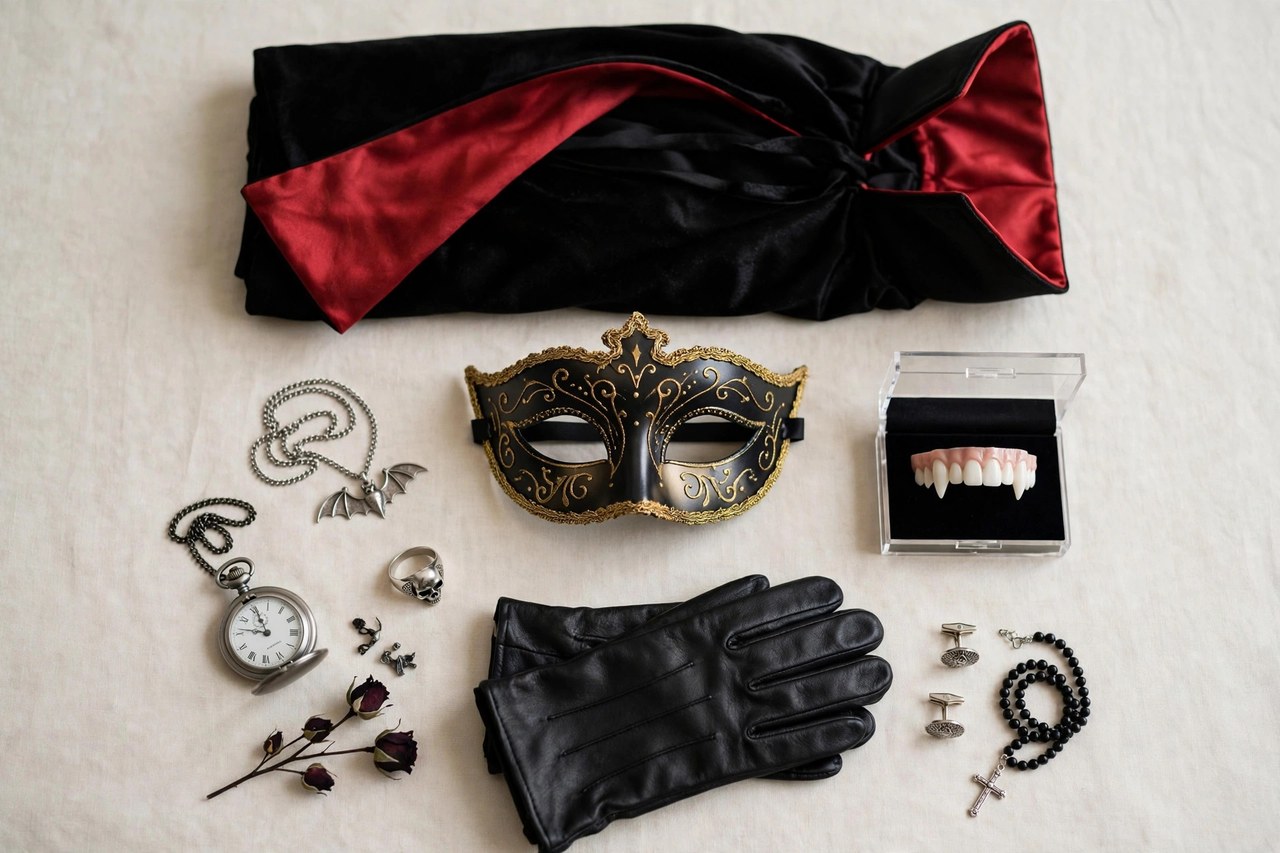
A men's Halloween costume is a costume worn on or around Halloween, the festival that falls on October 31 - Hallowe'en, a contraction of All Hallows' Evening, also called Allhalloween, All Saints' Eve. Costumes were traditionally modeled after supernatural figures - vampires, monsters, ghosts, skeletons, witches and devils - and over time the selection widened, first in the United States, to popular characters from fiction, celebrities, and generic archetypes such as ninjas. The men's costume is therefore two purchases in one: a character to inhabit for a night, and a garment that has to survive that night comfortably. This guide is built around the questions buyers actually ask: which style, which size, which fabric, and what will it look like after a year of real use - answered in order, with the trade-offs stated plainly.
Styles and Construction
Shop by family first. The classic supernatural line - vampire, skeleton, ghost, devil - is the oldest and the most forgiving to wear. Character costumes licensed from film and fiction add recognition at the price of thinner construction. Archetypes - pirate, knight, ninja, cowboy, prisoner, doctor - are the flexible middle: recognizable in silhouette, easy to improve with your own accessories. Construction divides the market honestly: bagged costumes are printed polyester jumpsuits with foam or plastic details, bought for one or a few wears; separates and higher-end pieces use woven fabrics, lined masks and real fastenings, and can serve for years. Masks decide comfort more than any other part - check eye placement, breathing room and whether a half-mask plus makeup beats a full latex head by the second hour.
The durable buying order is job, specification, budget - in that sequence. Decide what the garment must do, translate that into fiber, weight, construction and size numbers, and only then shop price. Read labels as specifications, inspect the garment inside out where finishing is unposed, and prefer the maker who publishes measurements to the one who publishes adjectives. A garment that matches your measurements, climate and laundry will be worn; one that misses any of the three becomes expensive storage.
Fit and Sizing
Costume sizing is not clothing sizing: most makers use broad bands (medium, large, extra-large) cut generously to fit over your own clothes, because costumes are worn as a layer in late-October weather. Measure chest, waist and inseam against the maker's chart rather than assuming your suit size, and size up if you are between bands - a costume worn over a sweater needs the room. Length matters for safety: hems should clear the ground, capes should end above the ankle, and masks must never restrict vision on stairs or in traffic. If the costume will be worn sitting - a party host, a driver - test the waist, the mask and any foam padding seated, not just standing in the shop mirror.
Measure yourself once a year and keep the numbers - chest, waist, inseam, foot, head - because bodies drift gradually while size habits never do. Shop from measurements, try garments under real conditions (over layers, in your own shoes, late in the day for footwear), and be honest about alterations: lengths and small waist changes tailor beautifully; shoulders, rises and patterns are the garment you bought forever.
Wearing and Care
A costume's care is decided before its first wear: most bagged costumes are spot-clean only, with printed surfaces that crack in a hot wash, so treat stains the same night with a damp cloth and hang the costume to air before it goes back in its bag. Store masks un-crushed, stuffed lightly with tissue so the face keeps its shape, and keep latex away from heat and sunlight, which perish it. The better separates wash like the garments they are. Photograph what worked - the costume that got the laughs this year is next year's easiest decision - and mend loose fastenings in November, while you still remember where they failed, not in the October panic.
Five minutes when a garment comes off - shake it out, hang or fold it correctly, note the stain and the loose button - prevents most of the damage later blamed on quality. Keep a small kit where the clothes live: brush, lint roller, conditioner suited to your leathers, black, navy and grey thread. Clothing rarely dies at once; it fades by small neglects, and small attentions reverse the process at the same pace.
Common Questions
What were traditional men's Halloween costumes based on?
Supernatural and folkloric figures: vampires, monsters, ghosts, skeletons, witches and devils. References to wearing costumes at Halloween reach back to Scotland in 1585, and the custom is thick in the 18th and 19th centuries across the Celtic countries - Scotland, Ireland, Mann and Wales - with roots suggested in the Celtic festivals of Samhain and Calan Gaeaf and in the 'souling' practice of Allhallowtide. By the 1930s, characters from film, literature and radio joined the supernatural cast, and modern ranges add celebrities and archetypes like ninjas alongside them.
How should a men's Halloween costume fit?
Looser than your clothes, because it is worn over them. Costumes are cut in broad size bands to layer over a shirt or sweater in October weather, so measure your chest, waist and inseam, match the maker's chart, and size up when between bands. Then apply the safety fit: hems clear of the ground, capes above the ankle, and a mask that leaves full vision and easy breathing - a costume you cannot see or breathe in fails before the party starts.
What is the best men's Halloween costume this year?
Most likely, the one you are wearing. Costume quality is measured in recognition and endurance - a character read across a room in two seconds, in a garment comfortable enough to wear for five hours. The classic supernatural figures never date; a topical character dates by design. Choose for the event you are actually attending, the weather it will actually have, and the hours you will actually wear it.
More in Men's Clothes Guide H
Halloween and Its Costumes
Halloween, or Hallowe’en (a contraction of All Hallows’ Evening), also known as Allhalloween, All Hallows’ Eve or All Saints’ Eve, is a celebration observed in a number of countries on October 31st. Halloween costumes are traditionally modeled after supernatural figures such as vampires, monsters, ghosts, skeletons, witches and devils; over time, in the United States, the costume selection extended to include popular characters from fiction, celebrities, and generic archetypes such as ninjas and princesses. An early reference to wearing costumes at Halloween comes from Scotland in 1585, though they may pre-date it; the custom is thick through the 18th and 19th centuries in the Celtic countries of Scotland, Ireland, Mann and Wales; and its roots are suggested in the Celtic festivals of Samhain and Calan Gaeaf, or in the practice of “souling” during the Christian observance of Allhallowtide — with costumes and mumming long associated with festivals at other times of year, such as Christmas. By the 1930s, costumes based on characters in mass media — film, literature and radio — were popular. And what is the best men’s Halloween costume this year? Don’t ask us, we don’t know; it will most likely be the one that you are wearing.
Looking for Men's Clothing Stores?
This guide explains men's halloween costumes. To browse where to buy, visit our men's clothing store directory, where you can find retailers that carry them.