Men's Hip Hop Fashion Guide
Men's hip hop fashion is the clothing of a subcultural movement formed in the early 1970s by African-American youths in the South Bronx of New York City - a culture built, in part, on 'flipping': updating classic recordings, attitudes and experiences for modern audiences. Clothing has always been a big part of hip hop's social and cultural impact, and as the genre's popularity grew, so did its fashion's effect on the mainstream. This guide traces the men's wardrobe the culture built - the sneakers, denim, jerseys and labels it made its own - and the two great silhouettes, the baggy era and the tailored turn, that still organize how it is worn.
Shop Men's Hip Hop Fashion Now
Shop Men's Hip Hop Fashion on Amazon Shop Men's Hip Hop Fashion on eBayThe Amazon and eBay links on this page are affiliate links. If you make a purchase through them, Apparel Search may earn a commission.
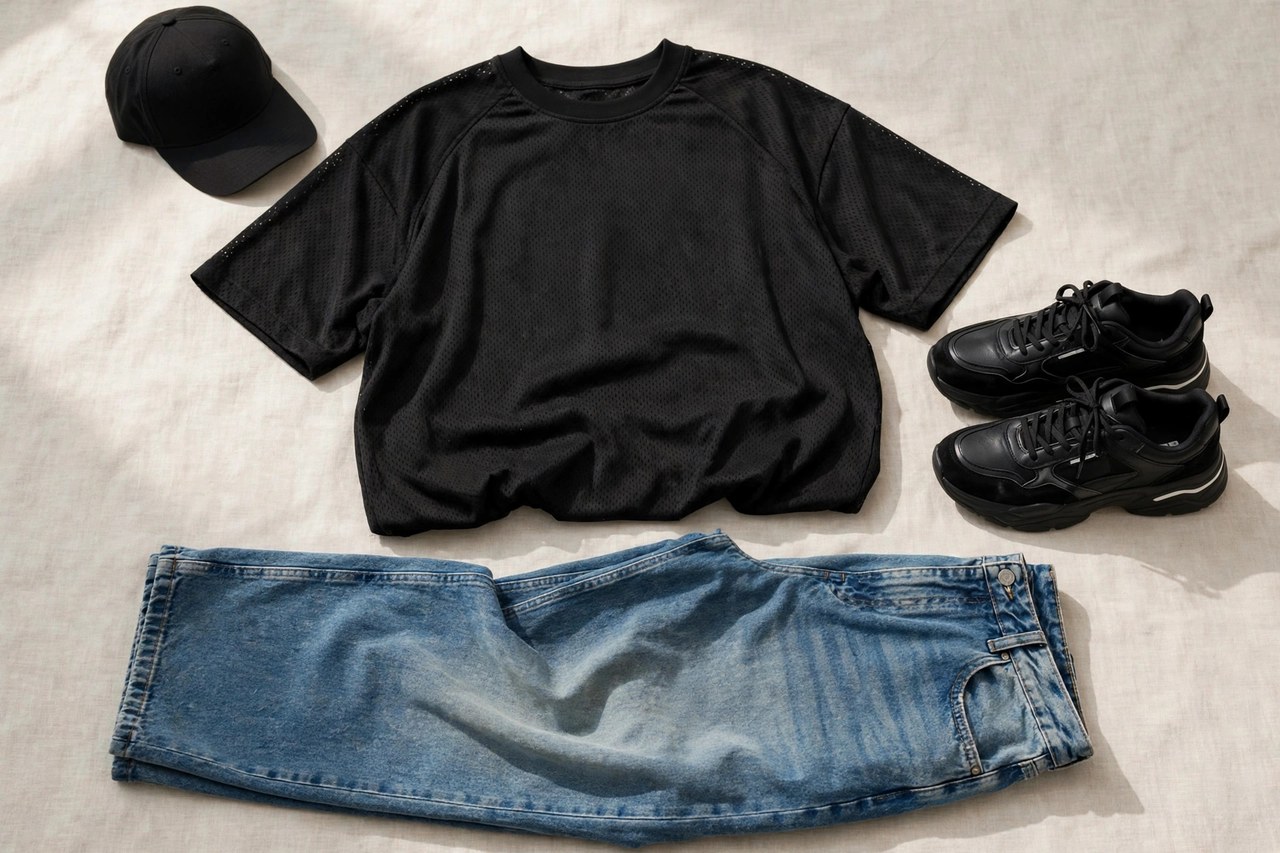
Men's hip hop fashion is the clothing of a subcultural movement formed in the early 1970s by African-American youths in the South Bronx of New York City - a culture built, in part, on 'flipping': updating classic recordings, attitudes and experiences for modern audiences. Clothing has always been a big part of hip hop's social and cultural impact, and as the genre's popularity grew, so did its fashion's effect on the mainstream. This guide traces the men's wardrobe the culture built - the sneakers, denim, jerseys and labels it made its own - and the two great silhouettes, the baggy era and the tailored turn, that still organize how it is worn. This guide explains what to look for, how the sizing actually works, which fabrics and constructions earn their price, and how to care for the garment so it keeps doing its job season after season.
Styles and Construction
The early uniform crossed over piece by piece: Run-DMC's affinity for Adidas shell-toes worn without laces, the Wu-Tang Clan's championing of Clarks Wallabees, Kangol hats, Cazal glasses, track suits and heavy gold chains. At its commercial peak in the mid-to-late 1990s, hip hop embraced major designers and built a new connection with classic fashion - Ralph Lauren, Calvin Klein and Tommy Hilfiger all tapped into the culture - and the new millennium's uniform settled into baggy shirts, baggy jeans and sports jerseys, with Timberland boots and crisp sneakers as footwear law. Then the founders became the industry: Pharrell and Jay-Z started their own clothing lines, Kanye West linked with Louis Vuitton, and the clothes got tighter, more classically fashionable and more expensive, until artists' brands were primary businesses, not side income.
The durable buying order is job, specification, budget - in that sequence. Decide what the garment must do, translate that into fiber, weight, construction and size numbers, and only then shop price. Read labels as specifications, inspect the garment inside out where finishing is unposed, and prefer the maker who publishes measurements to the one who publishes adjectives. A garment that matches your measurements, climate and laundry will be worn; one that misses any of the three becomes expensive storage.
Fit and Sizing
Wearing hip hop fashion is a silhouette decision before it is a shopping list. The baggy era's rules were proportion and freshness: jeans and shirts worn oversized but immaculate, sneakers spotless and often unlaced or precisely laced, a jersey or a logo piece carrying the statement. The tailored era that followed kept the sneaker and the statement piece but fitted everything else - slim denim, fitted tees, designer collaborations worn like tailoring. Both eras agree on the fundamentals: one piece leads, footwear is non-negotiable, and logos are worn as affiliation, not decoration. Fit the statement piece first and build quietly around it; the culture's own history is the proof that either silhouette works when it is worn completely.
Measure yourself once a year and keep the numbers - chest, waist, inseam, foot, head - because bodies drift gradually while size habits never do. Shop from measurements, try garments under real conditions (over layers, in your own shoes, late in the day for footwear), and be honest about alterations: lengths and small waist changes tailor beautifully; shoulders, rises and patterns are the garment you bought forever.
Wearing and Care
Care in this wardrobe is sneaker care first: hip hop's footwear law has always been freshness, so rotate pairs, clean after wear, keep boxes or bags for the special pairs, and treat the white sneaker as the garment it is - maintained weekly, not rescued yearly. Denim is washed sparingly and inside out to hold dye; jerseys wash cool and never iron their lettering; logo and graphic pieces follow the print rules - inside out, low heat, no iron on the design. Store the statement pieces properly hung or folded, because a culture built on updating classics respects the garment that lasts: the vintage hip hop pieces now traded as collectibles are simply the ones somebody cared for.
Five minutes when a garment comes off - shake it out, hang or fold it correctly, note the stain and the loose button - prevents most of the damage later blamed on quality. Keep a small kit where the clothes live: brush, lint roller, conditioner suited to your leathers, black, navy and grey thread. Clothing rarely dies at once; it fades by small neglects, and small attentions reverse the process at the same pace.
Common Questions
Where did hip hop fashion come from?
From the South Bronx in the early 1970s, where African-American youths - with roots the historian Robert Farris Thompson traced to Barbados, Jamaica, Cuba and Puerto Rico as well as the American South - built a culture around DJing, dance, graffiti and rap. Its fashion grew with the music: early signature pieces like Run-DMC's Adidas and the Wu-Tang Clan's Clarks Wallabees crossed into the mainstream first, and by the mid-to-late 1990s the culture was embracing major designers and being embraced back.
What changed in hip hop fashion in the 2000s?
The silhouette and the ownership. The new millennium began with the baggy uniform - oversized shirts, jeans and jerseys - but as artists like Pharrell and Jay-Z launched their own clothing lines and Kanye West collaborated with Louis Vuitton, the clothes became tighter, more classically fashionable and more expensive. Artists stopped merely endorsing brands and started owning them: clothing lines became supplemental and then primary income, and the tailored era's fitted, designer-led look has alternated with baggy revivals ever since.
What are the essential pieces of a men's hip hop wardrobe?
Across both of its eras, the same foundations: immaculate sneakers - the culture's footwear law - as the base; denim, baggy or fitted by era; a statement top, whether a sports jersey, a logo piece or a designer collaboration; and headwear, from the Kangol and the fitted cap onward. Build around one leading piece, keep footwear fresh, and let fit follow the silhouette you have chosen rather than mixing eras by accident.
More in Men's Clothes Guide H
From the South Bronx to the Runway
Hip hop is a subcultural movement formed during the early 1970s by African-American youths residing in the South Bronx in New York City — the demographics art historian Robert Farris Thompson traced to English-speaking blacks from Barbados like Grandmaster Flash, black Jamaicans like DJ Kool Herc, Cubans who introduced the dance rhythms of mambo and danzón and Afro conga and bongo drums, and Puerto Ricans who emulated Tito Puente and Willie Colón, with roots in jazz and funk. Hip hop is simultaneously new and old: sampling means the culture revolves around updating classic recordings, attitudes and experiences for modern audiences — “flipping” — in the footsteps of blues, salsa, jazz, ragtime and rock and roll, with inspiration from soul, funk and rhythm and blues. Clothing has always been a big part of hip hop’s social and cultural impact: early crossovers like Run-DMC’s affinity for Adidas and the Wu-Tang Clan’s championing of Clarks’ Wallabees preceded the commercial peak, when, in the mid-to-late 1990s, the culture embraced major designers — Ralph Lauren, Calvin Klein and Tommy Hilfiger tapped into hip hop culture. The new millennium’s uniform was baggy shirts, jeans and jerseys; then Pharrell and Jay-Z started their own clothing lines and Kanye West linked up with Louis Vuitton, and the clothes got tighter, more classically fashionable and expensive, until artists’ brands became primary sources of income. Hip hop is created and enjoyed by all cultures.
More to Explore on Apparel Search
- Streetwear
- Fashion
- Clothing Retail Stores
- Fashion News
- Fashion Designers
- Popular Brands
- Men's Clothing Stores
- Men's Clothing Wholesalers
- Young Men's Wholesalers
- Young Men's Clothing Stores
- Hip Hop Fashion Definition
- Learn about urban fashion
- streetwear brands
- Men's Clothes Guide H-P
- Men's Clothes Guide Q-Z
- Streetwear History
Looking for Men's Clothing Stores?
This guide explains men's hip hop fashion. To browse where to buy, visit our men's clothing store directory, where you can find retailers that carry them.