Diane Kruger Fashion Blog
Celebrity fashion blog posts and style coverage from Apparel Search — Diane Kruger
Diane Kruger is the fashion industry's favorite actress for a specific reason: she started as a model, never uses a stylist, and dresses herself with a professional's eye — which is why her Cannes red carpets are an annual event in their own right and why designers lend to her personally. From Troy (2004) and Inglourious Basterds (2009) to her current run of European film work, she has kept the model's discipline: the right dress, worn like she chose it, because she did. This page collects the Apparel Search fashion blog coverage of what she wears.
View more fashion blog celebrities.
The Model Who Dresses Herself
Kruger modeled in Paris in the 1990s — Chanel and the Paris houses among her clients — before acting took over, and the training never left: she is famous in fashion circles for doing her own styling, her own hair and makeup for many appearances, and for treating a premiere dress as a working decision rather than a team production. The result is the most consistent personal red-carpet record of her generation — Jason Wu (a close friend), Chanel, Prada and Giambattista Valli worn with a model's economy.
Cannes is her home carpet — she has been a fixture there since the 2000s and won the festival's Best Actress award in 2017 for In the Fade, in a year when her every appearance was covered as a fashion story in itself.
The Current Chapter: 2024–2025
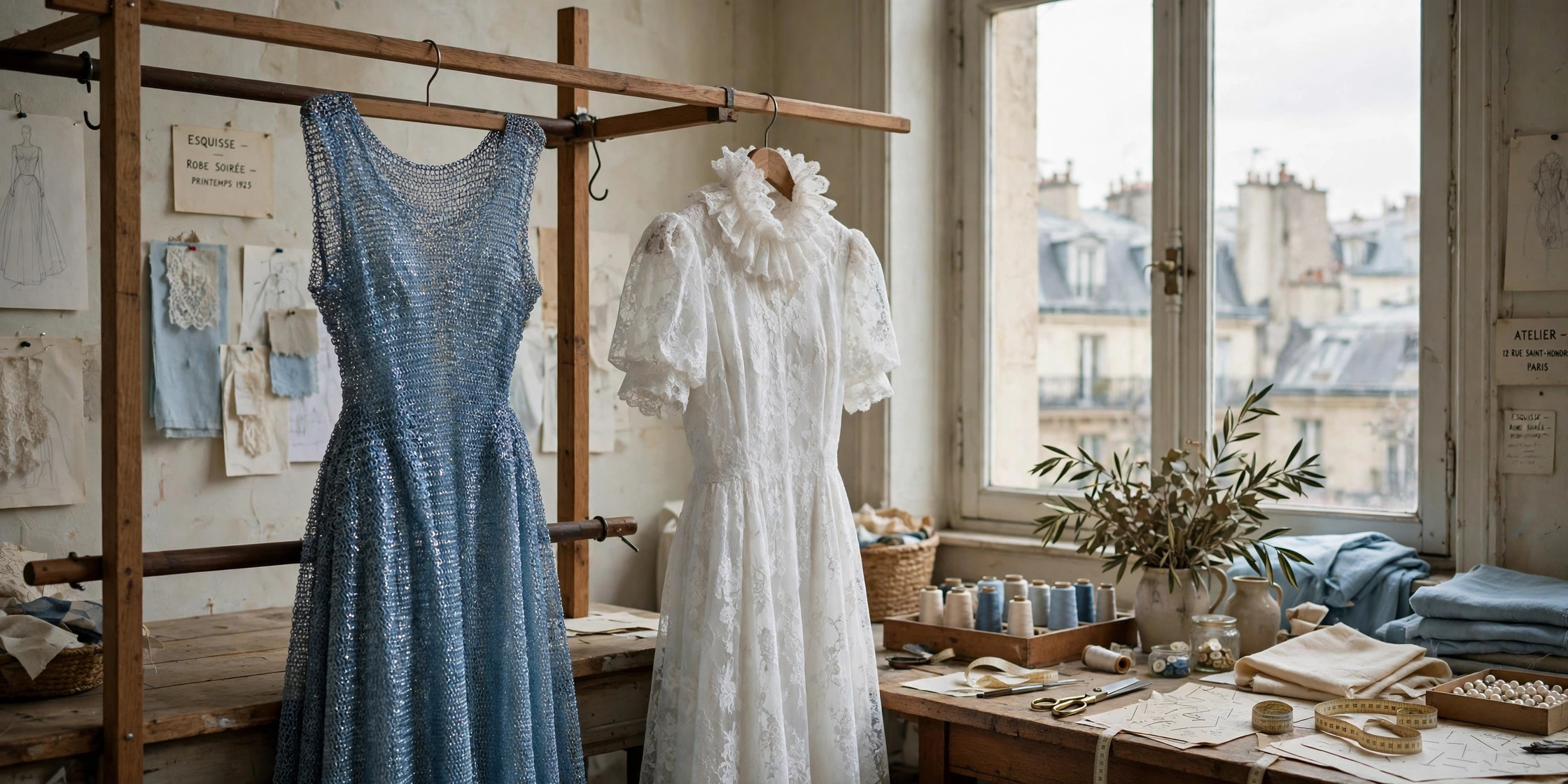
The recent record is vintage Kruger: at Cannes 2024, an arctic-blue chainmail Versace gown that moved like liquid; at the amfAR gala, a deliberately crinkled neon Prada; at the 2024 César Awards, Jean Paul Gaultier couture by Simone Rocha. In 2025 she wore lace Dolce & Gabbana at Cannes, a masked Jason Wu look at the New York City Ballet gala, and — for the Paris premiere of Merteuil in November 2025 — a white lace Erdem dress with a ruffled collar and hoop-skirt structure that matched the film's eighteenth-century setting to the decade's most discussed premiere look.
At the Hamburg Film Festival in 2025, promoting Amrum, she pattern-mixed Patou polka dots with Louboutin × Margiela pumps. The lesson the blog coverage keeps teaching: nobody is dressing her but her.
The Cannes Standard
Cannes is the most demanding red carpet in the world — a fortnight of premieres, photocalls and jury duties, each with its own dress code — and Kruger's two decades there constitute a masterclass in self-styling under volume. The photocall looks alone (a Givenchy kimono coat in acid yellow for Amrum in 2025, the Patou polka-dot pattern-mix in Hamburg) show the working method: current-season pieces, chosen with a buyer's eye, worn without the safety net of a stylist's team.
The industry notices the difference. Designers lend to her personally; fashion editors treat her choices as signal rather than placement. In a guide full of professionally styled stars, her page documents the older model of the fashion-actress relationship — the model's training, the actress's fame, and a wardrobe that is evidence of taste rather than budget. It is why her coverage here runs longer on individual looks than almost anyone's: each one was a decision, and decisions are what fashion writing is for.
Photocall Dressing: The Working Half of Cannes
Premieres get the histories, but the photocall is where a festival wardrobe proves itself: daylight, a wall of photographers, thirty seconds to compose a look that will run everywhere by evening. Kruger's photocalls are a genre of their own — the acid-yellow Givenchy kimono coat for Amrum, seasons of sharp day tailoring and considered shoes — because she treats the working half of the festival with the same seriousness as the red-carpet half.
That seriousness is the model's inheritance: a photocall is a job of work in front of cameras, and she works it like one. The blog coverage here gives the photocalls their due, as the place where her self-styling is most visible — no gown to hide behind, just choice after choice, in daylight.
German, Parisian, Herself
Kruger's style is often claimed by two countries — Germany, where she was born and where her later film work (In the Fade, Amrum) has rooted her; France, where she modeled, lives much of her life and is treated as a home star. The wardrobe declines to choose: Parisian fluency in the houses and the codes, German discipline in the execution.
That doubleness is her page's final lesson. Self-styling at her level is not a hobby but a bilingual fluency — and she remains its most fluent speaker in this guide.
Career Timeline
2004 — Troy moves the former model into film stardom.
2009 — Inglourious Basterds brings the SAG Award ensemble chapter.
2017 — Wins Best Actress at Cannes for In the Fade.
2024 — Chainmail Versace and crinkled Prada headline her Cannes season.
2025 — White lace Erdem at the Merteuil premiere in Paris; Patou pattern-mixing in Hamburg.
Following Her Coverage
Wikipedia and IMDb are linked at the top of this page for reference — she keeps no public social accounts of the usual kind, which makes the blog record the more valuable. The fashion blog search here collects Apparel Search's written posts about what she has been wearing. In the D index she anchors the letter's film stars; the Fashion Blog Celebrities hub provides the full list.
Common Questions
Does Diane Kruger use a stylist?
No — she is famous in the industry for dressing herself, a habit from her 1990s modeling years in Paris, and for often doing her own hair and makeup for appearances.
What are her standout recent looks?
The arctic-blue chainmail Versace at Cannes 2024, a deliberately crinkled neon Prada at amfAR, and the white lace Erdem dress at the Paris premiere of Merteuil in November 2025.
What is she best known for?
Troy (2004), Inglourious Basterds (2009) and her Cannes Best Actress win for In the Fade (2017) — and, in fashion, two decades of self-styled red carpets.
Why is her Cannes record so covered?
Because she styles herself across the festival's full fortnight of premieres and photocalls — volume that defeats most wardrobes — and the choices, from chainmail Versace to crinkled Prada, are hers alone.