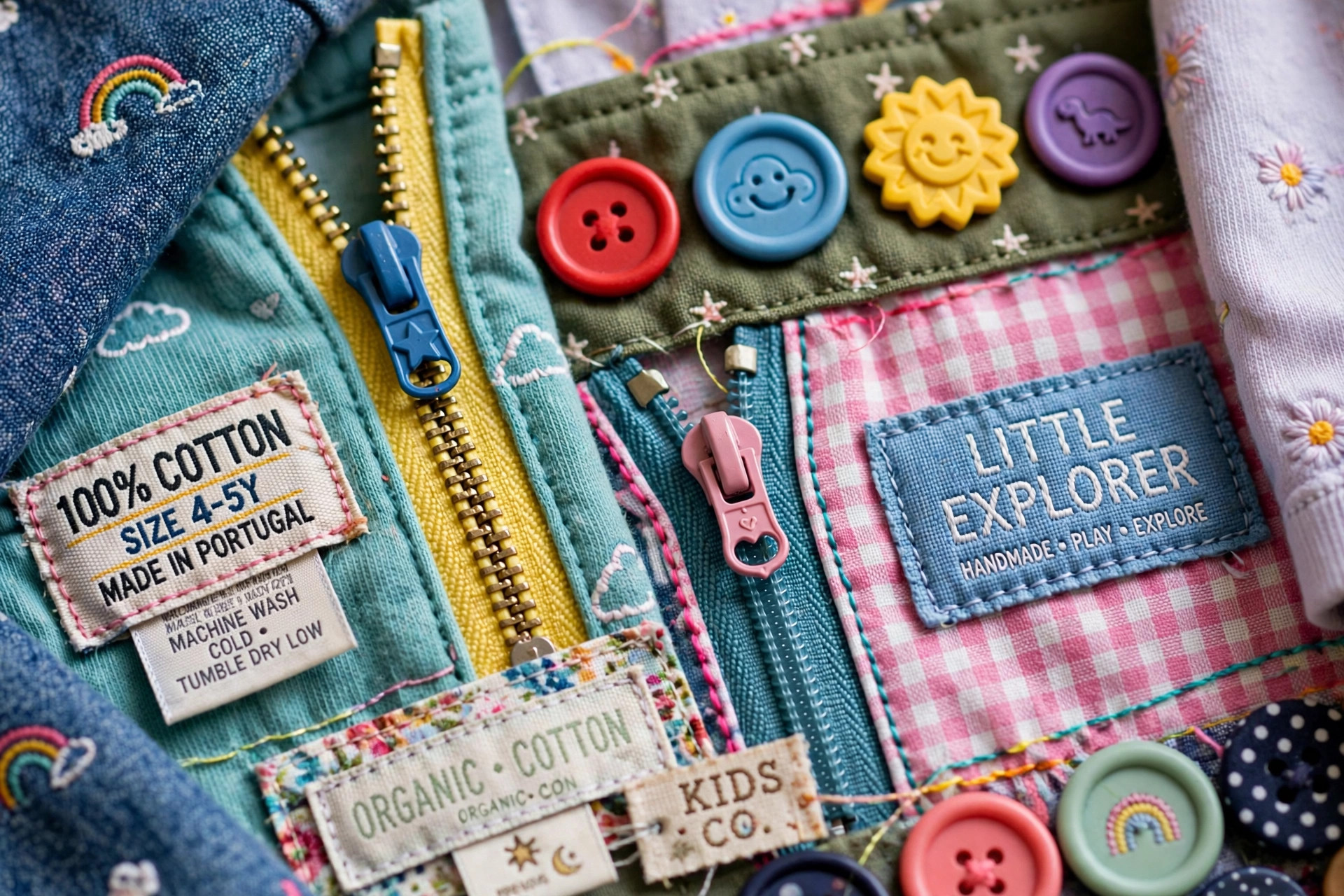
Trims — buttons, zippers, snaps, drawstrings, labels, and appliqués — make children's clothing functional and fun. But kids' wear trims face safety rules that adult garments never see: small parts, sharp points, drawstring strangulation hazards, and chemical limits. Choosing trims for children's wear is a compliance decision first and a design decision second.
Safety Comes First
In the US, children's products must meet CPSIA rules: lead and phthalate limits, and small-parts testing for ages under 3 — a button that detaches becomes a choking hazard and a recall. The EU's EN 14682 restricts drawstrings in children's clothing by age and garment zone. Always confirm your trims are certified for children's use, and keep supplier test reports on file.
Choosing Practical Trims
Kids destroy clothing, so trims must survive industrial-strength abuse: reinforced snap settings, lockable zipper pulls, bar-tacked buttonholes, and woven labels (printed labels crack and peel in the wash). Nickel-free snaps and zippers avoid skin allergies. For ages 0–3, many brands skip buttons entirely in favor of snaps and elastic.
Sourcing and Testing
Source trims from suppliers experienced in children's wear — they understand pull tests (buttons and snaps must withstand specified force), colorfastness to saliva and perspiration, and the documentation you'll need. Budget for third-party lab testing per style; it is far cheaper than a recall. Test the finished garment, not just the trim in isolation.
FAQs
- Are drawstrings allowed on children's clothing?
- Heavily restricted. The EU's EN 14682 bans functional drawstrings in certain zones for young children; US guidelines (ASTM F1816, now mandatory via CPSC rule) similarly restrict them. Most brands avoid drawstrings in kids' wear entirely.
- What is a pull test?
- A lab test measuring the force needed to detach buttons, snaps, and other small components. Children's garments must meet minimum pull-force thresholds so parts can't become choking hazards.
- Do children's trims need lead testing?
- Yes, in the US under CPSIA — children's products including trims must meet strict lead content and surface-coating limits, with testing by a CPSC-accepted lab.
- Woven labels vs. printed labels for kids?
- Woven labels last longer and stay legible through repeated washing; printed neck labels can crack, fade, and irritate skin. Many sensory-conscious brands go tagless instead.
Apparel Search: explore the manufacturing guides hub and production & sourcing resources for the fashion industry.