Men's Medical Footwear Guide
Medical footwear is the umbrella for every shoe worn on clinical floors - the clogs of the operating suite, the slip-resistant shoes of the wards, and the supportive sneakers of staff who walk miles of corridor per shift. This page sits with the men's medical clothing guide and the wider men's footwear guide, and that placement is the category in one line: footwear chosen not for how it looks in a mirror but for what a twelve-hour shift on hard, occasionally wet floors does to feet, knees and backs.
Shop Men's Medical Footwear Now
Shop Men's Medical Footwear on Amazon Shop Men's Medical Footwear on eBayThe Amazon and eBay links on this page are affiliate links. If you make a purchase through them, Apparel Search may earn a commission.
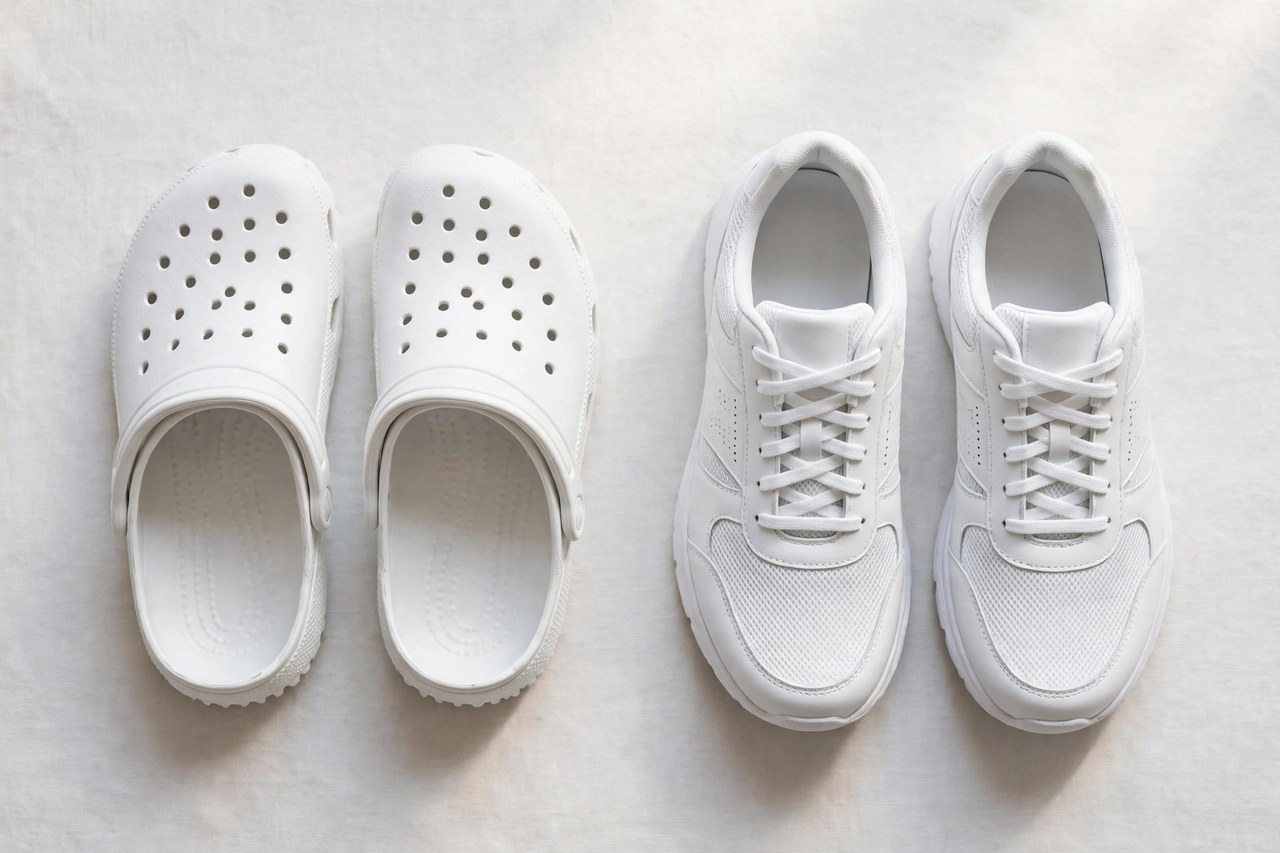
Medical footwear is the umbrella for every shoe worn on clinical floors - the clogs of the operating suite, the slip-resistant shoes of the wards, and the supportive sneakers of staff who walk miles of corridor per shift. This page sits with the men's medical clothing guide and the wider men's footwear guide, and that placement is the category in one line: footwear chosen not for how it looks in a mirror but for what a twelve-hour shift on hard, occasionally wet floors does to feet, knees and backs. This guide is built around the questions buyers actually ask: which style, which size, which fabric, and what will it look like after a year of real use - answered in order, with the trade-offs stated plainly.
Clogs, Shoes and the Shift's Demands
Sort by workplace before style. Clogs - closed-toe, often with a raised heel cup and a roomy toe box - dominate procedural areas because they slip off and on, wipe clean, and accommodate the swelling of a long standing day. Lace-up professional shoes give a more adjustable fit for walking-heavy roles. Across both, the specifications repeat: slip-resistant outsoles tested on wet tile, uppers that are leather or synthetic and fluid-resistant enough to be wiped or washed down, cushioning that survives compression rather than collapsing in a month, and a closed toe without exception. Fluid-barrier ratings, electrical hazard marks and similar certifications belong to specific facilities' rules - buy to your employer's specification first and your preference second.
Judge footwear by attachment and compound: cemented soles are light and affordable, stitched or welted constructions cost more and can be repaired, and the outsole rubber decides grip against longevity - soft compounds bite, hard compounds endure. Linings decide comfort over hours, removable insoles decide whether your own supports can come along, and honest weight decides whether the pair disappears on the foot or taxes every mile of the day.
Fit at the End of the Day
Fit medical footwear at the end of a day, in the compression socks or supports of the job, because clinical feet swell measurably across a shift. The toe box must clear the toes standing and walking - toes splay under load, and a clog that fits at 7 a.m. can punish by hour ten. Heel hold in a clog is looser by design; the test is whether the foot works to keep the shoe on, which tires the arch, or rides in it, which does not. Alternate two pairs across the week if the budget allows: cushioning foam needs a rest day to rebound, and the rotation doubles the life of both pairs.
Fit footwear late in the day in the socks you will actually wear, with roughly a thumb's width beyond the longest toe, the heel held without lift, and the foot's widest point meeting the shoe's widest point. Sizes are unstandardized between makers - trust your measured length and width over the printed number, and require no break-in argument: a shoe that needs excuses in the shop delivers them on the road.
Cleaned Like Equipment
Clinical footwear is cleaned like equipment: wipe uppers down after shifts where contamination is possible, wash removable insoles regularly, and let pairs dry fully between wears - a damp rotation is a hygiene failure, not a comfort detail. Replace by the outsole and the midsole, not the calendar: when the slip-resistant tread smooths at the heel and ball, or the cushioning stays compressed under thumb pressure, the shoe's working life is over whatever its uppers still promise. Keep the retired pair for the garden; do not let it drift back onto the ward.
Rotation is the first care rule: a day of rest between wears lets linings dry and cushioning rebound, and it doubles a rotation's life compared with daily wear of one pair. Clean after use, dry at room temperature away from radiators, hold shape with trees or paper, and condition leather on a schedule rather than when it looks thirsty. Reproof weather finishes when water stops beading, and resole stitched footwear before the wear reaches the welt.
Common Questions
What footwear do men wear for medical work?
Mostly clogs and slip-resistant professional shoes. Clogs - closed-toe, wipe-clean, with a roomy toe box - dominate operating and procedural areas; lace-up shoes and supportive professional sneakers suit walking-heavy ward work. The shared specifications matter more than the style: slip-resistant outsoles, fluid-resistant cleanable uppers, all-day cushioning, and a closed toe. Our medical shoes guide beside this one treats the lace-up shoe in detail.
Why do medical workers wear clogs?
Because the clog solves the shift's three problems at once: it slips off and on without hands between areas, its raised, roomy build accommodates feet that swell across twelve hours of standing, and its molded upper wipes clean of fluids that would soak a mesh sneaker. The trade is heel security - a clog rides looser than a laced shoe - which is why walking-heavy roles often choose laces instead.
How often should medical footwear be replaced?
When its working parts wear out: the slip-resistant tread smoothing at heel and ball, or the midsole cushioning staying compressed instead of rebounding. On hard clinical floors with daily wear that is commonly somewhere between six and twelve months. Rotating two pairs stretches both timelines, and the uppers' appearance is the least reliable guide - a handsome shoe can be a finished one.
More in Men's Clothes Guide M
Footwear in the Medical Family
The category belongs to two families at once: the men’s medical clothing guide above it and the men’s footwear guide in the F section beside it, both linked below.
More to Explore on Apparel Search
Looking for Men's Clothing Stores?
This guide explains men's medical footwear. To browse where to buy, visit our men's clothing store directory, where you can find retailers that carry them.