Men's Tank Tops Guide
A men's tank top is a sleeveless shirt with wide arm openings and a low neckline, made to maximize airflow and freedom of movement for the arms and shoulders. This is a strictly product-focused guide: cuts, fabrics, sizing and care for the garment itself, whether it is bought as an athletic top, a warm-weather layer or an undershirt-style base. The category divides into athletic tanks, casual ribbed tanks and undershirt tanks, and each is built differently.
Shop Men's Tank Tops Now
Shop Men's Tank Tops on Amazon Shop Men's Tank Tops on eBayThe Amazon and eBay links on this page are affiliate links. If you make a purchase through them, Apparel Search may earn a commission.
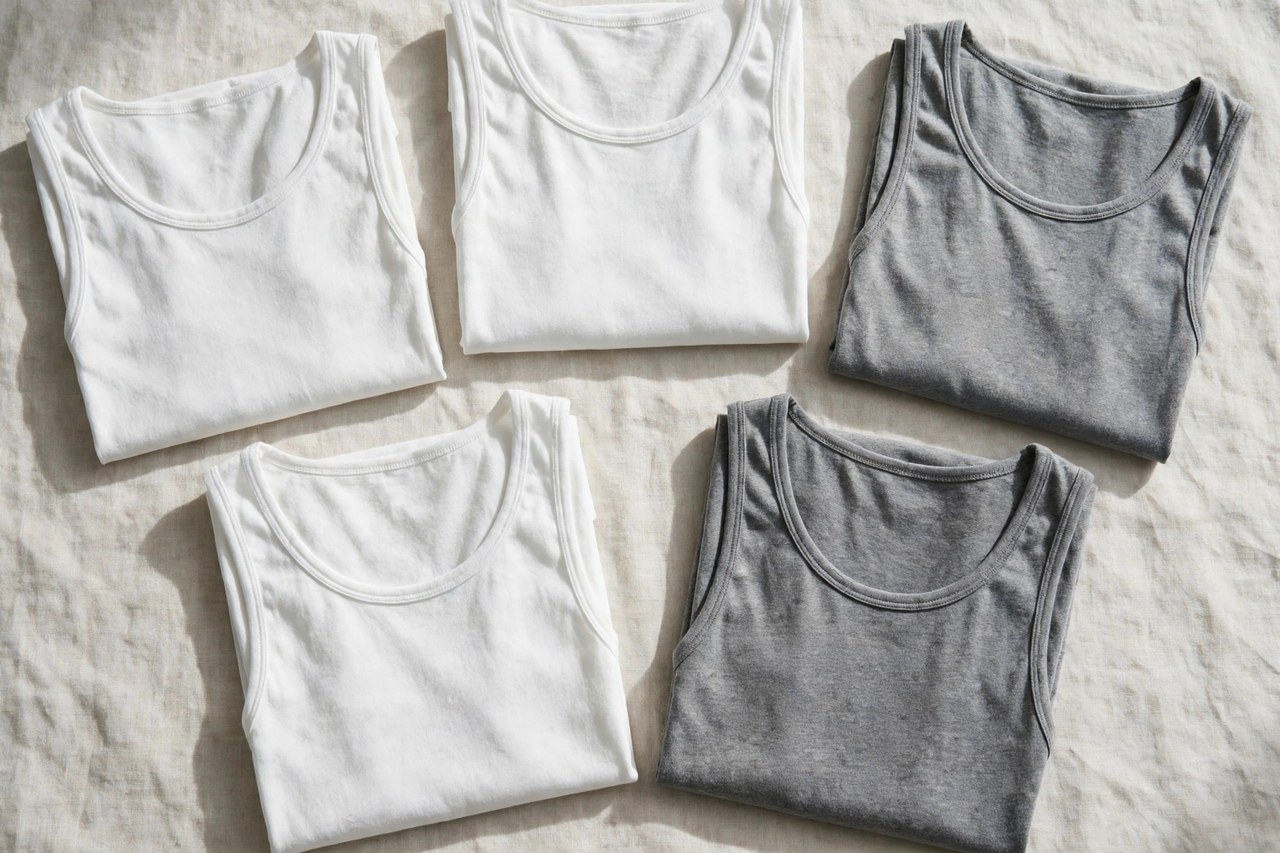
A men's tank top is a sleeveless shirt with wide arm openings and a low neckline, made to maximize airflow and freedom of movement for the arms and shoulders. This is a strictly product-focused guide: cuts, fabrics, sizing and care for the garment itself, whether it is bought as an athletic top, a warm-weather layer or an undershirt-style base. The category divides into athletic tanks, casual ribbed tanks and undershirt tanks, and each is built differently. This guide is built around the questions buyers actually ask: which style, which size, which fabric, and what will it look like after a year of real use - answered in order, with the trade-offs stated plainly.
Styles and Construction
Athletic tanks use lightweight synthetic or blended knits that wick moisture and dry quickly, with racerback or standard cuts and mesh panels where makers add ventilation. Ribbed cotton tanks - the classic undershirt style - rely on vertical rib knit for close fit and stretch recovery, and are sold by chest size in multipacks. Casual tanks in jersey or slub cotton sit looser, with bound armholes and necklines that should lie flat rather than curl. In all three, finishing decides quality: bound edges outlast raw-cut ones, and a slightly heavier knit holds its shape through a season of washing.
A top earns its keep in finishing: seams that hang straight and stay even at eight to twelve stitches per inch, collars and plackets that lie flat after washing, buttons sewn with thread shanks so they sit in their holes without pulling. Hold the cloth to the light - a tight, even weave or knit outwears a loose one at the same labeled weight, and pattern pieces cut on grain keep the garment from twisting around your body by the third wash.
Fit and Sizing
Size a tank by chest measurement and intended use. An undershirt tank should fit close, long enough to stay tucked, with arm openings that do not gap below the chest. An athletic tank should allow a full range of arm movement without the hem riding up, and a casual tank should skim rather than cling. Knits relax in wear and recover in the wash, so a tank that feels marginally snug new is often correct after the first laundry cycle.
Fit tops shoulders and chest first, because tailors cannot cheaply move either: the shoulder seam ends at the shoulder bone, the chest closes without pulling, and both arms raise without the hem escaping the waistband. Tucked lengths must stay tucked sitting; untucked lengths should end mid-fly. Sleeves are the cheap alteration, shoulders the permanent one - reject a wrong shoulder for any reason, forgive a long sleeve for many.
Wearing and Care
Wash tanks with like colors in cool or warm water; ribbed cotton styles keep their recovery best when dried low or on the line rather than baked at high heat. Whites used as undershirts benefit from an oxygen-based soak when they grey. Store folded with other knit tops, and inspect binding and straps each season - once an armhole binding loses elasticity, the garment's fit goes with it.
Launder tops by the label with three defaults: cool or warm water to protect color and trims, dark and printed pieces inside out, and low or line drying, which is the largest single lever on a shirt's lifespan. Fasten buttons and zips before washing to protect the whole load, treat stains before the dryer can set them, and store knits folded so their shoulders keep the shape they were knitted with.
Common Questions
What is the difference between a tank top and an undershirt tank?
Intended wear and cloth. Undershirt tanks (often ribbed cotton, sold in multipacks) are cut close and long to be worn under shirts. Athletic and casual tanks are outer garments: heavier or technical fabrics, finished bindings, and cuts designed to be seen. The same size in each will fit differently, so buy by the job.
Which fabric is best for a workout tank top?
A lightweight polyester or nylon blend with moisture-wicking finish: it dries fast, holds its shape when wet and resists odor better than pure cotton, which absorbs sweat and stays heavy. Mesh panels at the back and sides add ventilation. For low-intensity wear, a cotton blend is softer and perfectly serviceable.
How should a men's tank top fit?
Close but not tight for undershirt use; easy through the body with secure armholes for athletic use. The neckline and armholes should lie flat without gaping open below the chest, and the hem should cover the waistband. Measure your chest and follow the maker's chart - tank sizing varies more between brands than t-shirt sizing does.
More in Men's Clothes Guide T
Background and History
A tank-top is a type of sleeveless shirt. A sleeveless shirt is a shirt manufactured without sleeves, or one whose sleeves have been cut off after the manufacturing process had been complete. For example, if we purchase a t-shirt and then cut the sleeves off with a pair of scisors it technically turns into a sleeveless shirt even though it was not originally manufactured to be one. They are often used as undershirts for various reasons. This type of shirt is also often worn by athletes in sports and are regarded as acceptable public casual dress in most warm weather locales. What is a tank top? A tank top consists of a sleeveless shirt with low neck and different shoulder straps width. This style of shirt is also often referred to as a muscle shirt or wife-beater. They were quite popular in the 1980s and were stereotypically associated with surfers and bodybuilders (hence the name "muscle" shirt). Learn more about tank tops . Learn about the possibly offensive fashion term
Looking for Men's Clothing Stores?
This guide explains men's tank tops. To browse where to buy, visit our men's clothing store directory, where you can find retailers that carry them.