Men's Jockstraps Guide
A men's jockstrap (athletic supporter) is a support garment built from a front pouch, a wide elastic waistband and two elastic leg straps, leaving the seat open for ventilation and freedom of movement. Invented for 19th-century bicycle messengers and standard in sport ever since, it is covered here strictly as a product: pouch fabrics, cup-compatible versions, strap and waistband construction, sizing and care.
Shop Men's Jockstraps Now
Shop Men's Jockstraps on Amazon Shop Men's Jockstraps on eBayThe Amazon and eBay links on this page are affiliate links. If you make a purchase through them, Apparel Search may earn a commission.
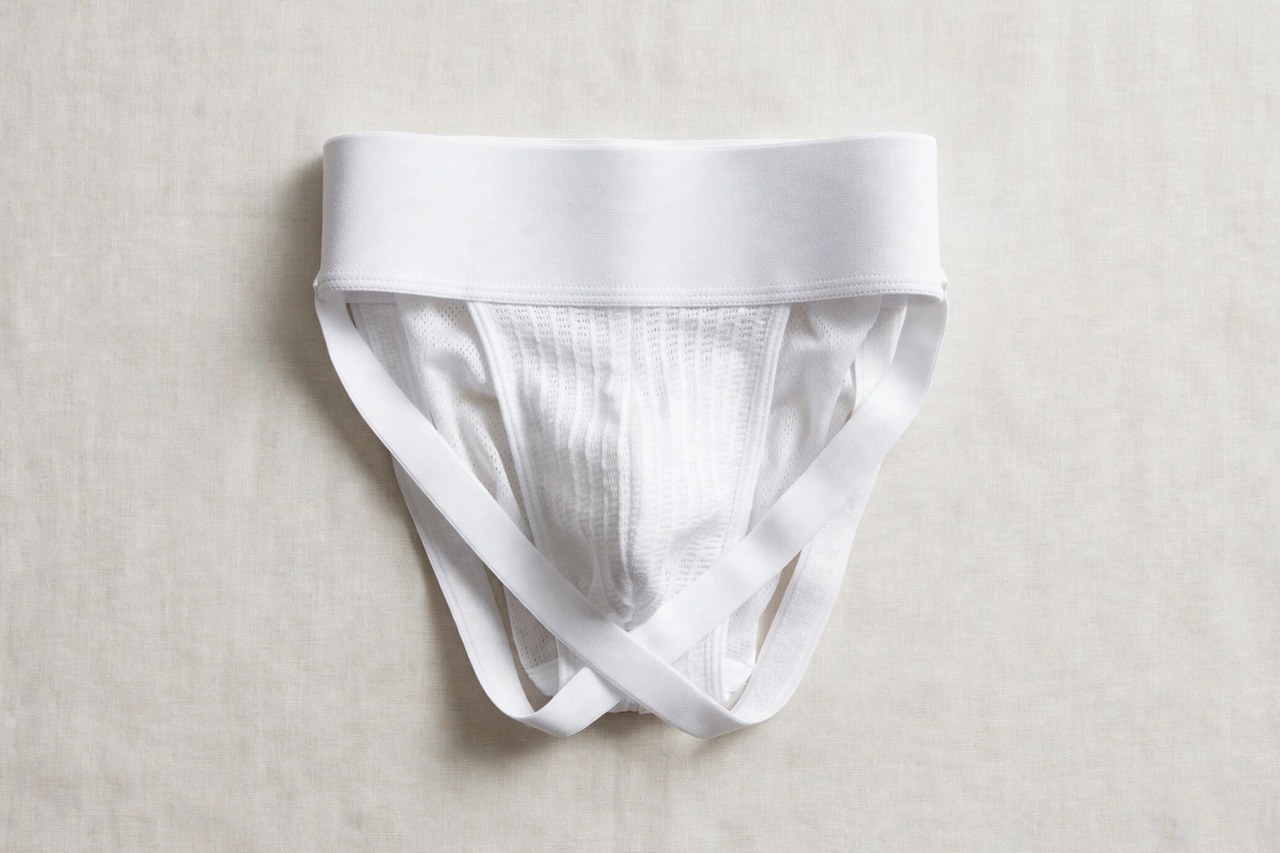
A men's jockstrap (athletic supporter) is a support garment built from a front pouch, a wide elastic waistband and two elastic leg straps, leaving the seat open for ventilation and freedom of movement. Invented for 19th-century bicycle messengers and standard in sport ever since, it is covered here strictly as a product: pouch fabrics, cup-compatible versions, strap and waistband construction, sizing and care. This guide walks through the choices that matter - style, fit, fabric and finish - with the practical detail a product listing rarely gives you, and closes with the care habits that keep the garment in service.
Styles and Construction
The classic build has three parts. The pouch is a knit - cotton, polyester mesh or modern microfiber - shaped to support, in standard or profile fits; some pouches are built with a pocket to hold a protective cup for contact sports, and cup and no-cup versions are different products that should not be improvised into each other. The waistband is wide elastic (two to three inches on classic athletic versions, narrower on fashion descendants) because it carries the garment's whole load. The leg straps are elastic bands that run from the pouch under the seat to the waistband's sides; their tension sets the lift and their width sets comfort. Modern variants include jock briefs and boxer-jock hybrids that put the supporter inside a brief or boxer-brief body for men who want the support system with full coverage.
The durable buying order is job, specification, budget - in that sequence. Decide what the garment must do, translate that into fiber, weight, construction and size numbers, and only then shop price. Read labels as specifications, inspect the garment inside out where finishing is unposed, and prefer the maker who publishes measurements to the one who publishes adjectives. A garment that matches your measurements, climate and laundry will be worn; one that misses any of the three becomes expensive storage.
Fit and Sizing
Size a jockstrap by waist measurement - the waistband is the fit - and confirm the pouch fits without compression; cup versions are sized with the cup's own chart, since the pocket must hold the cup's edges securely. Leg straps should sit snugly without digging; straps that have relaxed with age stop supporting and start chafing, which is the garment's retirement signal. Athletes between sizes generally take the smaller for support, since a supporter that shifts is not supporting.
Measure yourself once a year and keep the numbers - chest, waist, inseam, foot, head - because bodies drift gradually while size habits never do. Shop from measurements, try garments under real conditions (over layers, in your own shoes, late in the day for footwear), and be honest about alterations: lengths and small waist changes tailor beautifully; shoulders, rises and patterns are the garment you bought forever.
Wearing and Care
Elastic is the whole garment, so care is elastic care: wash cool or warm, avoid bleach, and dry low or line dry - heat shortens elastic life measurably. Wash after sport use promptly, since a supporter lives in the hardest laundry category you own. Keep a rotation for training schedules. Replace when waistband or straps lose recovery, which arrives sooner in this style than in covered underwear because the elastics work under constant tension.
Five minutes when a garment comes off - shake it out, hang or fold it correctly, note the stain and the loose button - prevents most of the damage later blamed on quality. Keep a small kit where the clothes live: brush, lint roller, conditioner suited to your leathers, black, navy and grey thread. Clothing rarely dies at once; it fades by small neglects, and small attentions reverse the process at the same pace.
Common Questions
When is a jockstrap the right choice over supportive underwear?
For sport where maximum ventilation and a dedicated support system matter, and where a protective cup is required - the cup-pocket jockstrap remains the standard carrier. For general training, modern pouch and boxer-jock hybrids give comparable support with full coverage. The classic jockstrap is a specialist tool: unmatched at its job, unnecessary outside it.
How do I choose a cup-compatible jockstrap?
Buy the system together: a pouch with a purpose-built cup pocket, and a cup sized by the maker's chart for your waist and age class. The pocket must hold the cup's edges fully - a cup riding on an edge is worse than none. Youth and adult cups and pouches are not interchangeable; contact-sport leagues often specify the standard, so check requirements before buying.
What is a boxer-jock or jock brief?
A hybrid that mounts the jockstrap's support pouch inside a brief or boxer-brief body, with leg straps either present or replaced by the body's own leg bands. It suits men who want supporter-grade front support with the coverage and trouser-compatibility of ordinary underwear, and it has become the common form of athletic underwear in team sports.
More in Men's Clothes Guide U
Background and History
A jock is a North American term for a stereotypical male athlete. However, that is not the only meaning of the word. It is also short for the word jockstrap which is an undergarment worn primarily by athletes. A jockstrap (also known as a jock, jock strap, strap, supporter, or athletic supporter) is an undergarment for supporting the male genitalia during cycling, sports or other vigorous physical activity and now commonly worn as everyday underwear. A jockstrap consists of a waistband (usually elastic) with a support pouch for the genitalia and two elastic straps affixed to the base of the pouch and to the left and right sides of the waistband at the hip. Jockstraps are fairly consistent in design with variations appearing in details like width of waistband and fabrics. Some jockstraps are designed for specific sports: Swim jocks, for example, have a narrow waistband, and hockey jocks sometimes have adjustable elastic straps and garter clips that hold hockey socks in place while the bulky goalie protector has genital
Looking for Men's Clothing Stores?
This guide explains men's jockstraps. To browse where to buy, visit our men's clothing store directory, where you can find retailers that carry them.