Men's Low Rise Underwear Guide
Men's low rise underwear is any style - brief, trunk or bikini - whose waistband is cut to sit well below the natural waist, on the hips, so it stays hidden under low-rise jeans and trousers. This guide is strictly product-focused: how rise is measured, which styles use it, the fit trade-offs a lower waistband creates, and sizing and care.
Shop Men's Low Rise Underwear Now
Shop Men's Low Rise Underwear on Amazon Shop Men's Low Rise Underwear on eBayThe Amazon and eBay links on this page are affiliate links. If you make a purchase through them, Apparel Search may earn a commission.
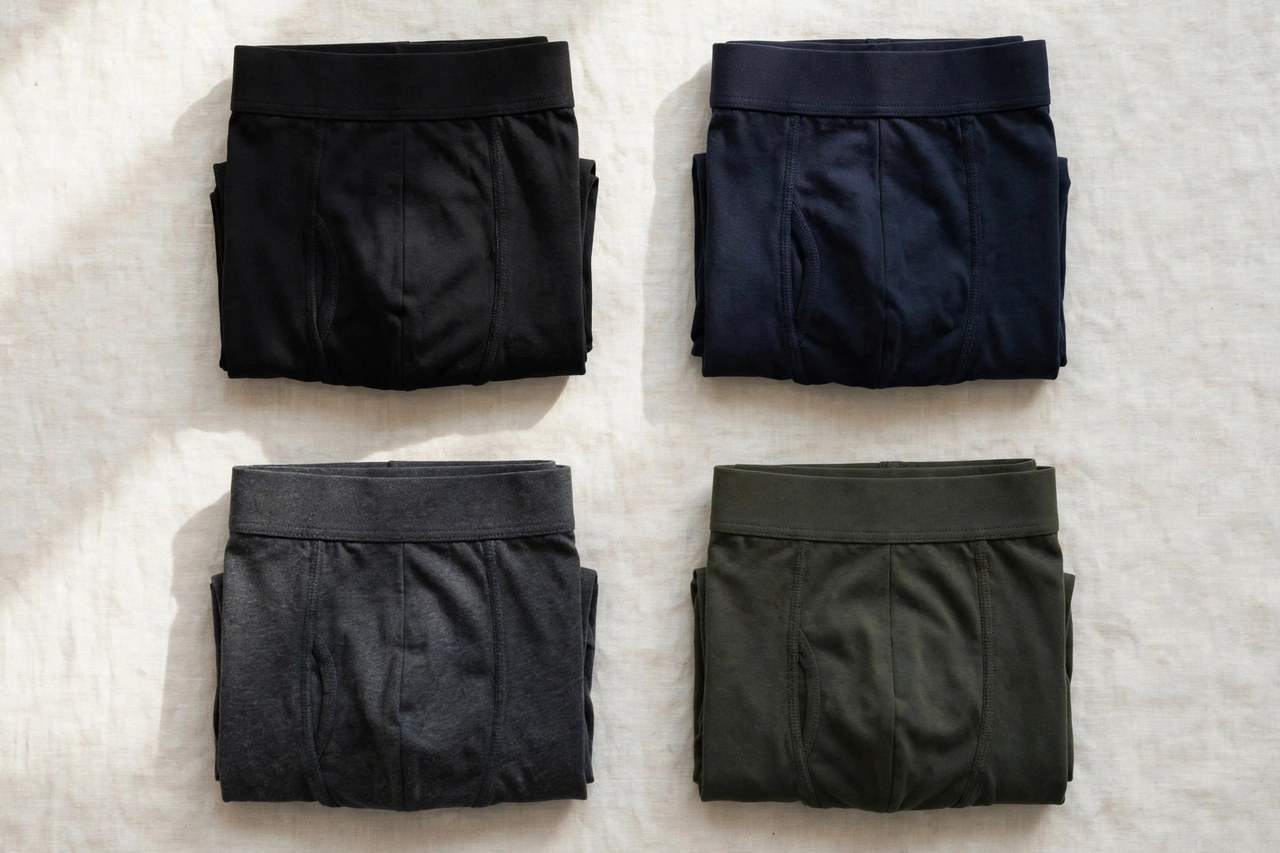
Men's low rise underwear is any style - brief, trunk or bikini - whose waistband is cut to sit well below the natural waist, on the hips, so it stays hidden under low-rise jeans and trousers. This guide is strictly product-focused: how rise is measured, which styles use it, the fit trade-offs a lower waistband creates, and sizing and care. This guide explains what to look for, how the sizing actually works, which fabrics and constructions earn their price, and how to care for the garment so it keeps doing its job season after season.
Styles and Construction
Rise is the distance from the front waistband through to the back waistband, and low-rise patterns reduce it by one to three inches against a classic cut, usually with a narrower waistband to match. The style emerged with low-rise denim and persists because waistband visibility is a real wardrobe problem: a classic brief's band can sit two inches above a low jean's. Low-rise briefs are the common form; low-rise trunks pair the hip fit with a short leg; bikini styles are inherently low. Construction compensations matter: with less rise holding the garment, the pouch shaping and leg elastic do more of the work, and better low-rise patterns are cut with a shaped seat so the back waistband stays at the hips instead of migrating down through the day. Fabric stretch (elastane blends) is near-universal in this category for the same reason.
For any leg garment the rise is the first specification, because it decides sitting comfort before fabric gets a vote: measure from front waistband through to back and compare it with a pair that already works. Then audit the stress points - bar-tacked belt loops and pocket corners, double-stitched inseams, hems finished evenly - and the pocketing, which should be deep, smooth and strong enough to carry what the garment's pockets invite you to carry.
Fit and Sizing
Measure and buy by waist (hip, in effect - measure where the band will sit) and test the fit sitting and bending, the positions where low-rise garments fail. The back band should stay at hip level without pulling the front down, and the front band should not fold. Men with a fuller seat often find low-rise the least stable cut and do better in mid-rise; the style flatters and serves straighter builds and low trousers best.
Measure where the waistband will actually sit, plus inseam to your preferred break, and thigh and seat for closer cuts. Then sit, squat and climb a step in the fitting room - a leg garment that only works standing still does not work. Waistbands relax roughly half an inch in wear and inseams shrink most in early washes, so buy the fit you want after those changes rather than the fit in the mirror.
Wearing and Care
Care follows the fabric (usually elastane blends): cool or warm washing, low or line drying to protect the elastics that this cut depends on more than most. Waistband recovery is the whole fit in a low-rise garment, so retire it when the band relaxes - there is no spare rise to compensate. Rotate pairs to rest the elastic between wears.
Wash leg garments inside out and cool; heat is the agent that fades dye, tires elastic and shortens inseams. Dry low or on the line, hang or fold promptly, and crease deliberately or not at all. Walk the stress points each season - hem edges, pocket corners, seat and inner thigh - and mend the small fray while it is still small: leg garments fail gradually, then suddenly, and the two-minute October repair prevents the November replacement.
Common Questions
Who should wear low rise underwear?
Men whose trousers and jeans are low-rise and who are tired of waistband show, and men who simply prefer a band on the hips. It is least suited to fuller seats (the back band migrates) and to higher-rise trousers, where a mid- or full-rise garment's extra coverage fits better. The trousers decide: match underwear rise to trouser rise and the problem the style solves disappears.
Low rise briefs vs bikini underwear - what is the difference?
Coverage at the side. A low-rise brief keeps a brief's fuller side panel and leg opening geometry, just with the waistband lowered. A bikini (its own guide in this section) narrows the side to a thin strap of fabric or elastic, reducing coverage front and back as well. Low-rise briefs are the conservative step; bikinis are the minimal-coverage branch of the same idea.
Why does the back waistband of low rise underwear slip down?
Geometry: with less rise, there is less fabric anchoring over the seat, so sitting and bending walk the band down if the seat shaping and elastic recovery are not up to the job. Fixes in order: confirm the size (too large slips worst), choose patterns with a shaped or contoured seat, choose a wider waistband, and accept that some builds are better served by mid-rise.
More in Men's Clothes Guide U
Background and History
Low-rise is a style of clothing designed to sit low on, or below, the hips. The style can also be called lowcut, hipster, or hip-hugger. The concept of low-rise underwear is similar to low-rise pants. Low-rise pants are pants that sit low on, or below, the hips, usually at least 8 centimeters lower than the navel. They are also called "low-cut jeans", "hipster jeans", and "lowriders". Low-rise pants have been available since the 1900s. The "rise" of a bottom garment is measured by the distance between the crotch and the waistline or top of the garment and is usually around 12 inches (30 cm) on regular pants. The average rise of a low-rise garment is roughly 8 inches (20 cm) with some as little as 3 to 4 inches (7.6 to 10.2 cm). A normal low-rise sits at least 2 to 3 inches (5 to 8 cm) below the navel. A "super" or an "ultra low-rise" sits at 4 to 5 inches (10 to 13 cm) below the navel. Men's
Looking for Men's Clothing Stores?
This guide explains men's low rise underwear. To browse where to buy, visit our men's clothing store directory, where you can find retailers that carry them.