Men's Thong Underwear Guide
Men's thong underwear pairs a front pouch with a narrow flat fabric strap at the back rather than a full seat, sitting on a waistband at the waist or hips. This guide is strictly product-focused and neutral: strap widths and shapes, pouch constructions, fabrics, precise sizing for a minimal pattern, and the gentle care the style's few components require.
Shop Men's Thong Underwear Now
Shop Men's Thong Underwear on Amazon Shop Men's Thong Underwear on eBayThe Amazon and eBay links on this page are affiliate links. If you make a purchase through them, Apparel Search may earn a commission.
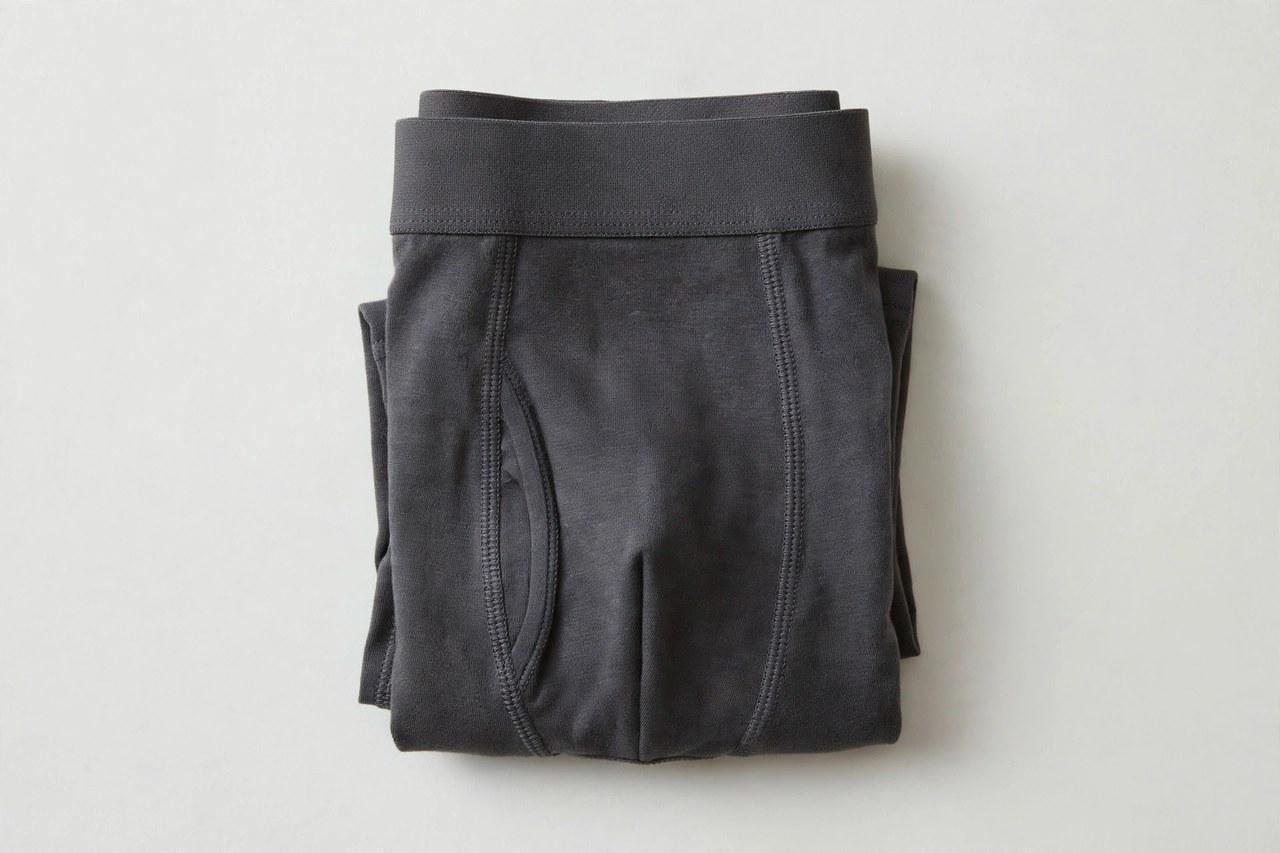
Men's thong underwear pairs a front pouch with a narrow flat fabric strap at the back rather than a full seat, sitting on a waistband at the waist or hips. This guide is strictly product-focused and neutral: strap widths and shapes, pouch constructions, fabrics, precise sizing for a minimal pattern, and the gentle care the style's few components require. This guide explains what to look for, how the sizing actually works, which fabrics and constructions earn their price, and how to care for the garment so it keeps doing its job season after season.
Styles and Construction
A thong's back is a shaped fabric band - wider and flatter than a g-string's cord (the G-String guide in this section covers that sibling style) - joined to the pouch and waistband in a T or Y configuration. Strap width is the main comfort variable: narrow straps minimize fabric; wider straps (toward an inch) distribute contact and are the usual recommendation for new wearers. Pouches follow the standard ladder - flat, contoured, and structured - and carry the whole fit at the front. Waistbands range from narrow elastic to fabric-covered bands; as in bikinis, a covered band at the hip is kinder over a day. Fabrics are stretch jerseys throughout - cotton-elastane, modal, microfiber - with flat seam finishing a genuine quality marker in a garment where nearly every edge is in contact and under tension.
The durable buying order is job, specification, budget - in that sequence. Decide what the garment must do, translate that into fiber, weight, construction and size numbers, and only then shop price. Read labels as specifications, inspect the garment inside out where finishing is unposed, and prefer the maker who publishes measurements to the one who publishes adjectives. A garment that matches your measurements, climate and laundry will be worn; one that misses any of the three becomes expensive storage.
Fit and Sizing
Sizing must be exact and by measured waist: minimal garments amplify error in both directions, and thongs add strap geometry to the equation - a strap sized for a different rise will not settle. New wearers should expect an adjustment period measured in wears, and should judge fit at day's end rather than minute one. If between sizes, take the larger with a contoured pouch: the front fit matters more than a half-inch of band tension.
Measure yourself once a year and keep the numbers - chest, waist, inseam, foot, head - because bodies drift gradually while size habits never do. Shop from measurements, try garments under real conditions (over layers, in your own shoes, late in the day for footwear), and be honest about alterations: lengths and small waist changes tailor beautifully; shoulders, rises and patterns are the garment you bought forever.
Wearing and Care
Wash thongs gently - cool water, a mesh bag to protect narrow parts and joins, line or low drying to protect the elastane. Inspect the strap joins and waistband attachments regularly: a minimal garment's components are all structural, and the straps' anchor seams are this style's known failure point. Retire on fraying at a join rather than after a failure in wear.
Five minutes when a garment comes off - shake it out, hang or fold it correctly, note the stain and the loose button - prevents most of the damage later blamed on quality. Keep a small kit where the clothes live: brush, lint roller, conditioner suited to your leathers, black, navy and grey thread. Clothing rarely dies at once; it fades by small neglects, and small attentions reverse the process at the same pace.
Common Questions
Thong vs g-string - what is the difference?
The back: a thong uses a flat fabric strap, typically a half-inch to an inch wide; a g-string reduces the back to a narrow cord or string joined in a T. Thongs are the more substantial and generally more comfortable of the two, and the usual first minimal style. Both share pouch constructions, fabrics and care - and both are covered as products in this section.
Are thongs practical under clothing?
They are chosen partly for that: with no seat fabric, there is nothing to bunch, ride or outline under close trousers, and the front fits like the brief its pouch comes from. Practicality depends on the wearer's adjustment to the strap, which is personal and usually settles within a few wears. Under loose clothing the benefit is smaller and a fuller style's simplicity may win.
What should a first-time thong buyer look for?
A wider strap, a contoured pouch, a fabric-covered waistband, and a forgiving fabric (cotton-elastane or modal), in your exact measured size. That specification is the style's most comfortable configuration and the fairest test of whether the category suits you. Save narrow straps and microfiber for a second purchase informed by the first.
More in Men's Clothes Guide U
Background and History
Men's Thong Underwear guide about Men's Thong Underwear Men's Thong Underwear : Directory and Information Regarding Men's Thong Underwear presented by Apparel Search Men's Underwear Guide Men's Underwear Stores Men's Underwear Wholesalers Underwear Factories Men's Clothes Comfy Men's Undies Men's Underwear Underwear Glossary Undergarments are items of clothing worn beneath outer clothes, usually in direct contact with the skin, although they may comprise more than a single layer. Some types of undergarments use much less fabric than others. The thong is one of those garments that skimps on the utilization of fabric. The thong is a garment generally worn as either underwear or as a swimsuit. However, if you are planning to wear your underwear as swimwear, we recommend against it. Swimwear is generally made with a different type of fabric which is more appropriate for water. A thong may also be worn for traditional ceremonies or competitions, such as sumo wrestling. However, that is not the type of thong we are talking about on this page. Thongs are almost
Looking for Men's Clothing Stores?
This guide explains men's thong underwear. To browse where to buy, visit our men's clothing store directory, where you can find retailers that carry them.