Men's Vintage Shirts Guide
Vintage shirts for men range from flannel work shirts and chambray button-downs to dress shirts, camp-collar styles, and western shirts with snap buttons. Older shirts often use all-cotton or wool fabrics, longer tails for tucking, and collar shapes that clearly reflect their decade. Patterns, from plaids to stripes, are a large part of their appeal. Because shirts are washed frequently through their lives, fabric strength and staining deserve especially close attention when you shop for older examples.
Shop Men's Vintage Shirts Now
Shop Men's Vintage Shirts on Amazon Shop Men's Vintage Shirts on eBayThe Amazon and eBay links on this page are affiliate links. If you make a purchase through them, Apparel Search may earn a commission.
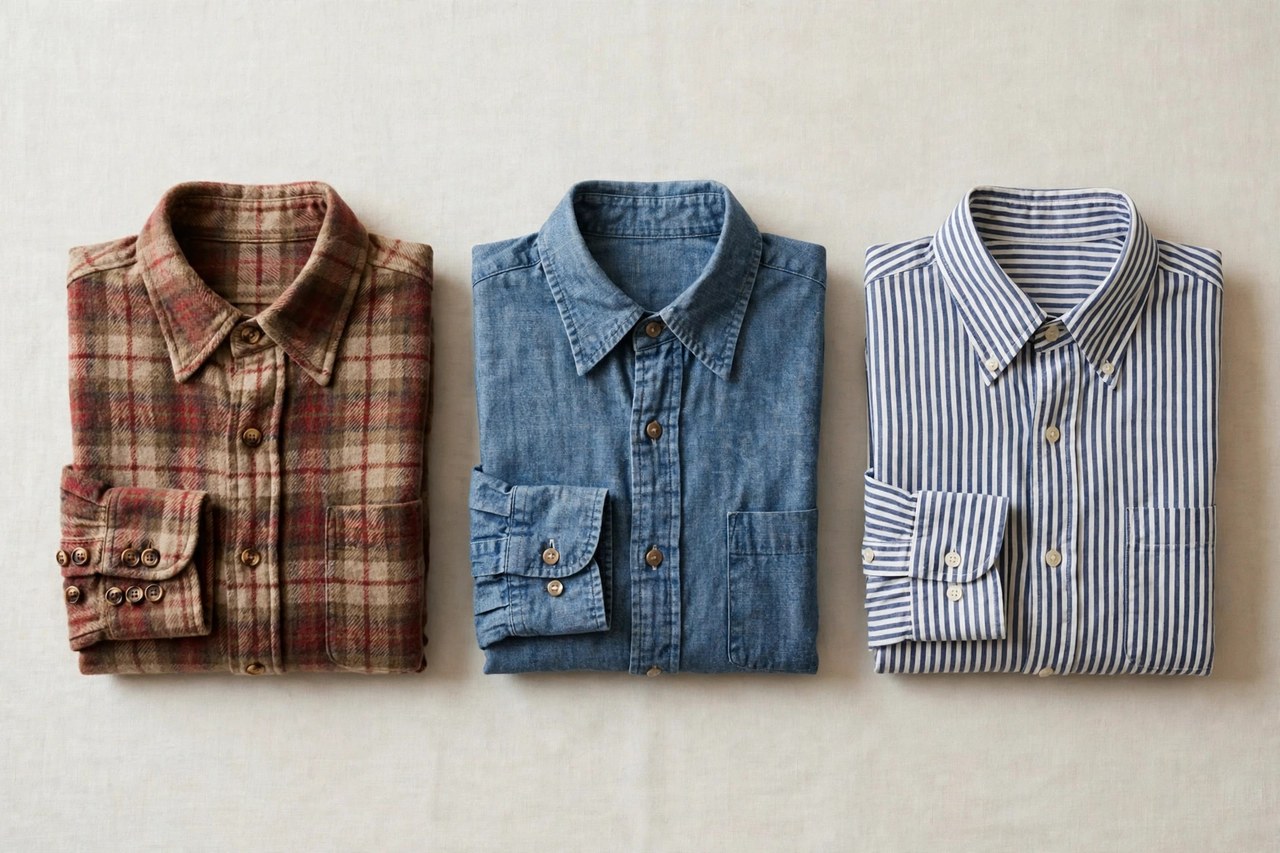
Vintage shirts for men range from flannel work shirts and chambray button-downs to dress shirts, camp-collar styles, and western shirts with snap buttons. Older shirts often use all-cotton or wool fabrics, longer tails for tucking, and collar shapes that clearly reflect their decade. Patterns, from plaids to stripes, are a large part of their appeal. Because shirts are washed frequently through their lives, fabric strength and staining deserve especially close attention when you shop for older examples. This guide covers the styles worth knowing, the fit points that decide comfort, the fabrics and construction that separate a good buy from a regret, and the simple care that makes the garment last.
Styles and Construction
Hold shirt fabric up to light to spot thinning at the collar fold, cuffs, elbows, and underarms, where wear and perspiration damage concentrate. Check for ring-around-the-collar stains, missing or cracked buttons, and fraying buttonholes, and compare both sleeves for fading differences. Examine seams along the shoulders and sides for repairs or puckering. Sniff for lingering odors, ask whether the shirt was shortened, and confirm the fabric content, since blends and pure cotton launder quite differently.
A top earns its keep in finishing: seams that hang straight and stay even at eight to twelve stitches per inch, collars and plackets that lie flat after washing, buttons sewn with thread shanks so they sit in their holes without pulling. Hold the cloth to the light - a tight, even weave or knit outwears a loose one at the same labeled weight, and pattern pieces cut on grain keep the garment from twisting around your body by the third wash.
Fit and Sizing
Size vintage shirts by measured chest, neck, shoulder, sleeve length, and body length rather than the letter or number on the label. Older cuts may be fuller through the body yet shorter in the sleeve than modern equivalents, or the reverse. Decide whether you will tuck the shirt in, since tail length changes how it wears. A shirt that fits shoulders and neck correctly can have its body taken in modestly by a tailor.
Fit tops shoulders and chest first, because tailors cannot cheaply move either: the shoulder seam ends at the shoulder bone, the chest closes without pulling, and both arms raise without the hem escaping the waistband. Tucked lengths must stay tucked sitting; untucked lengths should end mid-fly. Sleeves are the cheap alteration, shoulders the permanent one - reject a wrong shoulder for any reason, forgive a long sleeve for many.
Wearing and Care
Wash vintage shirts gently in cool water with mild detergent, treating collar and cuff soil by pre-soaking rather than harsh scrubbing that frays old cotton. Air dry or use the lowest heat, iron on a setting suited to the fiber, and store on hangers with the top button fastened to support the collar. Keep white and colored shirts away from prolonged sunlight in storage. Replace weak buttons before they are lost during washing.
Launder tops by the label with three defaults: cool or warm water to protect color and trims, dark and printed pieces inside out, and low or line drying, which is the largest single lever on a shirt's lifespan. Fasten buttons and zips before washing to protect the whole load, treat stains before the dryer can set them, and store knits folded so their shoulders keep the shape they were knitted with.
Common Questions
How do I size a vintage shirt correctly?
Use flat measurements for chest, neck, shoulder width, sleeve length, and overall length, and compare them with a shirt that fits you well. Vintage labels follow older standards and shirts may have shrunk, so a marked large can fit like a modern medium. Shoulders and neck are the least alterable points.
What damage is common on vintage shirts?
Thinning at the collar fold, cuffs, elbows, and underarms is most common, along with collar stains, cracked buttons, and frayed buttonholes. Hold the fabric toward light to reveal weak spots that photographs can hide, and ask the seller about stains and odors directly, since repeated past washing makes some marks permanent.
How should vintage cotton shirts be washed?
Wash gently in cool water with mild detergent, pre-soaking collars and cuffs instead of scrubbing them hard, and air dry where possible. Hot water and aggressive drying shrink and weaken older cotton and fade patterns. Iron on a moderate setting and store the shirt clean, buttoned at the collar, on a hanger.
More in Men's Clothes Guide V
Background
Let's assume you already know why shirts are worn. Here is a brief summary just in case. A shirt is a cloth garment for the upper body. It offers protection from the environment. Originally an undergarment worn exclusively by men, it has become, in American English, a catch-all term for a broad variety of upper-body garments and undergarments. In British English, a shirt is more specifically a garment with a collar, sleeves with cuffs, and a full vertical opening with buttons or snaps (North Americans would call that a "dress shirt", a specific type of "collared shirt"). There are many different shirt styles in the menswear market. Ranging from tank tops to tuxedo shirts and a wide assortment in between. Vintage clothing is a generic term for garments originating from a previous era. Therefore, a vintage shirt or top is one that was designed and manufactured in a previous era. You may want to take a moment to learn about the differences between vintage, antique, and retro clothes.
Looking for Men's Clothing Stores?
This guide explains men's vintage shirts. To browse where to buy, visit our men's clothing store directory, where you can find retailers that carry them.