Men's Wool Apparel Guide
Men's wool apparel is the whole wardrobe category seen through one fiber: the suits, trousers, sweaters, coats and shirts made from wool in its worsted, woolen, knitted and felted forms. This guide is the map of that territory - how the fiber's grades and cloth types divide across the wardrobe, and how to build a set of wool pieces that covers business, cold weather and everything between.
Shop Men's Wool Apparel Now
Shop Men's Wool Apparel on Amazon Shop Men's Wool Apparel on eBayThe Amazon and eBay links on this page are affiliate links. If you make a purchase through them, Apparel Search may earn a commission.
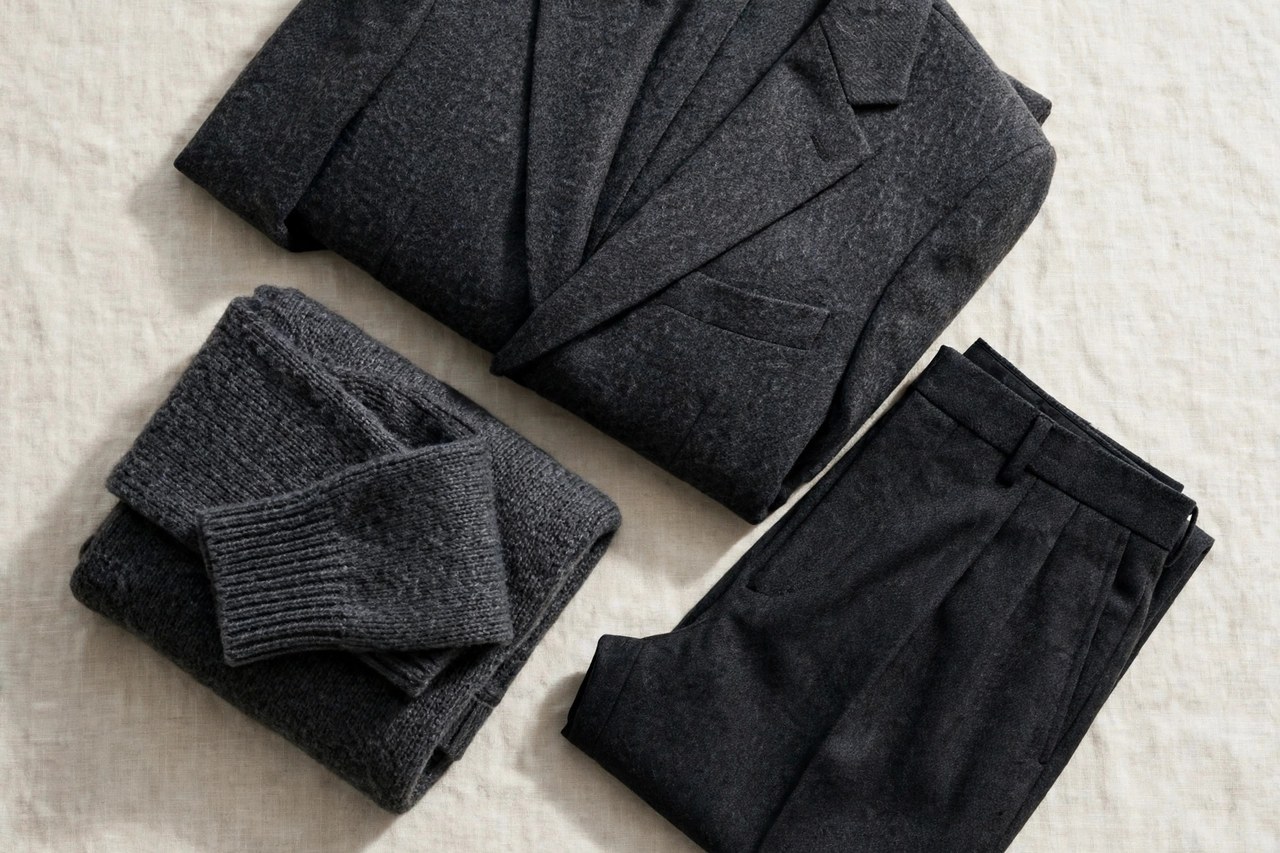
Men's wool apparel is the whole wardrobe category seen through one fiber: the suits, trousers, sweaters, coats and shirts made from wool in its worsted, woolen, knitted and felted forms. This guide is the map of that territory - how the fiber's grades and cloth types divide across the wardrobe, and how to build a set of wool pieces that covers business, cold weather and everything between. This guide is built around the questions buyers actually ask: which style, which size, which fabric, and what will it look like after a year of real use - answered in order, with the trade-offs stated plainly.
Styles and Construction
Organize wool apparel by cloth family. Worsted wools - combed, smooth, often Super-numbered - make suits, dress trousers and gabardine coats: crisp, wrinkle-shedding, formal. Woolen cloths - carded, soft, brushed - make flannel trousers, tweed jackets and blankets of texture: warm, matte, characterful. Knitted wool makes sweaters, cardigans, scarves and socks, where gauge and ply set the warmth and formality. Felted wool makes hats and traditional loden coats. A balanced wardrobe borrows from each family: a worsted suit and trousers for dress, a flannel and a tweed for texture, merino knits for layering, and one serious wool coat over all of it.
Judge wool first as a fiber, before the garment cut gets a vote. Fineness is measured in microns: merino at roughly 18-22 microns feels smooth against skin, while coarser wools trade softness for abrasion resistance and a drier hand. Crimp - the natural wave of the fiber - is what traps air for warmth and gives wool its spring and wrinkle recovery. Staple length matters too: longer staples spin into stronger, smoother yarns that pill less. Then read the cloth: twill weaves like gabardine shed wrinkles and water, flannels brush up into matte warmth, plain-weave tropical wools breathe, and knits trade structure for stretch and comfort.
Fit and Sizing
Build wool apparel in an order that multiplies outfits: start with the mid-grey flannel or worsted trouser and the navy blazer that pair with everything, add merino crew and V-neck knits in neutral colors, then the overcoat, then the suit, then the character pieces - tweeds, checks and bold scarves - that personalize the base. Fit returns on wool are unusually good because the fiber forgives: it molds subtly to the body, tailors alter it cleanly, and a day's rest restores its shape. Buy fewer, better pieces and rotate them; wool rewards rotation more than any other fiber.
Wool care starts with rest and air: wool resists odor and soil, so airing a garment overnight after wear replaces most washing. Wash when needed in cool water with wool detergent - hand wash or a true wool cycle - never hot, never agitated hard, because heat plus agitation plus moisture is felting. Roll in a towel to lift water, dry flat or hang tailored pieces on broad hangers, and store clean in a breathable bag with cedar or lavender, since moths target dirty wool. Steam refreshes wrinkles better than pressing; if you press, use a cloth and moderate heat so the surface does not shine.
Wearing and Care
One care system runs the whole category: rest and air after wear, brush wovens, wash rarely and gently, dry clean tailored pieces sparingly, steam instead of hard pressing, and store everything clean with moth protection. Keep a small kit with the clothes - brush, wool detergent, cedar blocks, a depiller - and the category maintains itself in minutes a week. Wool apparel fails by neglect (moths, felting, shine from over-pressing) far more often than by wear.
Fit wool with its behavior in mind: wool gives a little with body heat and wear, then recovers with rest, so a new garment should start neat rather than sloppy. Woven wool should skim without pulling at closures; knitted wool should follow the body without compressing the stitch open, which lets wind through and shortens the garment's life. Check drape from the side - good wool falls in clean vertical folds - and remember that tailored wool can usually be let out a seam allowance, while knits can be blocked modestly but never truly resized.
Common Questions
What are the first wool pieces a man should buy?
A navy wool blazer, a pair of mid-grey wool trousers and a fine merino sweater cover the most situations per piece: dressed up with a shirt and tie, dressed down with knitwear and loafers. Add the overcoat when your climate demands it, then the suit.
What is the difference between worsted and woolen cloth?
Worsted yarns are combed so the long fibers lie parallel, giving smooth, crisp cloth like suiting and gabardine. Woolen yarns are carded with fibers in every direction, giving soft, fuzzy, insulating cloth like flannel and tweed. Same fiber, opposite characters.
How many wool pieces can I rotate in a working week?
Two trousers, two knits and one jacket, rested a day between wears, cover a five-day week comfortably. Wool's rest-and-recover behavior is exactly what makes a small rotation work - cotton and linen need washing where wool needs airing.
More in Men's Clothes Guide W
Background
Clothing (also called apparel) is fiber and textile material worn on the body. The amount and type of clothing worn depends on body type, social, and geographic considerations. Wool apparel is worn for several reasons. One of the primary reasons is for warmth. Wool is the textile fiber obtained from sheep and other animals, including cashmere and mohair from goats, qiviut from muskoxen, angora from rabbits, and other types of wool from camelids. Initial studies of woolen underwear have found it prevented heat and sweat rashes because it more readily absorbs the moisture than other fibers. In the United States, three classifications of wool are named in the Wool Products Labeling Act of 1939. "Wool" is "the fiber from the fleece of the sheep or lamb or hair of the Angora or Cashmere goat (and may include the so-called specialty fibers from the hair of the camel, alpaca, llama, and vicuna) which has never been reclaimed from any woven or felted wool product".
Looking for Men's Clothing Stores?
This guide explains men's wool apparel. To browse where to buy, visit our men's clothing store directory, where you can find retailers that carry them.