Women's Panty Colors Guide
Panty color is a practical product choice — shades that disappear under clothing, basics that launder well, and colors bought for sets and seasons.
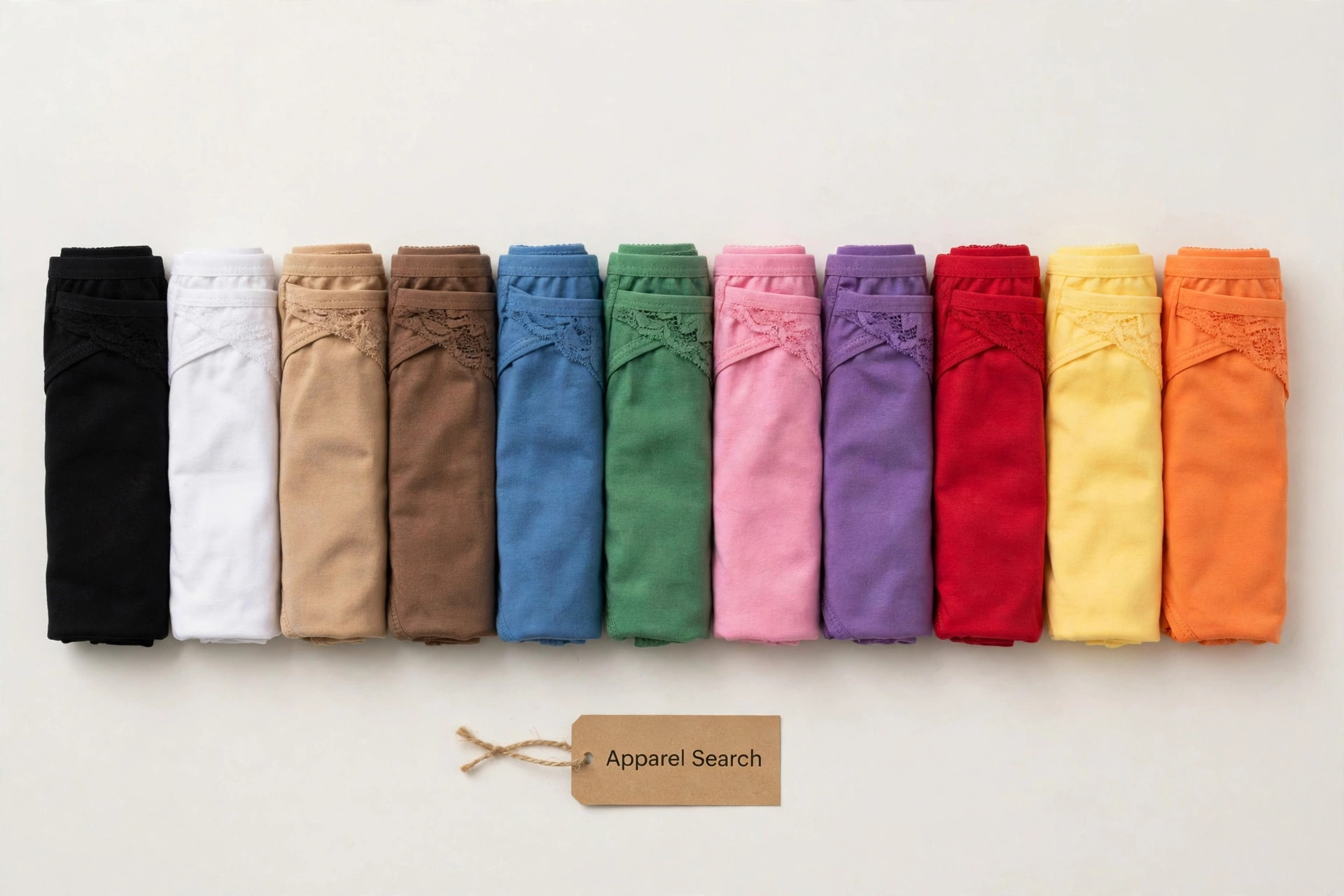
Panty color looks like a small decision until a pale shade outlines itself under light trousers or a favorite bright pair fades in the wash. Treated as a product question, the color range sorts itself out quickly: skin-tone shades exist to disappear, black and white are the laundering basics, and the bright and pastel families are there for matching sets and personal preference. This guide covers each family, plus the fabric and wash-care notes that keep colors behaving as bought.
The Disappearing Colors: Skin Tones, Tan and Brown
Under light or thin clothing, the shade that disappears is the one closest to your own skin tone — not white, which outlines itself clearly against the skin through pale fabrics. The useful range therefore runs from pale tan through warm beige to deep brown, and a shade a touch deeper than your skin usually hides better than a paler one, because fabric shadow darkens it slightly in wear.
Smooth fabrics matter as much as shade in this family: seamless edges in a skin-tone color are the most discreet combination under fitted clothing, while lace and textured trims can show through even when the color itself is right. If you wear pale trousers, skirts or dresses often, two or three pairs in your best-matching tone are the hardest-working items in the drawer.
Black, White and the Everyday Basics
Black is the default basic for good reasons: it suits dark clothing, coordinates with the widest range of matching tops, and hides wash wear longer than any pale shade. White is the traditional basic for light summer clothing and cotton sets, with one honest limitation — it grays gradually over time if it is washed with colored loads, and it shows through pale, thin fabrics more than a skin-tone shade does.
A practical everyday rotation is simple to build: skin-tone shades for light outfits, black for dark outfits and easy coordination, and white or pale shades where you prefer them under opaque light clothing. Bought in multipacks, these basics are also where consistent dye quality shows — pairs from the same pack match each other exactly, which cannot be promised across separate purchases.
Color, Sets and Seasons: Blue, Green, Pink, Purple, Red, Yellow and Orange
Beyond the basics, color is bought for pleasure and coordination. Blue and green shades, from navy and teal to sage, are everyday-friendly and launder well. Pink and purple cover the widest decorative range, from blush and lavender to vivid fashion shades. Red is the classic strong set color, and yellow and orange appear mainly in warm-weather and novelty ranges, where bright color is the point of the purchase.
Care keeps the whole range honest. Sort washes into dark, bright and pale loads, use cool water and a gentle detergent, and consider a mesh bag for lace-trimmed pieces so hooks and straps from other garments cannot snag them. Air drying protects both dye and elastic; repeated tumble drying is the fastest way to fade brights and gray whites at the same time.
Women's Panty Colors by Shade
Common Questions
What panty color disappears under white trousers?
The shade closest to your own skin tone, ideally in a smooth, seamless fabric. White itself is a common mistake: under pale, thin fabric it shows as a clear outline against the skin, while a tan or brown tone matched to you blends in and effectively vanishes.
How many colors does an everyday collection need?
Three groups cover nearly every outfit: skin-tone shades for light and thin clothing, black for dark clothing and easy set coordination, and white or pale shades for opaque light clothing if you like them. Decorative colors and matching sets can then be added purely by preference.
Why do white pairs turn gray over time?
Dye transfer and detergent residue from mixed washes. Whites washed with colored loads pick up a little loose dye each time, and the effect builds gradually. Wash whites and palest shades separately in cool water, and they will hold their brightness far longer.
Thank you for using the Apparel Search website. We hope this guide helps you choose panty colors with confidence, and we invite you to keep exploring the color guides linked above as your wardrobe grows and seasons change.

Looking for Women's Clothing Stores?
This guide helps you choose panty colors that work under your clothes and coordinate with your sets. To browse where to buy, visit our women's clothing store directory, where you can find retailers that carry them.
Search Apparel Search